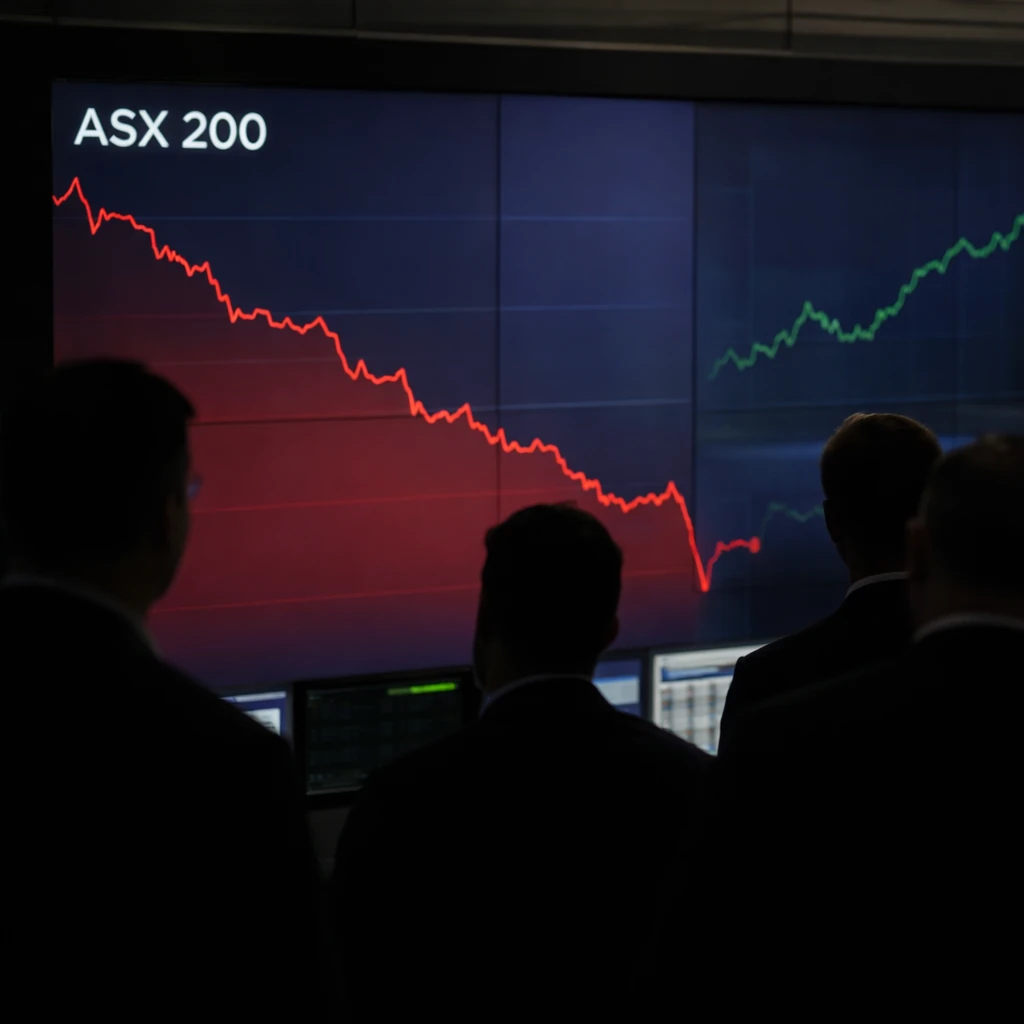

The Australian share market opened the new week under intense pressure, but one corner of the market refused to follow the slide. The ASX 200 fell 4.08% today to 8,490, wiping out hundreds of points as investors reacted to a fresh oil shock, inflation worries, and heightened geopolitical uncertainty. The selloff was broad and aggressive, yet energy stocks managed to edge higher as traders rotated into companies that stand to benefit from rapidly rising crude prices.
The contrast was stark. BHP sank nearly 6%, helping drag the materials sector sharply lower, while Woodside Energy and Santos attracted buying interest as oil markets tightened. For investors, this was not just another red session. It was a reminder that when global risk rises, Australian equities can split into two very different stories at once: one tied to growth fears and one tied to commodity supply stress.
Market snapshot: The ASX 200 dropped to 8,490, BHP fell almost 6%, Woodside rose about 1%, and Santos climbed close to 3% as the energy sector became the only patch of green in a sharply weaker market.
Energy stocks found support as oil surged
The biggest reason energy names held firm was simple: oil prices surged as markets priced in the risk of deeper supply disruption across the Middle East. That move quickly changed sector leadership on the ASX. Companies with direct exposure to oil and gas prices suddenly looked more attractive than miners and other cyclical names that tend to suffer when investors fear slower global growth.
Woodside Energy added to its recent momentum and at one point traded around its strongest level since January 2024. Santos also pushed higher as the market reassessed the earnings backdrop for major Australian energy producers. When crude jumps this quickly, investors often rush toward large-cap energy names because stronger benchmark prices can improve near-term revenue expectations, cash flow sentiment, and dividend appeal.
That shift came at the exact moment broader equity markets were moving the other way. Rising oil is rarely an uncomplicated positive for stock indexes overall. It can support producers, but it also raises transport costs, lifts inflation risks, and increases pressure on central banks to stay cautious. That is part of why the market reaction felt so severe.
Materials struggled as BHP led the downside
While energy tried to stabilize the benchmark, the materials complex went into reverse. The sector fell close to 6%, with BHP among the most visible drags on the index. For a market like Australia, where heavyweight miners influence daily direction so heavily, a sharp drop in BHP can quickly amplify losses across the entire benchmark.
The selling pressure reflected more than one issue. Investors were already facing a fragile global growth backdrop, and a sudden spike in oil only added to the fear that industrial demand could weaken if inflation remains sticky for longer. In that environment, materials stocks often lose favor because they sit at the intersection of commodity demand, economic momentum, and risk sentiment.
Why this matters for the ASX 200: Australia’s benchmark is unusually sensitive to moves in both miners and energy producers. On Monday, those two groups moved in opposite directions. Energy shares benefited from the oil rally, but the losses in materials were deep enough to overwhelm that support and pull the whole market sharply lower.
The geopolitical backdrop is now driving the tape
The move in Australian equities did not happen in isolation. Investors are reacting to a much larger global repricing tied to supply risk in energy markets and the fear that elevated fuel costs could keep inflation hotter than policymakers would like. A market already nervous about growth tends to respond badly when oil jumps fast, because that combination can squeeze consumers, raise business costs, and unsettle rate expectations all at once.
That helps explain why defensive buying in oil-linked stocks was not enough to rescue the broader index. The market is no longer looking only at company fundamentals. It is also weighing how long elevated energy prices can last and whether that changes the path for inflation, bond yields, and corporate earnings in the weeks ahead.
Santos also has a fresh project catalyst
Another reason Santos stayed in focus was its newly approved investment alongside Beach Energy in the Moomba Central Optimisation project in the Cooper Basin, South Australia. The project carries an estimated investment of A$357 million over three years and adds a company-specific growth angle at a time when the entire energy sector is already benefiting from stronger commodity pricing.
For investors, this matters because it gives Santos more than just a macro tailwind. It also reinforces the company’s longer-term production and infrastructure strategy. When a stock has both a supportive commodity backdrop and a fresh development story, it tends to command extra attention during volatile sessions.
What the market is watching next
The next phase for the ASX will depend on whether oil keeps climbing and whether global investors grow even more defensive. If crude remains elevated, energy names could continue to outperform, but the rest of the market may struggle to absorb the inflation shock. At the same time, traders will be watching consumer inflation expectations and broader sentiment signals for clues on whether central bank caution will intensify.
For now, Monday’s session sends a very clear message. The Australian market is being pulled in two directions. Energy stocks are benefiting from the same global stress that is damaging miners, pressuring the index, and rattling investors. That makes 8,490 more than just a level on the screen. It marks a session where oil, geopolitics, and sector rotation collided in a way that could shape the week ahead.
Investors looking at the ASX 200 today are not just asking whether the market fell. They are asking what kind of market this has suddenly become. Monday’s answer was sharp and unmistakable: one where energy is acting like a shelter, materials are taking the hit, and every move in oil now matters even more.
You May Also Like
Apple AAPL stock at $257 as Formula 1 streaming deal reshapes the 2026 season
For the external source used in this report, see the latest coverage from Reuters on Santos and Beach Energy’s Cooper Basin investment decision.

Make Swikblog your go-to source on Google for reliable updates, smart insights, and daily trends.