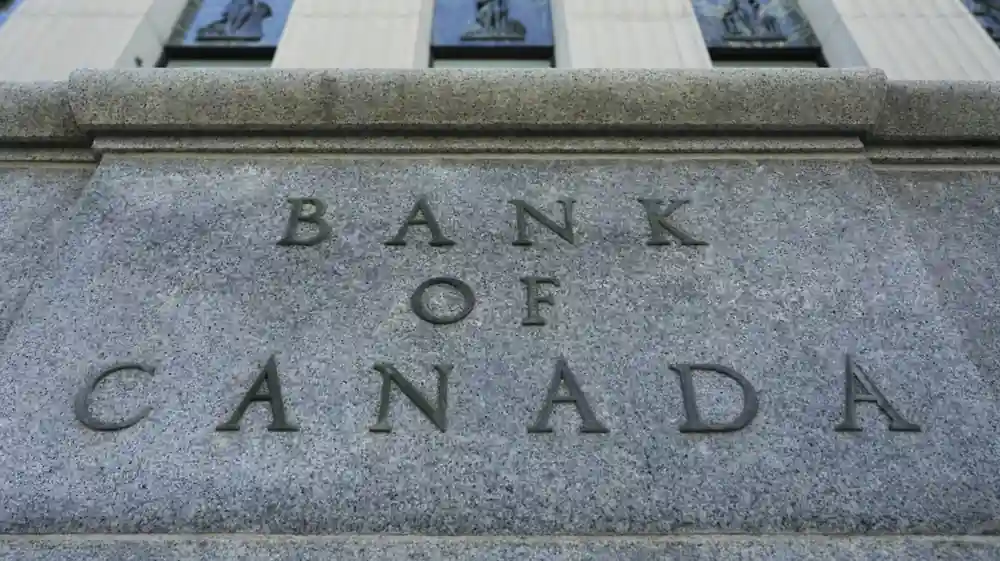

The Bank of Canada left its benchmark interest rate unchanged at 2.25% on June 10, choosing to hold borrowing costs steady as policymakers navigate a challenging mix of weak economic growth, elevated inflation and growing geopolitical uncertainty.
While financial markets largely expected the decision, the central bank’s latest assessment provides a clearer picture of the risks shaping Canada’s economic outlook in the second half of 2026. Rising oil prices, supply-chain disruptions linked to the ongoing Middle East conflict and uncertainty surrounding future U.S. trade policy have emerged as key concerns for policymakers.
According to the Bank of Canada’s official interest rate announcement, the conflict in the Middle East has entered its fourth month, contributing to higher energy costs and renewed pressure on global supply chains. At the same time, the U.S. administration continues to discuss additional tariffs, creating uncertainty for businesses and exporters across North America.
Despite those external pressures, Canada’s domestic economy is showing signs of slowing. The economy contracted by 0.1% during the first quarter, performing below the Bank’s earlier expectations. Consumer spending increased by 1.4%, but weaker government spending, lower housing activity and subdued business investment weighed on overall growth. Exports also declined during the quarter, while imports rose as businesses rebuilt inventories.
The latest data suggests economic activity could improve modestly in the second quarter, but the Bank believes the economy will continue operating with excess supply. That means demand remains too weak to fully utilize available economic capacity, a factor that would normally support lower interest rates.
However, inflation remains the central challenge. Canada’s Consumer Price Index accelerated to 2.8% in April, largely driven by higher energy prices and the impact of previous tax changes dropping out of annual calculations. Oil prices remain roughly US$10 per barrel above the assumptions used in the Bank’s April Monetary Policy Report, increasing the risk that inflation could stay elevated for longer than anticipated.
There are some encouraging signs beneath the headline inflation figure. Measures of core inflation have eased toward the Bank’s 2% target, the share of goods and services experiencing rapid price increases has moved closer to historical averages, and shelter inflation continues to moderate. Food inflation has also slowed compared with previous months, although it remains higher than many households would like.
The labour market reflects a similar story of resilience mixed with softness. Employment increased in May, but broader hiring activity has been largely unchanged since the beginning of the year. Canada’s unemployment rate stood at 6.6% in May and has fluctuated between 6.5% and 7% throughout 2026, suggesting businesses remain cautious about expanding payrolls.
Financial conditions have loosened somewhat since April, supported by stronger global equity markets. At the same time, bond yields remain volatile and the Canadian dollar has weakened against the U.S. dollar and several major currencies. Those developments could influence inflation and borrowing conditions in the months ahead.
Read More
For Canadian households, the latest decision means variable-rate borrowing costs remain unchanged for now. Mortgage holders, prospective homebuyers and investors will continue monitoring how future inflation data affects the central bank’s outlook. The direction of borrowing costs could also play a significant role in the Canada housing market forecast for 2026, where affordability remains one of the biggest challenges facing buyers.
The Bank’s latest statement suggests policymakers are willing to look through short-term spikes in energy prices, but they remain committed to preventing those increases from becoming embedded throughout the broader economy. While further rate cuts have not been ruled out, officials appear determined to see more evidence that inflation is moving sustainably toward the 2% target before adjusting policy again.
For now, the central bank is signaling patience. The path of inflation, oil prices, employment growth and global trade developments will likely determine when Canadians see the next move in interest rates.

Make Swikblog your go-to source on Google for reliable updates, smart insights, and daily trends.