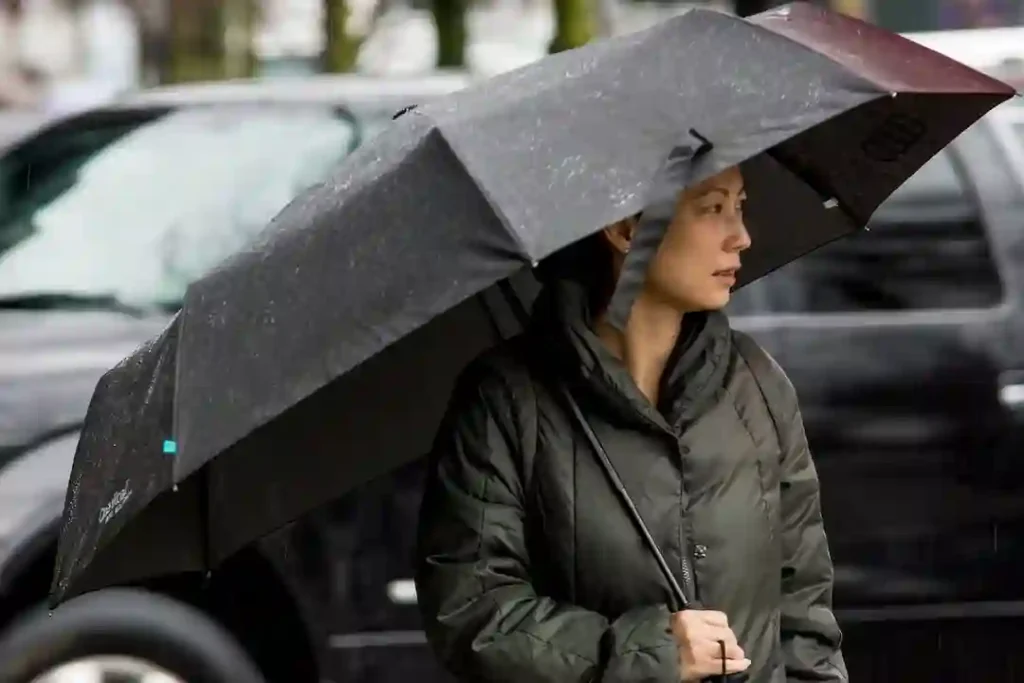

A powerful atmospheric river is continuing to drench British Columbia’s south and central coast, with Environment Canada warning that heavy rain, flooding risks, and potential landslides will persist through Friday. Multiple rainfall warnings are now in effect across Metro Vancouver, Vancouver Island, the Fraser Valley, and the Central Coast, as forecasters track what they describe as a “prolonged atmospheric river event.”
The system has already brought sustained rainfall to several regions, but officials say the most intense phase is still ahead. The heaviest downpours are expected Thursday night into Friday morning, raising concerns about rising rivers, overwhelmed drainage systems, and hazardous travel conditions across affected areas.
Heavy rain targets Metro Vancouver, Howe Sound and Vancouver Island
Environment Canada says northern parts of Metro Vancouver and Howe Sound will see periods of heavy rain from Wednesday through Friday. Inland and western Vancouver Island are also under warning, with rainfall expected to continue in waves throughout the period.
Forecasters noted that rainfall over Vancouver Island may briefly ease Wednesday morning, but this is only a short pause. Conditions are expected to intensify again by Wednesday afternoon as the atmospheric river strengthens, continuing to funnel moisture into the region.
This sustained rainfall increases the likelihood of water pooling on roads, reduced visibility, and rapidly deteriorating driving conditions. Authorities warn that localized flooding is likely in some areas, and certain roads could become impassable if water accumulates faster than drainage systems can handle.
For real-time alerts and regional updates, residents can monitor Environment Canada’s official weather warnings.
Fraser Valley faces up to 100 mm rain and flood risk
The Fraser Valley is among the hardest-hit regions in the current forecast. Environment Canada expects up to 100 millimetres of rainfall between Tuesday night and midday Thursday, with even higher totals possible near mountainous areas.
This situation is particularly concerning because rain is falling on top of existing snowpack in higher elevations. The combination of rainfall, snowmelt, and runoff can significantly increase water flow into rivers and streams, heightening the risk of flooding in low-lying and flood-prone communities.
Officials warn that these conditions could lead to swollen waterways, overflowing drainage channels, and localized flooding, especially if rainfall intensifies as expected later in the week.
Central Coast could see 150–300 mm rainfall
Some of the most extreme rainfall totals are forecast for British Columbia’s Central Coast, particularly south of Bella Bella near Rivers Inlet. Environment Canada has issued rainfall warnings for the region, with coastal communities expected to receive between 150 and 200 millimetres of rain.
In mountainous areas, totals could reach up to 250 millimetres, with localized amounts approaching 300 millimetres. These levels of precipitation significantly increase the risk of flooding, debris flows, and slope instability.
Officials warn that steep slopes, deforested regions, and areas affected by recent wildfires are especially vulnerable to landslides under such conditions. Saturated soil combined with intense rainfall can quickly trigger slope failures, posing risks to infrastructure and nearby communities.
Flood watch and high streamflow advisories issued
The province’s River Forecast Centre has issued a flood watch for the Central Coast, indicating that river levels are rising and that flooding of nearby areas is possible. The agency noted that flooding impacts are more likely in low-lying regions, particularly if heavy rainfall continues or arrives in multiple pulses.
In addition, high streamflow advisories are in place across a wide area, including Vancouver Island, the Fraser Valley, the South Coast, the North Coast, and the upper Fraser region. This includes the Robson Valley and tributaries near Prince George.
High streamflow advisories mean rivers and streams are rising and conditions are becoming more dangerous, although widespread major flooding is not yet expected. However, officials stress that conditions can change quickly if rainfall intensifies.
Residents can track river conditions and advisories via the B.C. River Forecast Centre.
Drivers warned of hazardous roads and possible closures
Environment Canada is urging drivers to exercise caution as conditions worsen. Extensive water pooling on roads is expected, which can lead to hydroplaning and reduced vehicle control. Visibility may also drop significantly during periods of heavy rain.
Localized flooding could make some roads impassable, particularly in low-lying or poorly drained areas. In more severe cases, debris, small landslides, or washouts could disrupt transportation routes, especially in mountainous and coastal regions.
Officials emphasize that drivers should avoid flooded roadways, reduce speed, and stay alert to changing conditions. Even shallow water can pose a serious hazard if currents are strong or road surfaces are compromised.
Landslide risk rises in vulnerable areas
One of the most serious concerns during this prolonged rainfall event is the increased risk of landslides. Environment Canada warns that landslides may occur in vulnerable areas such as steep slopes, deforested land, or regions affected by recent burn scars.
As soil becomes saturated over multiple days of rainfall, its stability decreases, making slopes more prone to sudden movement. This risk is especially high during peak rainfall periods expected late Thursday into Friday.
Residents living near hillsides or known slide-prone areas are advised to remain alert for warning signs such as cracking soil, falling debris, or unusual water flow patterns.
Peak impact expected Thursday night into Friday
While rain has already begun affecting much of the region, forecasters say the most critical period will arrive Thursday night into Friday morning. This is when rainfall rates are expected to peak, potentially triggering the most severe impacts, including flooding, landslides, and dangerous travel conditions.
With multiple warnings already in place and ground conditions becoming increasingly saturated, the coming hours will be crucial for many communities across British Columbia.
Authorities continue to urge residents to stay informed, limit unnecessary travel during peak rainfall, and prepare for rapidly changing conditions as this high-impact weather event unfolds.

Make Swikblog your go-to source on Google for reliable updates, smart insights, and daily trends.