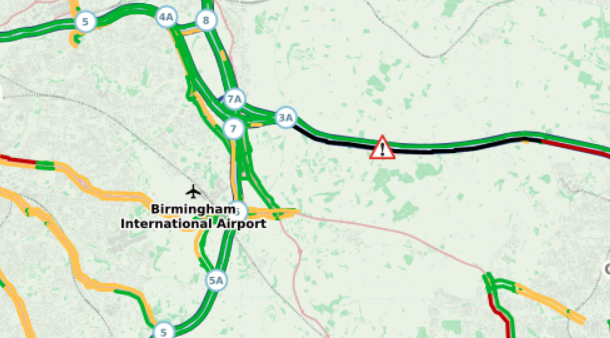

A crash on the M6 northbound near Birmingham triggered significant disruption on Monday morning, with multiple lanes closed between junctions 3 and 4 and delays building to around 20 minutes as traffic slowed sharply through the affected stretch.
The incident, reported on 13 April, remained active during the late morning period, with authorities indicating that normal traffic conditions were unlikely to return until between 11:15 and 11:30. The disruption followed an earlier accident in the same area, compounding pressure on one of the UK’s busiest motorway corridors.
Traffic monitoring systems showed that vehicles were moving slowly past the scene, with lane restrictions forcing heavy volumes of traffic into reduced space. For drivers travelling northbound past Birmingham, the delays came at a critical time when weekday demand is typically high and traffic flow already stretched.
The M6 is a key national route linking the Midlands with the North West, and even short-term incidents can quickly escalate into wider congestion. Monday’s collision demonstrated how successive incidents — particularly in close proximity — can significantly extend recovery times and increase disruption beyond initial estimates.
Knock-on impact across the network
The closure of multiple lanes created a bottleneck effect, slowing vehicles well before the incident point and increasing congestion at surrounding junctions. Motorists attempting to reroute risked adding pressure to local roads, particularly around Birmingham’s already busy transport network.
While the estimated delay was placed at 20 minutes, real-world travel times can vary as traffic continues to compress and recover gradually after lanes reopen. Even once the obstruction is cleared, residual congestion often lingers as traffic flow normalises.
Drivers were advised to monitor live updates via Traffic England, where lane status and clearance progress were being tracked in real time.
The incident highlights the fragility of traffic flow on major UK motorways, where consecutive collisions — even if resolved within hours — can disrupt thousands of journeys and ripple across the wider road network.
you may also like: Frontier Flight 4753 Denver to Dallas cancelled on April 13, 2026
Make Swikblog your go-to source on Google for reliable updates, smart insights, and daily trends.