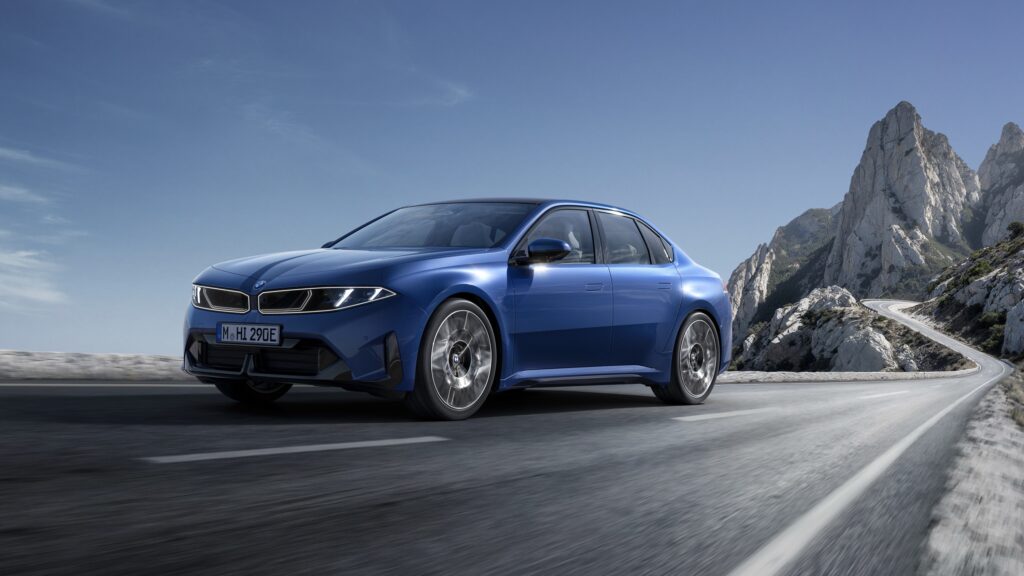

BMW has officially unveiled its next-generation electric i3 sedan, and it’s already making headlines across the global EV market. With a claimed 560-mile range, 30% efficiency improvement, and cutting-edge software-driven architecture, this is not just another electric car—it’s BMW’s most important model for the future.
The i3 is the first fully electric version of the iconic 3 Series, a car BMW itself calls the “essence of the brand.” Built on the new Neue Klasse platform, this sedan marks a major technological shift as the automaker accelerates its push into the premium EV segment.
Why the BMW i3 Matters So Much
The 3 Series has defined BMW for over 50 years, known for sporty performance, balanced handling, and premium appeal. Electrifying it isn’t just symbolic—it’s strategic.
The new i3 is expected to set the standard for all future BMW EVs. Production begins in Munich in August 2026, and it will initially launch as the i3 50 xDrive, a dual-motor all-wheel-drive variant.
Under the hood, the i3 delivers 463 horsepower and 476 lb-ft of torque, using an asynchronous motor at the front and an electrically excited synchronous motor at the rear. This setup ensures improved efficiency, lower energy loss, and better performance compared to previous BMW EV generations.
560-Mile Range and 30% Efficiency Gain
The headline feature is undoubtedly the 560-mile range, placing the i3 among the longest-range EVs globally. While real-world estimates suggest around 440 miles, it still represents a massive leap forward.
This performance is powered by BMW’s sixth-generation battery technology, which delivers a 30% increase in efficiency compared to its earlier EV platforms.
The battery uses a cell-to-pack architecture, eliminating modules and directly integrating cells into the pack. This design improves structural rigidity, reduces weight, and increases usable energy density.
Additionally, the new cylindrical cells are around 20% more energy-dense, while energy losses have been reduced by up to 40%. These improvements make the i3 not only more efficient but also more cost-effective to produce.
According to Top Gear, this combination of improved motors, battery design, and software is what enables BMW to push EV range to new limits.
400kW Charging and 10-Minute Range Boost
The BMW i3 is built on an advanced 800-volt electrical architecture, enabling ultra-fast charging speeds.
With support for up to 400 kW DC fast charging, the car can add approximately 250 miles of range in just 10 minutes. While such chargers are still limited globally, this feature future-proofs the vehicle as charging infrastructure continues to evolve.
This positions BMW directly against Tesla and other premium EV makers where charging speed is becoming a key competitive advantage.
“Heart of Joy” and Software-Defined Driving
One of the most revolutionary aspects of the i3 is its software-driven architecture. BMW calls it a “software-defined vehicle,” powered by multiple high-performance computing systems.
At the center is the “Heart of Joy”, a control unit that manages steering, braking, regenerative energy, and suspension dynamics in real time.
This system allows for:
- Smoother handling and better cornering balance
- Rear-biased torque delivery for a sportier feel
- Up to 95% braking handled by regeneration
- More precise traction and stability control
BMW has also rewritten its traction and braking systems from scratch, relying on software rather than hardware limitations to improve performance.
Advanced Driver Assistance and AI Integration
The i3 introduces next-generation driver assistance systems designed to work in sync with the driver.
There are two levels of automation:
- A standard system requiring hands on the wheel at high speeds
- An advanced system allowing hands-free driving with strict monitoring
This system can handle tasks like stopping at traffic lights, restarting automatically, and adapting to road conditions using gaze tracking and driver input analysis.
Inside, the i3 features an AI-powered assistant integrated with Amazon Alexa, enabling voice control and smart interaction.
As highlighted by Ars Technica, BMW is combining rules-based safety systems with AI enhancements to ensure both reliability and innovation.
Interior: Panoramic Vision and “Shy Tech”
The cabin of the i3 reflects BMW’s futuristic design philosophy. One of its standout features is the Panoramic Vision display, which projects information across the entire width of the windshield.
Additional highlights include:
- A 17.9-inch central touchscreen
- Optional head-up display
- Minimalist dashboard design
- Physical controls retained for usability
BMW calls this approach “shy tech”, where advanced technology is integrated seamlessly without overwhelming the driver.
Driving Dynamics: Built for Enthusiasts
BMW knows that the 3 Series is famous for its driving experience, and the i3 aims to deliver on that legacy.
The car features near 50:50 weight distribution and a low center of gravity thanks to the battery placement.
Key improvements include:
- Rear-biased power delivery for better cornering
- Adaptive suspension tuning for comfort and performance
- One-pedal driving with extremely smooth stops
BMW even claims the i3 could be easier to drift than previous models, highlighting its focus on driving pleasure.
Sustainability and Cost Efficiency
Beyond performance, BMW has also focused heavily on sustainability. The i3 uses around 30% recycled materials and is designed with mono-material construction for easier recycling.
The company also claims the vehicle can offset its carbon footprint compared to gasoline models in as little as one year, thanks to improved efficiency and renewable energy usage in production.
EV Market Impact and What Comes Next
The launch of the BMW i3 signals a major shift in the premium EV segment. With long range, ultra-fast charging, and advanced software integration, BMW is positioning itself as a serious competitor to Tesla, Mercedes, and Audi.
Future plans include additional variants such as a Touring (wagon) version and a high-performance electric M3.
For investors and EV watchers, this launch highlights BMW’s aggressive push into electrification. The Neue Klasse platform will underpin multiple future models, making the i3 a critical foundation for the company’s long-term strategy.
As the EV race intensifies, BMW’s 560-mile i3 doesn’t just join the competition—it raises the bar for what premium electric sedans can achieve.

Make Swikblog your go-to source on Google for reliable updates, smart insights, and daily trends.