Budweiser
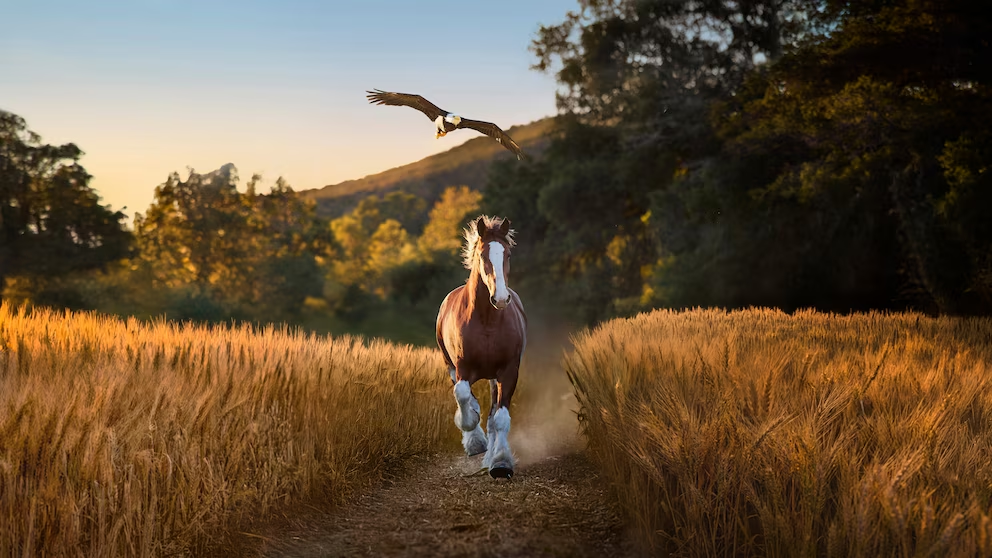
Budweiser is putting two of America’s most familiar symbols at the center of its 2026 Super Bowl campaign, using a Clydesdale horse and a bald eagle to mark the beer brand’s 150th year of brewing in the United States. The new commercial, titled American Icons, takes a quiet, emotional approach instead of relying on celebrity cameos or fast jokes.
The one-minute spot opens on a farm at sunrise, where a young Clydesdale runs out from a stable and into open fields. During that early morning scene, the foal finds a bald eagle chick that has fallen from its nest. The eaglet appears alive and safe, but too young to fly, setting up a story about growth, patience and companionship.
A Super Bowl ad built around patience, not punchlines
Rather than turning the moment into a rescue scene, Budweiser lets the story unfold slowly. The young horse stays near the eagle, and the two animals grow up alongside each other through changing seasons, storms and quiet days on the farm.
That slower pace is part of the commercial’s point. The Clydesdale becomes stronger and more confident, while the eagle gradually learns to trust its wings. The message is simple but effective: progress is often built through time, care and repeated effort.
Budweiser has used Clydesdales in Super Bowl advertising for decades, making the horses one of the most recognizable brand images in American television marketing. For 2026, pairing a Clydesdale with a bald eagle gives the campaign a wider patriotic frame, especially as the company marks a major anniversary.
Why the eagle and Clydesdale pairing matters
The final scene brings the commercial’s emotional arc together. As both animals reach maturity, the eagle rides on the back of the Clydesdale before lifting into the sky. The image is designed to feel grand without needing much dialogue, using the animals’ shared journey as the heart of the story.
A farmer watches the moment unfold with visible emotion, giving the ad its human reaction without shifting attention away from the animals. It is the kind of restrained sentiment Budweiser has often used in its most memorable Super Bowl spots.
The commercial is set to Lynyrd Skynyrd’s “Free Bird,” a song choice that reinforces the ad’s theme of release and independence. The music builds gradually with the visuals, moving from a soft opening to a more powerful finish as the eagle finally takes flight.
The ad also arrives at a time when Super Bowl commercials are often judged long before game day, as brands release spots early across YouTube, social platforms and their own websites. That means emotional replay value matters almost as much as the live television moment.
Budweiser’s approach stands apart from many game-day ads because it avoids crowded storytelling. There are no rapid cuts, celebrity punchlines or overexplained slogans. Instead, the commercial depends on familiar images, strong music and a simple visual payoff.
The company has also pointed to animal-handling safeguards and wildlife-related oversight connected to the production, a detail that matters because viewers increasingly expect transparency when live animals appear in major advertising campaigns.
Super Bowl LX gives Budweiser a national stage to remind viewers of its advertising history while tying the campaign to its 150-year milestone. The brand’s Clydesdales have long been associated with tradition, and the bald eagle adds a broader symbol of resilience and freedom.
For official campaign details and brand information, visit Budweiser’s official site.
For more Super Bowl context, see Super Bowl LX date, time, odds and ticket details .

Make Swikblog your go-to source on Google for reliable updates, smart insights, and daily trends.