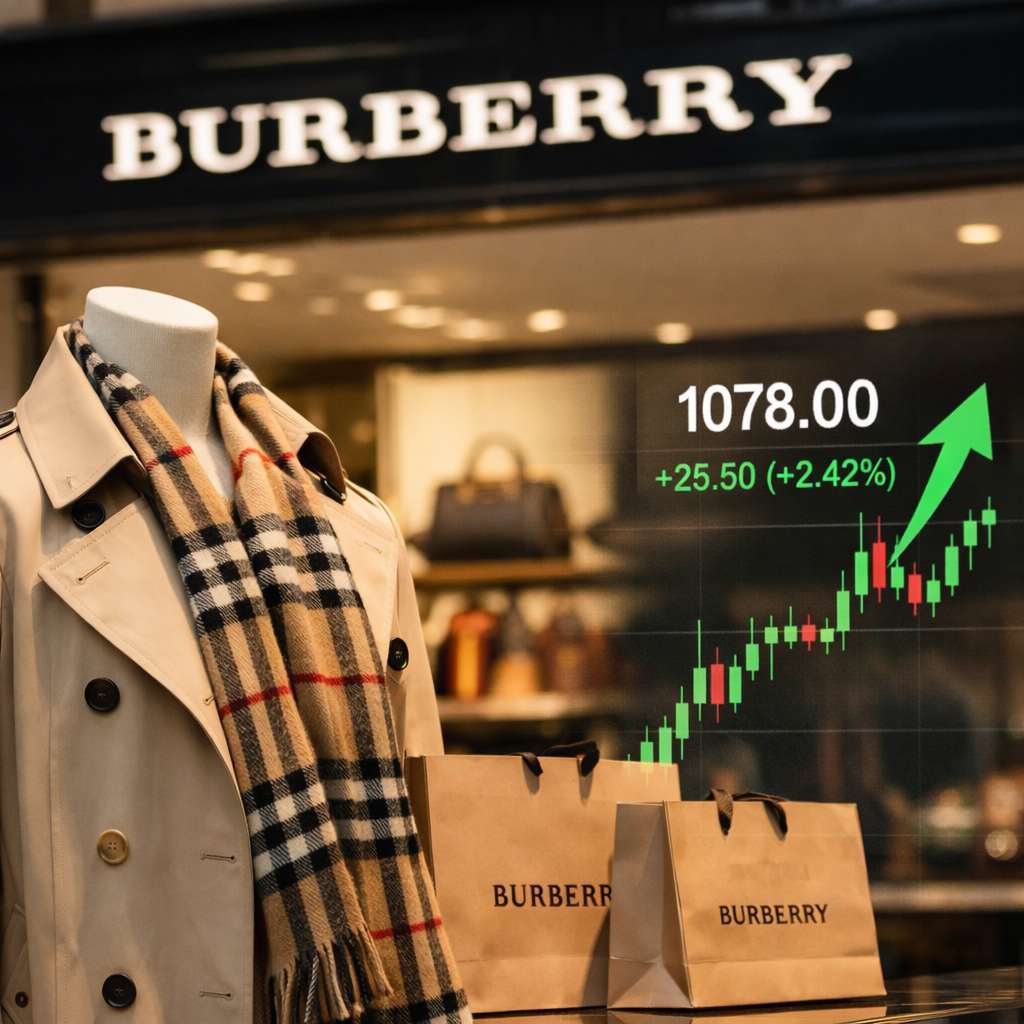

Burberry shares rose to 1,078p, extending gains as investors responded to growing confidence around the company’s turnaround strategy. The British luxury brand, which has spent the last few years trying to recover from a sharp loss of momentum, is now showing early signs of stabilisation — enough for UBS to describe the stock as a “compelling entry point.”
The shift in sentiment is not based on hype alone. It reflects a combination of improving sales trends, stronger margins, and a clearer strategic direction that is beginning to resonate with both customers and investors.
Sales recovery and margin expansion drive turnaround narrative
UBS expects Burberry’s upcoming full-year results in May to confirm that the turnaround is gaining pace. The bank forecasts fourth-quarter retail sales of £554 million, representing a 6% increase on a like-for-like basis. In a luxury sector that has been grappling with uneven demand and cautious spending, that level of growth is a meaningful signal that the brand is regaining traction.
However, the bigger story lies in profitability. UBS projects full-year gross margins of 67.1%, marking an improvement of around 4.6 percentage points year-on-year and coming in ahead of the company’s own guidance. This reflects a notable shift in how Burberry is managing its business.
The company is moving away from heavy discounting, particularly in outlet channels, and focusing more on full-price sales. For a luxury brand, this is critical. Reduced discounting not only supports margins but also helps rebuild brand perception, which is essential for long-term pricing power.
At the same time, Burberry has been repositioning itself around its heritage strengths. The renewed focus on core categories such as outerwear, including its iconic trench coats, alongside clearer branding and more accessible pricing, appears to be striking the right balance between exclusivity and volume.
This back-to-basics approach is not about reinvention, but about execution — and early indicators suggest it is starting to work.
Investors are now watching closely to see whether this momentum can continue. One of the key factors will be China, which remains a crucial market for global luxury demand. Burberry has already seen Chinese consumer spending return to growth in the third quarter, and any further improvement could act as a significant catalyst for the company’s recovery.
On the risk side, geopolitical tensions remain in focus. However, the ongoing Middle East conflict is expected to have only a limited impact on Burberry, as the region accounts for roughly 3% of total sales. This relatively low exposure provides some insulation against broader disruptions.
Despite the improving outlook, UBS has trimmed its 12-month price target to 1,410p from 1,570p. The reduction is not linked to weaker expectations for Burberry itself but reflects a broader de-rating across the luxury sector. Importantly, the bank has maintained its ‘buy’ rating, reinforcing confidence in the company’s recovery trajectory.
With shares currently trading at 1,078p, the revised target still points to notable upside if the turnaround continues to gain traction. That valuation gap is a key reason why analysts are increasingly highlighting the stock as an attractive entry point rather than a high-risk recovery play.
There is, however, a longer-term consideration for investors focused on income. UBS does not expect Burberry to resume dividend payments until 2029. While this may disappoint some shareholders, it also reflects a strategic decision to prioritise reinvestment and balance sheet strength during the turnaround phase.
For now, the market appears to be focusing more on operational improvement than on near-term payouts. The combination of rising sales, expanding margins, and a clearer brand strategy is helping to rebuild confidence in a company that had struggled to define its direction.
Burberry’s recovery is still in its early stages, and challenges remain. Luxury demand continues to be sensitive to macroeconomic conditions, and the company will need to prove that its progress is sustainable over multiple quarters.
Yet the narrative is changing. What was once seen as a brand in decline is now being viewed, cautiously, as a business in recovery. If upcoming results reinforce the current trends, the idea of a “compelling entry point” may gain broader acceptance among investors.
For further updates, investors can track official announcements and disclosures on Burberry’s corporate website.
You may like: Domino’s stock at $352 puts focus on the new CEO’s strategy reset and what comes next for the pizza giant.
About Author
Ankit is an experienced digital writer with more than 9 years of professional writing experience in business, technology, entertainment, finance, and online news coverage. He specializes in building concise, informative, and engaging content designed for modern readers. His work reflects a strong understanding of fast-paced publishing, editorial clarity, and content performance across digital platforms. About Author

Make Swikblog your go-to source on Google for reliable updates, smart insights, and daily trends.