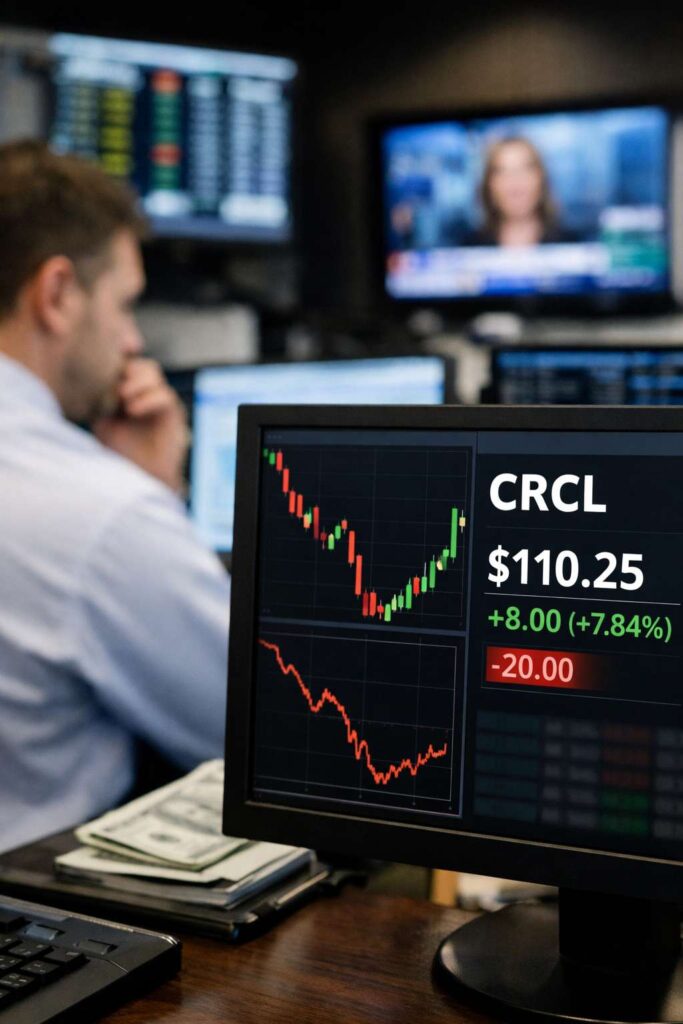

Circle (NYSE: CRCL) stock plunged nearly 20% today in one of its sharpest intraday declines on record before staging a strong rebound to around $110, up roughly 8% from the lows. The dramatic swing came as investors reacted to fresh developments around the proposed Clarity Act, a key piece of US crypto legislation that could reshape how stablecoins operate.
The initial sell-off was driven by fears that the bill may restrict stablecoin “yield” — incentives or rewards offered to users holding digital dollars like USDC. Since yield has been a major driver of capital inflows into stablecoins, the reaction was swift and aggressive, dragging not only Circle but also crypto-linked stocks lower. However, as more details emerged, analysts and investors began reassessing whether the market had overreacted.
What Triggered the 20% Crash
The panic began after reports suggested that the Clarity Act could prohibit companies from offering yield “directly or indirectly” on stablecoin balances, especially if those rewards resemble traditional bank deposits. This immediately raised concerns that one of crypto’s most powerful growth levers could be curtailed.
Stablecoin yield has been crucial in attracting users and liquidity. Without it, investors may still use stablecoins for transactions but may be less inclined to hold large balances. According to industry voices, yield is what converts stablecoins from a utility into an investable asset class.
That fear quickly translated into market action. Circle stock, which had rallied from around $60 to nearly $130 in recent weeks, saw heavy profit-taking as traders rushed to exit positions. Coinbase (NASDAQ: COIN), a key partner that distributes USDC and shares in its economics, also dropped sharply during the session.
Why the Market May Have Misread the Situation
Despite the sharp decline, analysts — including Bernstein — pushed back on the bearish narrative, arguing that the market may be conflating two very different things: earning yield versus distributing yield.
Circle primarily generates revenue from interest on reserves backing USDC, not from directly paying users yield. The proposed regulation appears more focused on limiting how platforms distribute rewards rather than eliminating the underlying economics of stablecoins.
“The market is conflating who earns yield with who distributes yield,” analysts noted. This distinction became a key reason behind the stock’s rebound, as traders began to realize that Circle’s core business model might not be as directly impacted as initially feared.
Additionally, the bill may still allow “activity-based rewards” — incentives tied to payments, trading, or loyalty programs — which could preserve some growth dynamics within the ecosystem. Barron’s report highlighted that the regulatory language is still evolving, leaving room for interpretation.
Deeper Industry Tensions Driving Volatility
The reaction to the Clarity Act is not happening in isolation. It reflects a broader and intensifying conflict between traditional banks and crypto firms. Banking executives have warned that stablecoins could siphon deposits away from the financial system, potentially impacting lending capacity across the $23 trillion US credit market.
This underlying tension is shaping how regulation is being crafted. While policymakers aim to support innovation, they are also under pressure to protect the traditional banking system. That push-and-pull dynamic is likely to keep crypto-related stocks volatile.
Additional Pressure: Wallet Freeze Controversy
Adding to the uncertainty, Circle also faced criticism after reports that it froze multiple USDC wallets. A viral post from blockchain investigator ZachXBT questioned the company’s response during incidents, reigniting concerns about centralization and control in stablecoins.
This issue matters because one of crypto’s core value propositions is decentralization. Any perception of centralized intervention can impact user trust, especially among more sophisticated participants in the ecosystem.
Rising Competition From Tether
Circle is also facing increasing competitive pressure. Long-time rival Tether has taken steps to expand its presence in the US market, including launching a regulated stablecoin product. Tether has also reportedly engaged a Big Four auditing firm, which could improve transparency and challenge one of Circle’s key differentiators.
This intensifying competition adds another layer of complexity for investors evaluating Circle’s long-term positioning.
Why the Stock Rebounded to $110
After the initial panic, the market began to stabilize as investors reassessed the situation. The rebound reflects a growing view that the sell-off may have been excessive relative to the actual regulatory risk.
Several factors contributed to the recovery:
– Clarification that the regulation targets distribution of yield, not necessarily its generation
– Possibility of continued incentives through activity-based rewards
– Dip buying after a sharp and rapid decline
– Recognition that Circle’s revenue model is tied to reserves and infrastructure, not just incentives
The stock’s ability to recover quickly highlights how sentiment-driven crypto equities can be, especially in an environment dominated by policy headlines.
The Bigger Picture for Circle
Beyond the short-term volatility, Circle continues to position itself as a broader fintech infrastructure company. Its ecosystem extends beyond stablecoins into payments, cross-border transfers, and tokenized financial assets.
The company has also been benefiting from strong fundamentals, including rising stablecoin circulation and favorable interest rate conditions, which support its reserve-based revenue model. Circle’s transparency disclosures continue to emphasize reserve backing and operational trust as key strengths.
What Investors Should Watch Next
Going forward, the key variable will be how the Clarity Act evolves. Investors will closely monitor whether lawmakers refine the language around stablecoin rewards and how regulators balance innovation with financial stability concerns.
At the same time, competition, trust issues, and macro factors like interest rates will continue to influence Circle’s trajectory.
Today’s price action makes one thing clear: CRCL is no longer just another crypto stock — it has become a central battleground for how the future of digital finance will be regulated. The 20% plunge and rapid rebound to $110 reflect not just volatility, but a market trying to price in an entirely new regulatory reality in real time.
You may also like BP Share Price Today: 559.30% Rally Analysis for 2026.

Make Swikblog your go-to source on Google for reliable updates, smart insights, and daily trends.