
Updated: July 4, 2026
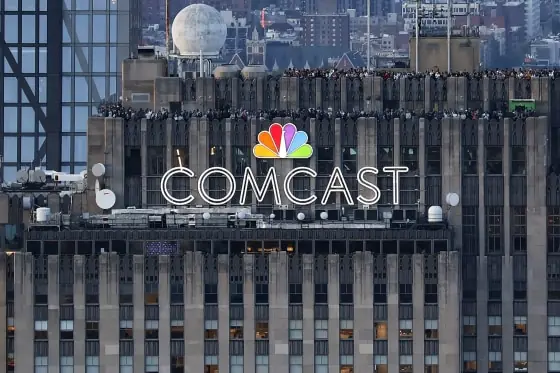
Comcast has unveiled plans for one of the biggest restructurings in its history, confirming that it intends to separate its media and entertainment business from its core connectivity operations. If the transaction receives the necessary approvals, NBCUniversal and Sky will become a standalone publicly traded company while Comcast continues as a broadband, wireless and technology-focused business.
The proposed separation is structured as a tax-free spin-off for shareholders and is expected to take around a year to complete. Existing Comcast investors are expected to receive shares in both companies once the deal closes, subject to regulatory, tax, financing and board approvals.
How Comcast will look after the split
Following the separation, Comcast will focus on broadband internet, wireless services, business connectivity and technology infrastructure. The company says these operations currently serve more than 65 million homes and businesses, making network investment and customer growth its primary priorities.
The newly independent NBCUniversal will combine many of Comcast’s best-known entertainment assets under one company. Those include NBC, Peacock, Bravo, Telemundo, Universal Pictures, Universal Television, Universal theme parks and European broadcaster Sky.
Why the company is making this change
The businesses now operate in very different markets. Comcast’s connectivity division competes with fibre broadband providers and wireless carriers, while NBCUniversal faces challenges tied to streaming, advertising, film production, sports broadcasting and international media rights.
Separating the businesses allows each management team to concentrate on its own investment strategy, financial priorities and long-term growth plans without balancing the competing demands of two very different industries.
Leadership plans for both companies
Comcast said Mike Cavanagh, currently serving as the company’s president, will become chief executive officer of the new NBCUniversal business. Michael Angelakis, Comcast’s former chief financial officer, is expected to return as a strategic adviser before taking over as Comcast’s chief executive after the transaction is completed.
Brian L. Roberts, who has led Comcast for decades as chairman and chief executive, will remain involved with both organisations during the transition, helping oversee one of the company’s most significant structural changes.
What the transaction means for shareholders
Shareholders are expected to own stock in both companies after the spin-off. Comcast also plans to retain up to a 19.9% interest in NBCUniversal for up to one year before gradually reducing that holding in a tax-efficient manner.
The company has indicated that both businesses are expected to begin operating with investment-grade balance sheets, giving each greater financial flexibility to pursue acquisitions, invest in growth and manage borrowing costs.
Market reaction and industry impact
Investors welcomed the announcement, with Comcast shares moving higher after the restructuring plans were revealed. Spin-offs are often viewed positively when investors believe separate companies can be valued more accurately than a large diversified group.
The move reflects broader changes across the media industry. Traditional television businesses continue to face subscriber losses, while streaming services compete for audiences against global rivals including Netflix, Disney and Warner Bros. Discovery. At the same time, broadband providers are investing heavily to defend market share against expanding fibre networks and fixed wireless services.
What it means for Peacock, Universal and Sky
As an independent company, NBCUniversal will rely on several key businesses to drive future growth. Peacock remains central to its streaming strategy, Universal Pictures continues to produce major film franchises, and Universal’s theme parks provide a growing source of revenue beyond television and movies.
Sky strengthens the company’s international presence by giving it established operations across Europe. That broader footprint could support future investments in sports broadcasting, streaming services and advertising partnerships outside the United States.
Recent corporate restructuring across several industries highlights how major companies are simplifying operations to focus on their strongest businesses. A similar example can be seen in this report on Tortilla’s accounting-related restructuring challenges.
Read More
Approvals still required before completion
The separation has not yet been finalised. Comcast must still satisfy a range of conditions, including board approval, regulatory clearance, financing arrangements and tax requirements before the transaction can move forward.
Even after the split, both businesses will continue operating in highly competitive markets. Comcast will be focused on expanding broadband and wireless services, while NBCUniversal will compete for streaming subscribers, advertising revenue, premium sports rights and box office success.
A timeline of Comcast’s restructuring
Comcast expanded internationally by acquiring Sky in 2018. In recent years it reorganised several cable television assets, including moving a number of cable networks into the newly formed Versant business. The planned NBCUniversal spin-off marks the next stage of that strategy, reflecting the industry’s shift toward more focused companies with distinct operating models.
Further information about the proposed transaction, including investor presentations and regulatory updates, is available through Comcast Investor Relations.

Make Swikblog your go-to source on Google for reliable updates, smart insights, and daily trends.