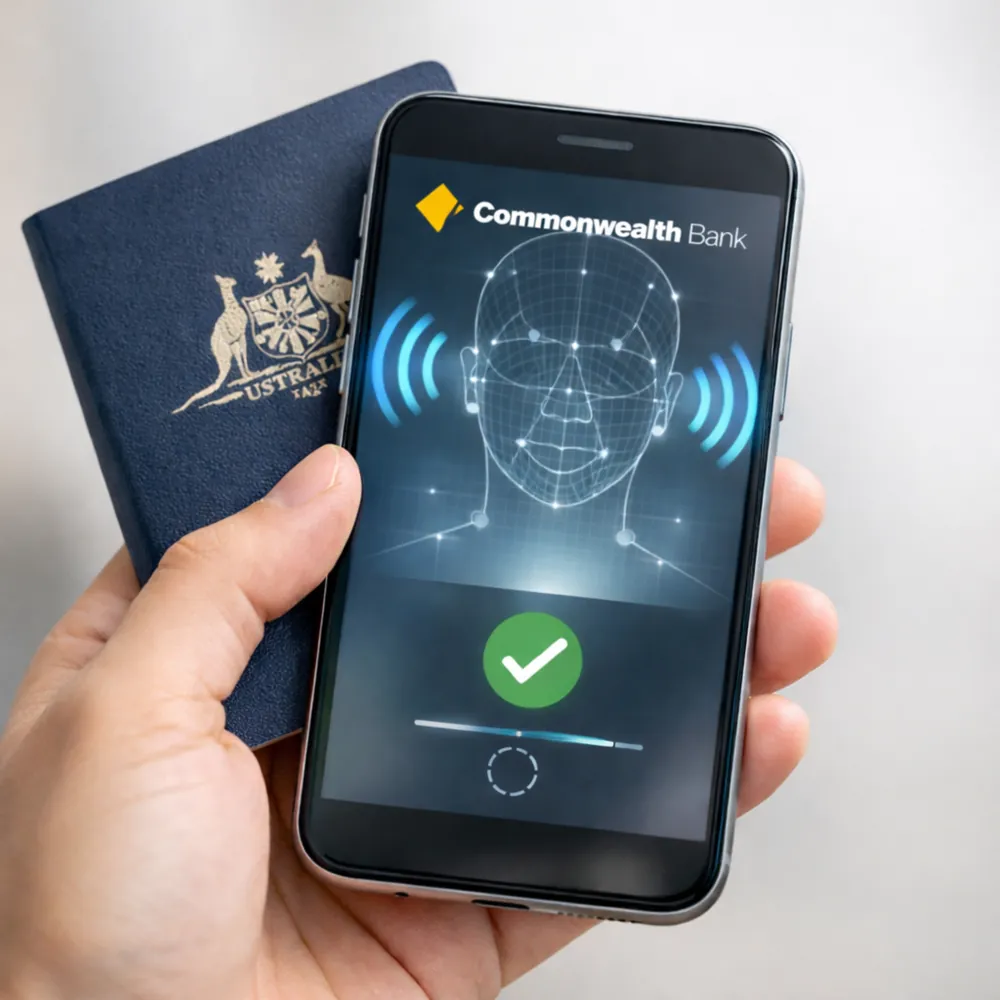

Commonwealth Bank has rolled out a new passport-based identity feature that could make opening a bank account dramatically faster for new customers. The update allows eligible users to tap an Australian ePassport against their phone and verify their identity through the CommBank app, cutting a process that once required multiple documents down to something that can now be completed in under one minute.
For a bank the size of Commonwealth Bank, even a small improvement in onboarding can quickly turn into a major competitive edge. Speed matters in retail banking, but so does trust. This latest move aims to deliver both. Instead of relying on the old method of uploading separate documents and manually filling out key details, the new feature uses near-field communication technology to read encrypted data stored inside the passport chip, then combines that with a live selfie check to confirm the customer’s identity.
Key point: Commonwealth Bank says the feature is a first in Australia and allows some new customers to complete signup in less than a minute using only an ePassport and a selfie.
That shift may sound simple, but it signals something much bigger inside the banking sector. Banks have spent years trying to remove friction from digital account opening without weakening fraud controls. The challenge has always been clear: make it easier for genuine customers to join while making it harder for scammers, synthetic identities and money mule networks to slip through. Commonwealth Bank’s new setup is designed to do both at once.
The technology works by pulling data directly from the NFC-enabled chip embedded in modern passports. Australia has used ePassports for two decades, and the documents contain securely stored biometric and personal data. By reading that chip through a smartphone, the app can pre-fill the application information while also unlocking the official photo stored in the passport. The customer then takes a selfie, and the system checks whether the two images match.
That combination of encrypted document data and biometric verification gives the bank a far stronger level of confidence than a basic manual form. It also reflects a broader trend in digital finance: the best onboarding tools are no longer just about convenience. They are becoming part of a bank’s fraud defence system from the very first touchpoint.
Why this matters beyond just faster signup
The headline appeal is obvious. A process that once felt administrative and slow has been compressed into a fast, tap-and-verify experience. But the deeper significance is the growing role of biometric identity in everyday banking. More financial institutions have started requiring selfies and live identity checks when customers open accounts online, reset payment credentials or request higher transaction limits. Commonwealth Bank’s passport feature pushes that trend a step further by turning the passport itself into a more active part of the verification process.
That matters because identity fraud has become more complex. Criminals do not always rely on fully fake information. In many cases, they blend real and fabricated data to create accounts that appear legitimate on the surface. A system that checks encrypted passport information against a live selfie can make that far more difficult. For customers, that means the feature is not just about saving time. It is also about improving confidence that the account-opening process is more secure from the outset.
Commonwealth Bank has said the encrypted information unlocked through the passport is not stored, which is likely to be an important reassurance for users who remain cautious about digital identity tools. Privacy concerns can quickly undermine adoption if banks appear careless with sensitive information. By focusing on verification rather than long-term retention of the unlocked chip data, the bank is trying to keep the process both secure and acceptable to mainstream customers.
The feature also arrives at a time when digital onboarding is becoming a more visible battleground among Australia’s major banks. Customers increasingly expect banking apps to behave like other modern digital services: fast, intuitive and available instantly from a phone. A process that feels outdated can push potential users away before they even open an account. This is where Commonwealth Bank may see a meaningful edge, especially among younger, mobile-first customers who expect financial products to work with the same simplicity as contactless payments or digital wallets.
There is also a wider industry angle here. If Commonwealth Bank’s rollout proves successful, rivals may feel pressure to adopt similar technology. That would turn what looks like a product feature today into a sector-wide standard tomorrow. Australia already has the infrastructure for it, because modern passports are built with NFC chips. As the bank expands the feature further, including plans to make it available for customers outside Australia later in the year, the move could shift expectations around what digital identity verification should look like in banking.
For readers unfamiliar with the document technology behind it, the Australian government explains that modern Australian passports are ePassports containing an electronic chip, making them suitable for this type of app-based verification.
A small app update with much bigger implications
On the surface, this is a straightforward consumer-tech story: tap a passport, take a selfie and open an account in under a minute. But it also reflects a more important shift in banking strategy. The institutions likely to win the next phase of retail banking are not just those offering competitive rates or large branch networks. They are the ones reducing friction while strengthening digital trust.
That is why this launch stands out. It turns a familiar piece of identity infrastructure into something more useful, shortens a frustrating process and raises the bar for what customers may soon expect from every major bank. For Commonwealth Bank, the passport feature is not just a convenience tool. It is a signal that the race to make banking faster, safer and more seamless is moving into a new phase.
You may like: Plug Power Breakout Watch: 10% Move in Focus After Hydrogen Deal
Author Bio
Swikriti is a Swikblog writer with 9 years of experience focusing on financial markets, stock analysis, and high-impact global news with a strong editorial perspective.

Make Swikblog your go-to source on Google for reliable updates, smart insights, and daily trends.