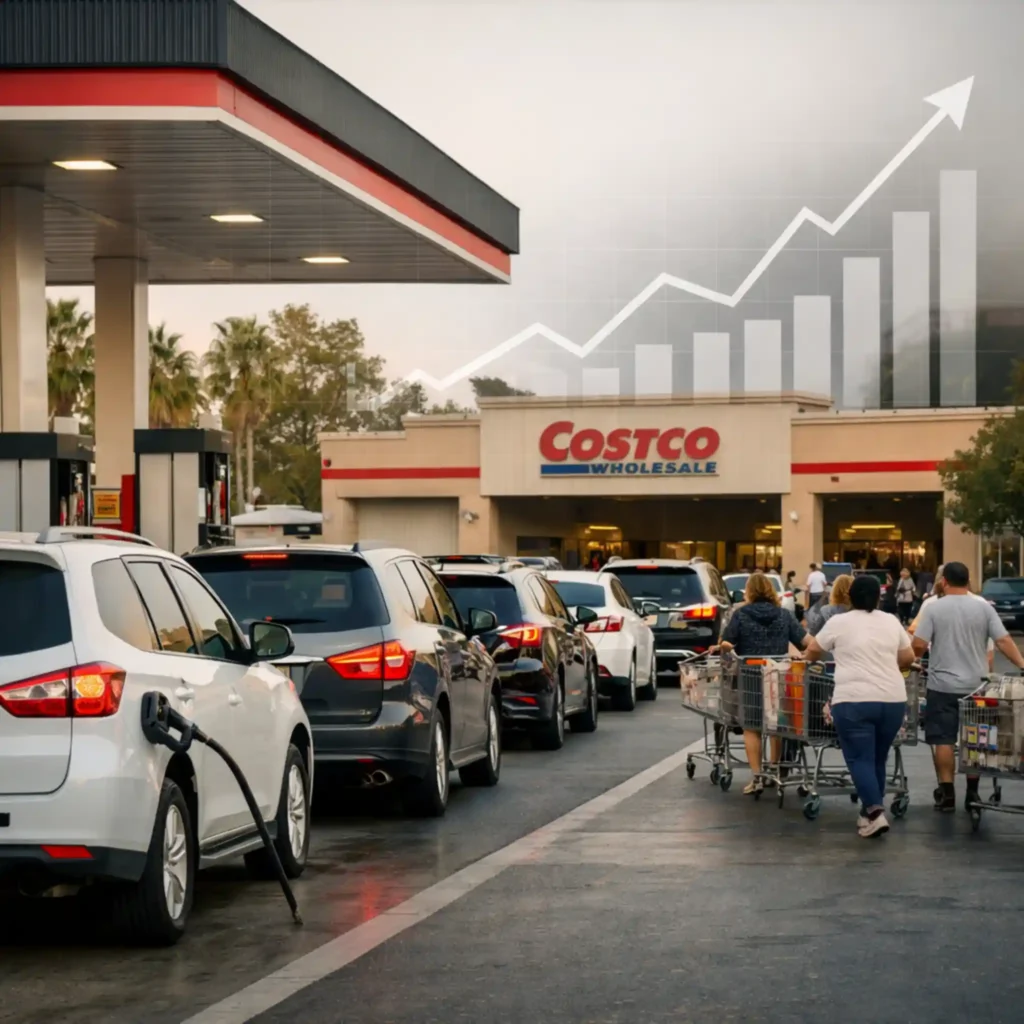

Costco is back in focus as rising fuel prices create an unusual retail tailwind. While much of the market has been rattled by fresh volatility, the warehouse giant has held up better than many expected, and the reason is simple enough for any shopper to understand. When gas prices climb sharply, consumers start looking for the cheapest pump in town. In many parts of the US, that search often ends at Costco. And once drivers pull into a Costco gas station, many of them do not stop at filling the tank. They head inside for groceries, household staples, and bulk-value purchases that feel even more important when budgets are under pressure.
That is the backdrop behind the latest attention on Costco. With average gas prices in California reportedly pushing toward $6 a gallon, investors are looking closely at whether the company is entering another stretch of stronger sales momentum. Costco already has a major presence in the state, where roughly 26% of its sales are tied to California, and it operates gas stations at the majority of its more than 640 US warehouses. That combination matters in a fuel shock. Higher prices at the pump do not just create pain for households; they also strengthen Costco’s value proposition at exactly the moment consumers are most eager to save money.
Why rising gas prices can work in Costco’s favor
Most retailers see rising fuel prices as a headwind because they squeeze consumers and leave less room for discretionary spending. Costco is different. Its fuel business acts more like a traffic engine than a standalone convenience play. Shoppers come for lower gas prices, then add food, cleaning products, paper goods, or other essentials to the trip. That dynamic becomes more powerful in a cost-of-living squeeze, when shoppers are not just browsing for deals but actively changing habits to protect their monthly budgets.
That is why analysts are paying attention to March sales expectations. One Wall Street estimate highlighted in the source material points to roughly 10% sales growth for the month, with potentially even stronger momentum in the months ahead. The logic behind that view is tied directly to consumer behavior. If households are suddenly spending much more each month on gasoline, the value of buying groceries and essentials from a low-price warehouse chain becomes more obvious. Costco does not need shoppers to splurge. It only needs them to keep prioritizing value.
The company’s membership structure adds another layer to the story. Costco’s basic Gold Star membership costs $65 a year, while the Executive tier is $130. That model has long been one of the company’s biggest strengths because recurring membership fees support profitability even when margins on merchandise stay tight. When gas prices surge, the savings at the pump can make that annual fee feel easier to justify. For many households, the membership stops feeling like an optional shopping perk and starts looking like a practical budgeting tool.
There is also history behind this argument. During earlier periods of elevated fuel prices, Costco saw stronger operating momentum as drivers leaned harder into value shopping. That is part of the reason the market has been willing to keep treating Costco as a relative safe haven in a shaky consumer backdrop. The stock’s resilience has stood out at a time when broader indexes have been under pressure, suggesting investors still see Costco as one of the cleaner ways to play defensive retail.
The sales story looks strong, but the stock debate is more complicated
Even with that favorable setup, the bull case is not completely straightforward. A key question hanging over the stock is whether much of this benefit is already reflected in the share price. Costco is not an undiscovered name, and its premium valuation has been part of the debate for a long time. Investors know the company has pricing power, loyal members, and a reputation for steady execution. So the issue now is less about whether higher gas prices help Costco’s business in the short term and more about whether the market has already priced in that boost.
That debate matters because a great business and a great stock entry point are not always the same thing. Costco can continue producing strong store traffic, healthy renewal trends, and better-than-expected monthly sales without necessarily turning into a straight-line momentum trade from here. Some analysts remain cautious for exactly that reason. The upside from rising gas prices is widely recognized, which can limit surprise. Still, that does not take away from the strength of the operating picture. It simply means expectations are high.
For readers watching the company as shoppers rather than shareholders, the bigger takeaway is easier to see. Costco’s model is built for moments like this. It thrives when people become more intentional about where they spend, how often they shop, and which brands they trust for everyday value. The Kirkland label, bulk discounts, and low-margin reputation all become more meaningful when inflation and fuel prices squeeze household cash flow at the same time.
That is why the current setup is drawing so much attention. Rising gas prices are usually framed as a negative economic story, and for many families they still are. But for Costco, they can become a traffic driver, a membership retention tool, and a sales catalyst all at once. The company does not need a booming economy to stay relevant. In many ways, it looks strongest when consumers are forced to become more disciplined. Readers who want to track the latest market pricing and stock moves can follow Costco’s market performance on Yahoo Finance, but the main story is already clear: in a tougher spending environment, Costco’s value-first model is again proving hard to ignore.
If fuel prices remain elevated and California stays at the center of the pressure, Costco may keep seeing exactly the kind of shopper behavior that supports another strong sales stretch. Whether that turns into another major stock breakout is still open to debate, but the business momentum behind the company’s latest spotlight looks real enough to keep both shoppers and investors paying close attention.
You may also like: Burberry Shares Rise to 1,078p as Turnaround Gains Momentum and Entry Point Looks Compelling

Make Swikblog your go-to source on Google for reliable updates, smart insights, and daily trends.