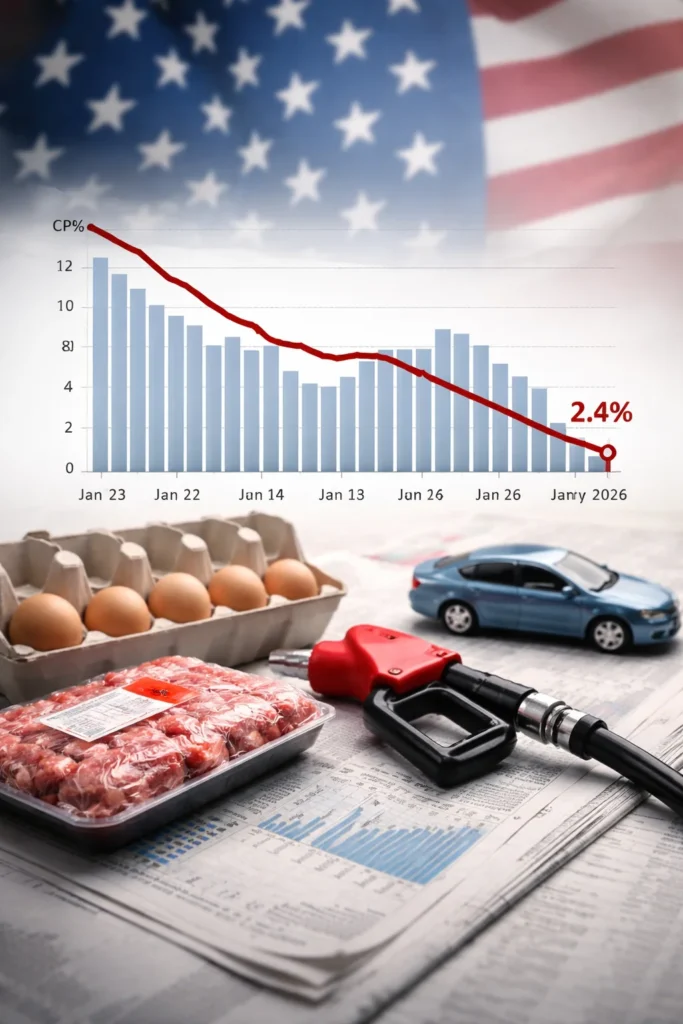

U.S. inflation eased again in January, giving policymakers another encouraging sign that price pressures are gradually cooling. Fresh data released by the U.S. Bureau of Labor Statistics (BLS) showed the Consumer Price Index (CPI) rose 2.4% from a year earlier, down from 2.7% in December. The report suggests inflation continues moving closer to the Federal Reserve’s long-term target, although many Americans are still paying noticeably more for everyday essentials than they were before the recent inflation surge.
The Consumer Price Index is one of the most closely watched measures of inflation because it tracks how prices change across a broad range of goods and services. Investors, businesses and consumers use the report to understand whether inflation is accelerating or slowing, while Federal Reserve officials rely on the data when considering future interest-rate decisions.
January CPI highlights
- Headline CPI: 2.4% year over year (December: 2.7%)
- Core CPI: 2.5% year over year (December: 2.6%)
- Monthly CPI: +0.2%
- Monthly Core CPI: +0.3%
- Energy prices: -1.5% in January
- Used cars and trucks: Nearly -2%
- Apparel: +0.3%
- Shelter: +0.2%, down from December
Official data, historical tables and methodology are available from the U.S. Bureau of Labor Statistics.
Energy and housing provided the biggest relief
Lower energy prices played an important role in slowing overall inflation during January. Falling fuel costs helped offset continued price increases across several service categories, reducing pressure on the headline CPI reading.
Housing costs also continued to cool. Shelter inflation has remained one of the largest contributors to overall inflation over the past few years, so January’s slower monthly increase is another indication that one of the economy’s most persistent inflation drivers is gradually easing.
Used vehicle prices declined again as inventories improved, extending a trend that has reversed much of the rapid price growth experienced during the pandemic.
Everyday expenses remain a challenge
Slower inflation does not mean prices are returning to previous levels. Instead, it means prices are increasing at a slower pace. Many households continue to feel pressure because wages and savings are still adjusting to the higher cost of living.
Food remains one of the most noticeable expenses for consumers. Beef prices were roughly 15% higher than a year ago, while coffee prices increased by around 18%, keeping grocery bills elevated despite broader improvements in inflation.
Consumer confidence has improved compared with the peak inflation period, but many families remain cautious about spending as housing, insurance and other essential costs continue to consume a larger share of household budgets.
Why the Federal Reserve is watching closely
The Federal Reserve paused interest-rate cuts earlier this year and has repeatedly stated that it wants greater confidence inflation is moving sustainably toward its 2% target before making additional policy changes.
Although January’s report supports the broader disinflation trend, policymakers continue to monitor wage growth, consumer spending, employment data and inflation expectations before deciding whether borrowing costs should be reduced.
Quick Facts
- Report: U.S. Consumer Price Index (CPI) – January
- Released by: U.S. Bureau of Labor Statistics (BLS)
- Headline inflation: 2.4% year over year (down from 2.7% in December)
- Core inflation: 2.5% year over year (down from 2.6%)
- Monthly CPI: +0.2%
- Monthly Core CPI: +0.3%
- Biggest declines: Energy prices (-1.5%) and used vehicle prices (nearly -2%)
- Sticky categories: Food, shelter and several service-related costs
- Why it matters: The report will help shape expectations for future Federal Reserve interest-rate decisions.
- Official source: U.S. Bureau of Labor Statistics
Trade policy also remains part of the outlook. Businesses continue tracking tariffs, shipping costs and supply-chain disruptions that could influence prices later this year if global conditions change.
Economists generally avoid drawing conclusions from a single inflation report because monthly data can fluctuate due to seasonal factors and energy prices. Instead, they look for several consecutive months that point in the same direction.
Upcoming Consumer Price Index and Personal Consumption Expenditures (PCE) reports will provide additional evidence on whether inflation continues moving lower or begins to stabilize above the Federal Reserve’s target.
The inflation outlook matters beyond Wall Street. Mortgage rates, auto loans, business investment and household borrowing costs are all influenced by expectations surrounding future Federal Reserve decisions.
Economic news often drives online search activity as people try to understand major financial developments. Recent search trends highlighted in Google Trends showing “Lasted” today across countries demonstrate how quickly public interest shifts when significant economic and global events unfold.

Make Swikblog your go-to source on Google for reliable updates, smart insights, and daily trends.