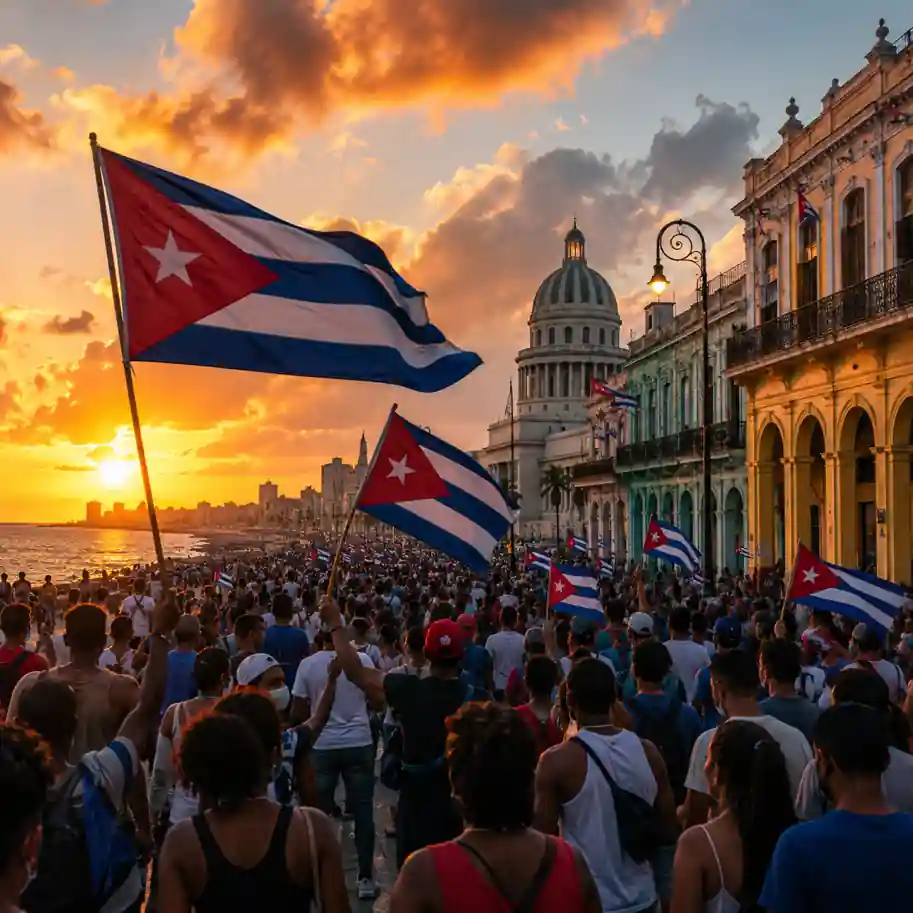

Cuba Independence Day on May 20, 2026, arrives during one of the most tense and uncertain moments the island has faced in decades. What was once mainly remembered as a historical anniversary is now being discussed by many Cubans as a symbol of possible political and social change amid deep economic hardship, blackouts and growing pressure on Miguel Díaz-Canel’s government.
May 20 marks the formal birth of the Republic of Cuba in 1902, when U.S. military occupation officially ended and Tomás Estrada Palma became the country’s first elected president. The Cuban flag was raised over Havana’s Morro Castle while the American flag was lowered, creating one of the most important moments in Cuban republican history. Historical records preserved by the Library of Congress document the ceremony and the transition of power.
According to historical accounts, Cuban independence hero Máximo Gómez reportedly reacted emotionally during the ceremony, saying: “At last we have arrived.” Yet the independence achieved in 1902 came with limits. The Platt Amendment, incorporated into Cuba’s constitution in 1901, allowed Washington to intervene militarily in Cuban affairs, restricted Cuba’s foreign agreements and established the foundation for the U.S. presence at Guantánamo Bay.
That complicated history explains why May 20 still divides opinions today. For many Cubans in exile and opposition movements, the date represents the birth of the modern Cuban republic and national sovereignty despite its imperfections. For the communist government established after Fidel Castro’s revolution in 1959, the republic before the revolution was portrayed as corrupt, unequal and heavily controlled by the United States. As a result, January 1 — the anniversary of the revolution — replaced May 20 as the government’s preferred national symbol.
Why expectations are rising in 2026
This year’s anniversary carries unusual political attention because Cuba is facing a severe economic and energy crisis. Rolling blackouts have affected large parts of the country, with some regions reportedly enduring outages lasting more than 20 hours. Fuel shortages, food inflation and transportation problems have intensified frustration among ordinary Cubans.
The island’s economic problems have also deepened after stronger U.S. sanctions and restrictions imposed in recent months. The pressure has impacted Cuba’s energy imports and financial system while also increasing uncertainty for businesses and foreign investment. Swikblog recently reported on the growing pressure surrounding the country’s energy situation in Cuba’s oil crisis puts 730,000 barrels at risk amid sanctions pressure.
The difficult conditions have triggered another major migration wave as thousands of Cubans continue leaving the island in search of economic opportunities abroad. At the same time, social media and internet access have changed the political environment inside Cuba. Since the large protests of July 2021, online discussions about freedom, reform and political rights have become more visible despite government restrictions.
Read More
Exile groups and political symbolism
Outside Cuba, exile organizations in Miami and other cities have increasingly linked May 20 with hopes for democratic transition. Several groups have publicly discussed plans for a future political opening that would include the release of political prisoners, economic stabilization and free elections.
For many Cuban-Americans, May 20 is not simply a historical anniversary but a reminder of the republic that existed before the communist era. In 2026, that symbolism feels stronger because of the visible strain on Cuba’s economy and institutions.
Meanwhile, Díaz-Canel’s government continues rejecting outside pressure and insists that Cuba’s problems are mainly caused by sanctions and the long-standing U.S. embargo. Officials have repeatedly said that political concessions are not under negotiation.
As Cuba Independence Day 20 May 2026 approaches, the anniversary has become more than a historical remembrance. It now reflects a larger debate about Cuba’s future, its political identity and whether the current crisis could eventually force major change on the island. For millions of Cubans both inside and outside the country, May 20 once again carries the emotional weight of a nation still debating what true independence should mean.

Make Swikblog your go-to source on Google for reliable updates, smart insights, and daily trends.