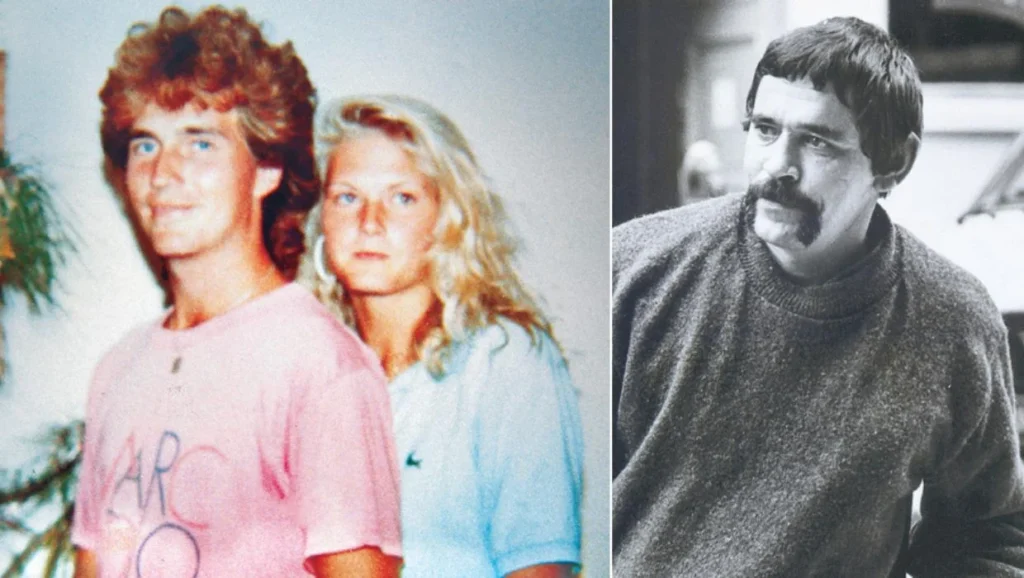

It began with two young tourists vanishing into the Coromandel bush in 1989. Nearly four decades later, the case has taken a dramatic turn that few expected. In a landmark decision, New Zealand’s Supreme Court has quashed the murder convictions of David Tamihere, reopening one of the country’s most controversial criminal cases.
The ruling has not only revived public attention but also raised serious questions about how the case was handled from the beginning. For years, Tamihere maintained his innocence. Now, after 37 years, the court has agreed that something went fundamentally wrong at his trial.
The case centres on Swedish backpackers Sven Urban Höglin, 23, and Heidi Paakkonen, 21, who were last seen alive on April 7, 1989, in Thames, at the edge of the Coromandel Peninsula. What followed was one of New Zealand’s largest land searches, yet only one body was ever found. Paakkonen’s remains have never been discovered.
One body found, decades of questions
At the time of the original trial in 1990, there were no bodies. Prosecutors relied heavily on circumstantial evidence, including witness sightings and statements from prison informants. Tamihere admitted he had stolen the couple’s car and belongings days after they disappeared, but he insisted he had never met them.
That denial did little to stop a conviction. He was found guilty of murdering both tourists and sentenced to life imprisonment.
But in 1991, a year after the trial, a major development changed everything. Höglin’s skeletal remains were discovered by pig hunters in the Wentworth Valley — roughly 70 kilometres away from where police had originally claimed the murders took place.
That discovery should have reshaped the case entirely. Instead, the conviction remained in place, even as the prosecution’s theory began to shift.
The witness who changed everything
One of the most damaging elements of the original trial was testimony from a jailhouse informant, Roberto Conchie Harris. He claimed Tamihere had confessed to killing the tourists while they were both in custody.
That testimony helped secure the conviction. But years later, it collapsed.
In 2017, Harris was found guilty of perjury for lying about key aspects of his evidence. By then, doubts about the case had already been building, but this revelation struck at the heart of the prosecution’s argument.
The Supreme Court would later describe this evidence as not just flawed, but fundamentally unfair. It was “concocted” and highly prejudicial, meaning it likely had a powerful impact on the jury’s decision.
For Tamihere, who had already spent around 20 years in prison before being released on parole in 2010, it marked a turning point in his long fight to clear his name.
A case that no longer matched itself
Alongside the false testimony, the Supreme Court focused on another critical issue — the way the Crown’s case had changed over time.
At trial, the murders were said to have taken place near Crosbies Clearing, deep in bushland north of Thames. But the later discovery of Höglin’s body suggested a completely different location, effectively rewriting the narrative of what happened.
The court described this as a “radical recasting” of the prosecution case. In simple terms, the version of events presented to the jury in 1990 was no longer the version being relied on years later.
That raised serious concerns. If the story had changed so significantly, then key evidence — including witness sightings — needed to be reconsidered in a new light. The Supreme Court said those questions had never been properly tested before a jury.
There were simply too many gaps, inconsistencies and unanswered issues for an appeal court to decide whether Tamihere was guilty beyond reasonable doubt.
Convictions quashed, but not the end
The result was decisive. The Supreme Court quashed the convictions and ordered a retrial, acknowledging that the original trial had been fundamentally unfair.
However, the ruling stops short of declaring Tamihere innocent. Instead, it resets the case — meaning guilt or innocence must be decided again, this time by a properly directed jury.
Whether that retrial actually happens is another question.
The decision now rests with the Crown, which must consider whether it is still possible to prosecute a case that is more than three decades old. Some witnesses have died. Evidence may no longer be available. Memories have inevitably faded.
Legal experts say it will be a difficult call. Even if prosecutors move forward, Tamihere could argue that the passage of time makes a fair trial impossible.
For ongoing updates and wider coverage of the case, readers can follow reporting from NZ Herald and RNZ News.
What remains clear is that the Tamihere case is far from over. After 37 years, it has shifted from a closed conviction to an open question once again — one shaped by missing evidence, a discredited witness, and a justice system now forced to confront its own past decisions.
For the families of the victims, the uncertainty continues. For Tamihere, the fight to clear his name enters a new phase. And for New Zealand, the case stands as a powerful reminder of how fragile even the most serious convictions can be when the foundations beneath them begin to crack.

Make Swikblog your go-to source on Google for reliable updates, smart insights, and daily trends.