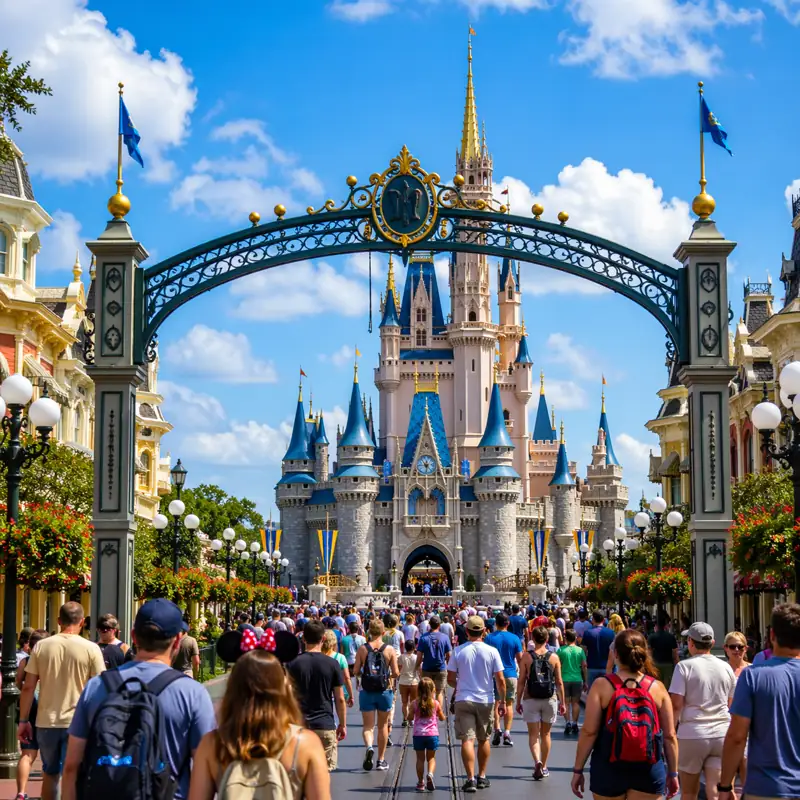

Disney is testing just how much pricing power its theme parks still have. With Walt Disney World now accepting bookings for most of 2027, the company has introduced a familiar message wrapped in a new number: the cheapest dates are still available, but the most popular ones are getting more expensive. The headline figure is hard to ignore. On select peak days, a one-day ticket to Magic Kingdom now climbs to $219, setting a new high for Disney’s flagship Florida park.
That does not mean every guest will suddenly pay that amount. Disney has kept its starting price for a one-day, one-park ticket at $119, which helps preserve the idea that a Disney vacation still has an entry point for more price-conscious families. But the upper end of the range is what stands out, especially because it reflects roughly a 10% jump versus prior peak levels. In practical terms, Disney is widening the gap between low-demand and high-demand travel days, asking its busiest visitors to carry more of the bill.
This matters for more than vacation planners. Disney’s parks business has become one of the company’s most dependable earnings engines, and every pricing decision at Walt Disney World sends a signal about how management views demand, consumer resilience, and the value of the Disney brand. When the company raises prices at Magic Kingdom, it is not simply tweaking admission. It is reinforcing the idea that its most iconic experiences can still command a premium even in a more price-sensitive travel market.
Disney is charging more for timing, not just admission
The latest pricing move is best understood as part of Disney’s broader yield-management strategy. Rather than lifting prices across the board, Disney is leaning harder into date-based pricing. The lower end remains intact, while the top end keeps moving higher. That allows the company to make two arguments at once: budget-conscious guests still have options, and the most desirable travel windows remain worth a premium.
Magic Kingdom, unsurprisingly, remains the most expensive park in the Walt Disney World lineup. It draws the strongest demand because it is the resort’s signature experience and still the park most families associate with a classic Disney trip. Animal Kingdom continues to be the lower-priced option, while EPCOT and Hollywood Studios usually sit between the two depending on seasonality and crowd expectations. Disney also continues to reward longer stays, with multi-day tickets offering a lower daily cost than single-day visits.
One detail travelers should not overlook is timing. Disney has opened bookings for the first 10 months of 2027, but November and December pricing has not yet been posted. Those are often among the priciest periods on the calendar thanks to holiday demand, school breaks, and year-end travel patterns. That means the current $219 figure may not end up being the absolute ceiling once the final two months are released.
For families doing the math, this pricing structure changes how trips get planned. A one-day visit on a peak date now looks materially different from a longer stay spread across lower-cost days. The difference is no longer minor. It can shape decisions around school schedules, hotel stays, dining budgets, and whether extras like skip-the-line access still make sense. Guests who once focused only on which park to visit may now need to think just as carefully about when they go.
New lands, ride upgrades, and a smarter pricing model are reshaping the Disney vacation
Disney’s defense for higher pricing is rooted in investment. The company is not just selling entry into an established park system; it is spending heavily to refresh the product. At Walt Disney World, that includes upcoming additions such as Tropical Americas, which is expected to open in 2027, along with major refurbishment work on existing attractions including Big Thunder Mountain Railroad. These projects are designed to keep the parks feeling current, drive repeat visitation, and strengthen Disney’s hold on families deciding where to spend their vacation dollars.
That reinvestment strategy helps explain why Disney feels comfortable asking more from guests on peak dates. If the company is pouring capital into new themed lands, ride upgrades, and overall guest experience, management can argue that the vacation product itself is improving. From a business perspective, this is a classic premium-brand play: protect the entry price where possible, raise the top end where demand is strongest, and point to ongoing enhancements as proof that the higher price is justified. Disney’s own Walt Disney World ticket page continues to show how deeply date-based pricing is now built into the booking process.
What makes the current picture more nuanced is that Disney is not pushing every vacation cost in the same direction. Around the same period, the company quietly reduced prices for its Lightning Lane Multi Pass, the paid service that helps guests bypass standby lines at select attractions. After hitting a high of $45 earlier in April, the pass dropped to about $35 on some days, with recent park-specific pricing around $26 at EPCOT and $37 at Magic Kingdom.
That move says a lot about how Disney now manages park economics. Admission prices are being used to monetize peak demand well in advance, while add-ons like Lightning Lane can be adjusted more quickly as crowd levels soften. In other words, Disney is not simply charging more for everything. It is segmenting the vacation more carefully, pushing up the headline cost of the busiest dates while lowering optional extras when the company sees room to stimulate in-park spending.
For consumers, the result is a more complicated but more predictable vacation economy. The cheapest way to do Disney is still to book earlier, pick lower-demand dates, and consider multi-day tickets or lower-priced parks. The most expensive way is increasingly obvious too: visit Magic Kingdom on a peak day, add premium conveniences, and travel when everyone else wants to be there. The price difference between those two versions of a Disney trip is only getting wider.
For investors, that widening gap may actually be the point. Disney is showing it can charge different customers very different amounts based on demand, timing, and behavior without abandoning its broad audience altogether. That is valuable at a time when the parks segment remains one of the clearest supports for the wider Disney story. If consumers keep paying up for the busiest dates, the company strengthens its case that its theme parks still have real pricing power. If demand cools, Disney has already shown it can respond with more flexible add-on pricing instead of rushing to cut the core ticket.
The bigger takeaway is that Disney is no longer selling a one-size-fits-all park day. It is selling a layered, dynamic vacation product where timing matters almost as much as destination. That may frustrate some guests, but it also reflects how modern travel pricing now works across airlines, hotels, and major attractions. Disney is simply applying that logic to one of the world’s most recognizable leisure brands. For readers tracking how pricing shifts affect major consumer companies, browse our latest finance and stock market coverage.
You may like BBC Proms 2026 lineup featuring 86 concerts and a major US tribute.

Make Swikblog your go-to source on Google for reliable updates, smart insights, and daily trends.