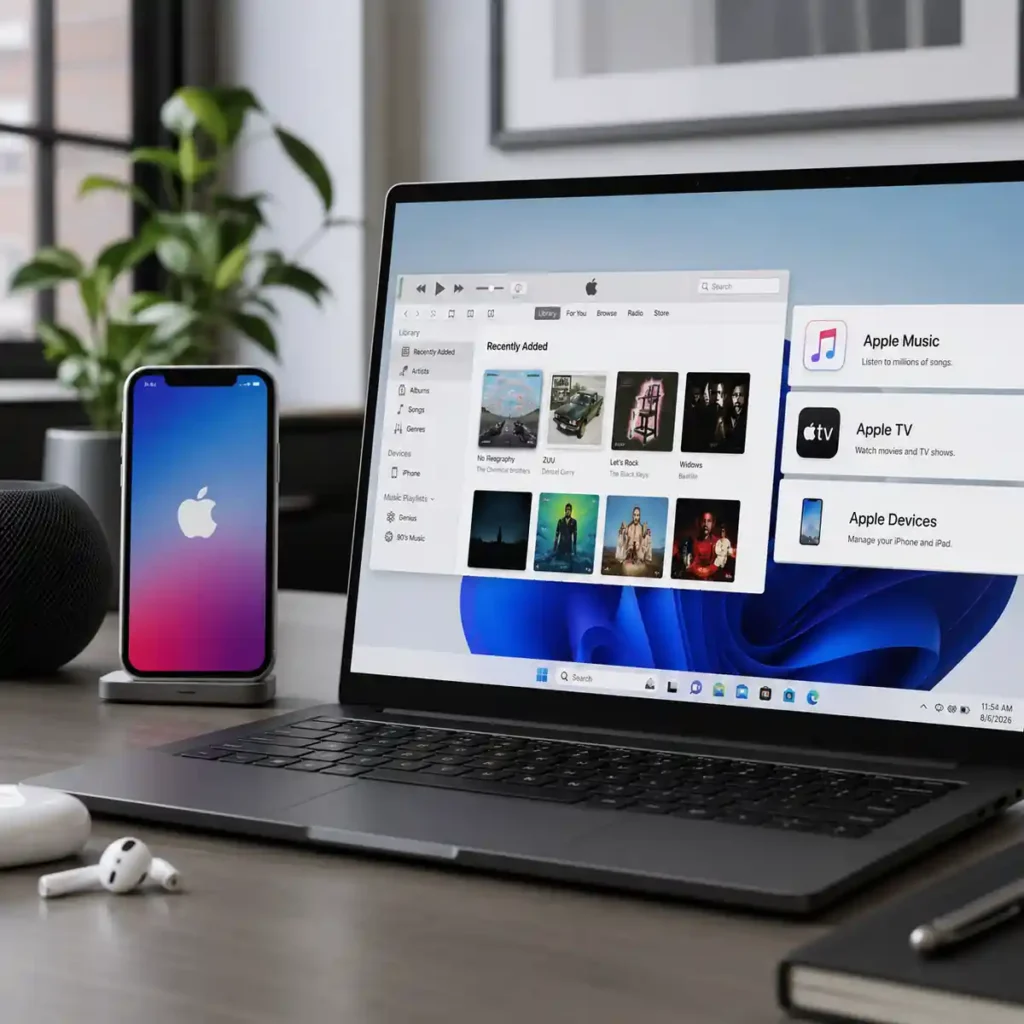

Apple retired iTunes as the all-in-one media hub on modern Macs years ago, but the software is not completely dead in 2026. Apple still supports iTunes for Windows for specific purposes, even as Apple Music, Apple TV and Apple Devices have taken over most of the jobs it once handled.
Apple’s latest guidance confirms that iTunes is still available for Windows. Apple now directs users to Apple Music for music, Apple TV for movies and TV shows, and Apple Devices for updating, backing up, restoring and syncing an iPhone or iPad. Windows users can still use iTunes for podcasts and audiobooks, and the app remains available through the Microsoft Store.
That matters for people with old music libraries, purchased songs, imported CDs, podcasts, audiobooks or an iPhone they manage from a PC. Whether you still need iTunes depends largely on your computer and what you want to do.
Yes, Apple still supports iTunes for Windows
Apple’s current Windows app guidance confirms that iTunes remains part of its Windows software lineup, even as most of its former functions have moved into separate applications.
Apple Music now handles music libraries and iTunes Store music purchases, Apple TV handles movies and television content, and Apple Devices manages connected iPhones and iPads.
iTunes, however, still has a specific role. Windows users can continue to use it for podcasts and audiobooks, and the application remains available through the Microsoft Store.
Apple has therefore not simply switched off iTunes everywhere. Instead, it has gradually separated the software’s major features into dedicated applications while keeping iTunes available for functions that have not fully moved elsewhere.
What replaced iTunes on Windows?
For years, Windows users could open a single application to manage music, movies, purchases, backups and connected Apple devices. Apple’s modern setup spreads those jobs across several apps.
Apple Music is now the main Windows app for listening to and managing music. It can work with music from an existing iTunes library, including songs purchased from the iTunes Store.
Apple TV manages movies and television shows from a user’s library and Apple’s wider video ecosystem.
Apple Devices is Apple’s dedicated Windows application for manually updating, backing up, restoring, managing and syncing an iPhone or iPad.
iTunes remains useful for podcasts and audiobooks. That narrower role explains why Apple continues to maintain and distribute the software even though most of its old functions have moved to newer apps.
Can you still sync an iPhone with iTunes?
Apple’s current Windows setup puts Apple Devices at the centre of iPhone and iPad management rather than iTunes.
If you are setting up a Windows PC today, Apple Devices is the application to use for local backups, restores, software updates and manual syncing. Older Windows configurations may still use iTunes-based workflows, but Apple’s newer software is now the preferred option.
Users moving from an older iTunes setup should be careful when changing library or syncing settings, particularly if important media exists only on one computer or device.
Keeping a separate backup of valuable local music, photos and other files before reorganising an old iTunes library remains a sensible precaution.
What happened to iTunes on Mac?
Apple began breaking up iTunes on the Mac with macOS Catalina in 2019. Music, television and podcasts moved into dedicated apps, while management of connected iPhones and iPads moved into Finder.
On macOS Catalina or later, users can select a connected iPhone or iPad in Finder to manage and sync content. Macs running macOS Mojave or earlier can still use the traditional iTunes workflow.
This difference remains important when following instructions online. Advice written for an older Mac or Windows installation may no longer apply to a modern computer.
The iTunes Store is still around
Retiring the main iTunes application on modern Macs did not mean Apple eliminated everything carrying the iTunes name. The iTunes Store remains part of Apple’s ecosystem, allowing users in supported regions to purchase music rather than relying entirely on streaming.
Existing purchases also remain important for people who built large digital music collections over many years. Apple Music for Windows can work with music from an existing iTunes library, including iTunes Store purchases, helping longtime users move to Apple’s newer software without abandoning their collections.
Apple’s modern music experience is very different from the original download-focused iTunes era. Features such as Apple Music Replay and personalised listening statistics show how strongly the company’s strategy has shifted toward streaming, cloud libraries and subscription services.
Telegram Restored to Apple App Store After Brief Removal
Apple Cash Down: Users Report Missing Money and Service Issues
What about iTunes Match?
iTunes Match is another surviving part of Apple’s older music ecosystem. It can still be useful for people with personal collections built from CDs or other locally stored music.
Apple’s cloud music library supports large personal collections, with eligible libraries containing up to 100,000 songs and iTunes Store purchases not counting toward that limit. Songs Apple can match with its catalogue may be available in 256 kbps DRM-free AAC quality, while eligible unmatched tracks can be uploaded.
That gives longtime users another reason not to treat the disappearance of the original all-in-one iTunes experience as the disappearance of their personal music libraries.
Why iTunes still matters in 2026
Apple’s entertainment business has changed dramatically since iTunes was its central media application. Streaming subscriptions, cloud syncing and dedicated apps now perform most of the jobs that once required a single piece of desktop software.
Yet the old and new ecosystems continue to overlap. That was evident during an Apple Music, Apple TV, App Store and iTunes Store outage, when older and newer Apple services appeared together as part of the same wider ecosystem.
As of the August 18, 2026 update, the simplest rule for Windows users remains clear: use Apple Music for music, Apple TV for movies and TV shows, Apple Devices for iPhone and iPad management, and iTunes when you need its remaining podcast or audiobook functions.
On a current Mac, Finder and Apple’s dedicated media apps have replaced the old iTunes workflow. On Windows, however, iTunes remains alive in a much smaller but still officially supported role.

Make Swikblog your go-to source on Google for reliable updates, smart insights, and daily trends.