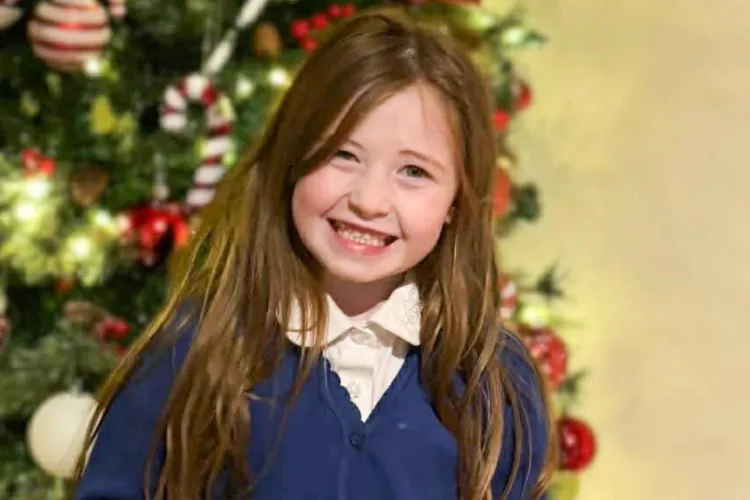

More than £14,000 has been raised in just 24 hours for the family of a seven-year-old girl found dead after going missing in Doncaster, as the case continues to draw national attention and deepen concerns about childcare provision for children with complex needs. The death of Nyla May Bradshaw, an autistic and non-verbal child from Skellow, has become a widely shared story not only because of the speed of the public response, but because it has opened a wider debate about whether vulnerable children are receiving the specialist care they need when school support is unavailable.
Nyla was reported missing on Monday morning while in the care of a new childminder during the Easter break. She was later found in a pond at Owston Hall golf course and died at the scene. South Yorkshire Police said there were no suspicious circumstances, but the circumstances surrounding her disappearance have left a grieving family at the centre of a broader conversation about safety, support and the limits of mainstream childcare settings for children who require constant supervision.
The story is trending because it carries both immediate heartbreak and wider public significance. On one level, it is the devastating loss of a young girl described by those close to her as full of light and energy. On another, it is a stark reminder of the difficult choices many families face when caring for autistic children or children with high support needs during school holidays. For many parents, the question is not simply whether childcare is available, but whether suitable childcare exists at all.
That distinction has become central to the reaction. Nyla’s usual childminder was unavailable, and her family made alternative arrangements at short notice. Friends of the family have said Nyla was known to run off and needed close one-to-one attention to remain safe. For parents in similar situations, that detail has resonated immediately. It reflects a reality in which childcare can look adequate on paper but still fall short of what a particular child needs in practice.
A local tragedy that has reopened a national issue
The fundraising campaign created in Nyla’s memory quickly gathered momentum, with donations pouring in from local residents, strangers and families with autistic children of their own. The speed of that support reflects deep sympathy for her parents, but it also shows how widely the underlying issues are understood. Across the UK, many parents of children with complex needs say they spend school breaks piecing together care through personal recommendations, informal networks and limited specialist options.
Campaigners and autism charities have long argued that the childcare system is not designed with these families in mind. A child may receive one-to-one support during term time through school or an Education, Health and Care Plan, only for that structure to disappear outside classroom hours. Parents then have to bridge the gap themselves, often while trying to remain in work. In those moments, the difference between available care and genuinely appropriate care can become critical.
Nyla’s death has sharpened attention on that gap. The discussion is no longer just about whether a provider is registered or experienced in a general sense. Families are asking whether carers and settings are properly equipped to handle children who are non-verbal, prone to wandering, sensitive to changes in routine or unable to communicate danger in conventional ways. Those are not minor adjustments. For some children, they are the core of safe care.
This is also why the story has travelled so quickly beyond Doncaster. Readers are not only reacting to a tragic headline. They are recognising a broader pressure point in modern family life, especially for disabled children and their parents. Childcare debates often focus on cost and availability, but this case has pushed suitability and specialist support into the spotlight. For families affected by autism, that question is often the most important one of all.
The issue of wandering is especially relevant. Autism organisations have repeatedly warned that some autistic children are at heightened risk of leaving safe environments unexpectedly, often with little awareness of surrounding danger. That can make places such as parks, roadsides and bodies of water particularly hazardous. The National Autistic Society has highlighted the need for better understanding of autistic children’s safety risks, but many families say awareness alone does not solve the problem if specialist childcare remains inconsistent or hard to access.
Why the childcare debate is growing now
Part of what gives this story such force is how ordinary the setting feels. It began with a school holiday, a change in routine and a temporary childcare arrangement, all familiar circumstances for working parents. There was nothing unusual about the pressure that led to those decisions. That is precisely why the case has struck such a chord. It shows how quickly an everyday challenge can turn into a catastrophe when support is stretched and a child’s needs are highly specific.
The public response has also been shaped by the sense that families like Nyla’s are often left to carry disproportionate responsibility. Local authorities, schools, health services and childcare systems may each offer some form of support, but parents frequently say those systems do not join up in a way that matches real life. When school is closed and the usual arrangement falls through, the burden of finding safe care lands squarely on the family. For children with complex needs, that burden can be immense.
As official processes continue, there will be scrutiny of safeguarding, training and the availability of appropriate SEND childcare in the area. But the questions raised by Nyla’s death are unlikely to remain confined to one town or one case. Campaigners are already using this moment to call for stronger, more specialist provision beyond school hours, arguing that children who require one-to-one support in term time do not stop needing it during holidays. That point has gained new urgency in the wake of this tragedy.
For Nyla’s family, the attention now surrounding the story cannot lessen the scale of their loss. What the donations and messages of support do show, however, is that the public sees more than one family’s grief in this case. Many see a warning about the fragility of a system that still leaves too many parents navigating risk on their own. Nyla is being remembered as a deeply loved little girl whose presence touched many lives, and the response to her death suggests that her story has also become part of a much larger reckoning over how safely children with the greatest needs are cared for when routine support falls away.
You may like: Jonathan Tortoise 193 Death Rumor Truth

Make Swikblog your go-to source on Google for reliable updates, smart insights, and daily trends.