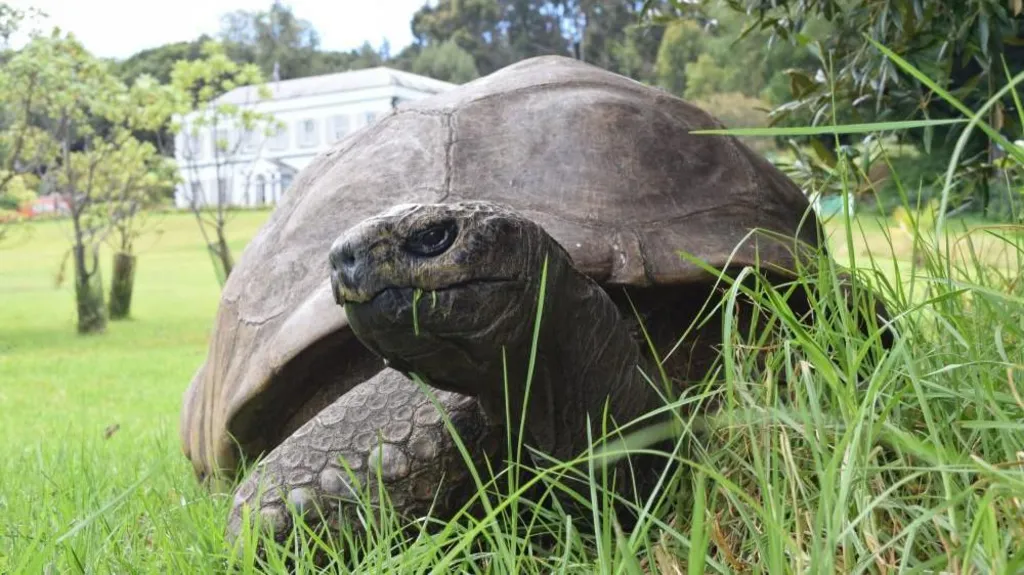

For a few dramatic hours, the world believed it had lost a living piece of history.
Jonathan, the world’s oldest known land animal, was suddenly reported dead at the remarkable age of 193. The news spread fast. Social media filled with tributes. Headlines appeared across major platforms. For many, it felt like the end of an era.
After all, Jonathan is no ordinary animal. Believed to have been born around 1832, he has lived through nearly two centuries of human history, from the reign of Queen Victoria to the modern digital age. The idea that such a creature had quietly passed away struck an emotional chord across the globe.
But just as quickly as the story spread, the truth emerged—and it completely changed everything.
The viral death claim that fooled millions
The confusion began with a social media post from an account claiming to be Jonathan’s longtime veterinarian, Joe Hollins. The message said the tortoise had “passed away peacefully” on the island of St Helena, describing him as a “gentle giant” who had lived through wars, empires and generations.
The wording was convincing. It sounded personal, emotional and authoritative. Within hours, the claim was picked up and amplified, turning into global breaking news.
But there was one major problem—the account was fake.
Shortly after the rumor gained traction, officials stepped in to clarify the situation. A spokesperson for the Friends of the British Overseas Territories confirmed that the report was false. They also revealed that the real Joe Hollins does not even have an account on X (formerly Twitter).
To remove any doubt, the Governor of St Helena personally checked on Jonathan and confirmed that he was alive and well.
What started as a heartbreaking farewell quickly turned into one of the internet’s most striking examples of how misinformation can spread faster than the truth.
A life that spans centuries
Part of what made the story so believable is Jonathan’s incredible age. Experts estimate he hatched around 1832. A photograph taken in 1882 already showed him fully grown, suggesting he was at least 50 years old at the time.
He has spent most of his life on St Helena, a remote island in the South Atlantic, living on the grounds of Plantation House, the official residence of the island’s governor.
Jonathan is believed to have lived through the reigns of eight British monarchs. In 1947, he even met the future Queen Elizabeth II during her visit to the island, along with King George VI.
More recently, in 2024, he was presented with a Guinness World Record certificate recognizing him as the oldest known living land animal. His longevity has made him a global icon, attracting attention far beyond the small island he calls home.
For official confirmation of his record, Guinness continues to list him as the oldest living land animal.
Still going strong at 193
Despite his age, Jonathan continues to live a relatively calm and content life. According to his real-life veterinarian, he has lost his sense of smell and is almost blind, but he still enjoys his daily routine.
He is hand-fed and particularly fond of bananas, though caretakers say they can sometimes stick in his mouth. His diet also includes cabbage, cucumber, carrots, apples and seasonal fruits. Lettuce hearts remain a favorite, even if they are not the most nutritious option.
Those small, everyday details are part of what makes Jonathan so relatable to people around the world. He is not just a record-holder. He is a living, breathing reminder of time itself.
How fake news created global panic
This incident highlights a growing problem in today’s fast-moving digital world. A single fake post, designed to look credible, managed to convince thousands of people—and even trigger media coverage—before the truth caught up.
Reports suggest the fake account may have been linked to a scam operation, showing how misinformation is often used to gain attention or exploit viral trends.
The speed of the spread is what made this story particularly striking. Emotional headlines travel faster than verified facts, especially when they involve something as rare and fascinating as the world’s oldest animal.
People didn’t just read the story—they reacted to it. They shared it, commented on it, and mourned a creature many have never seen in person. That emotional connection is exactly what fuels viral misinformation.
By the time the correction arrived, the original claim had already circled the globe.
The truth leaves a different kind of impact
In the end, the story didn’t become about loss—it became about resilience.
Jonathan is still alive, still resting in the sun on St Helena, still quietly holding a place in history that no other land animal can match. The panic has passed, but the fascination with his life remains stronger than ever.
And perhaps that is what makes this story so powerful. In a world obsessed with speed, updates and breaking news, Jonathan represents the opposite. He moves slowly. He lives quietly. And yet, he continues to capture global attention without saying a single word.
For now, the world’s oldest land animal is still here—and that might be the most remarkable headline of all.

Make Swikblog your go-to source on Google for reliable updates, smart insights, and daily trends.