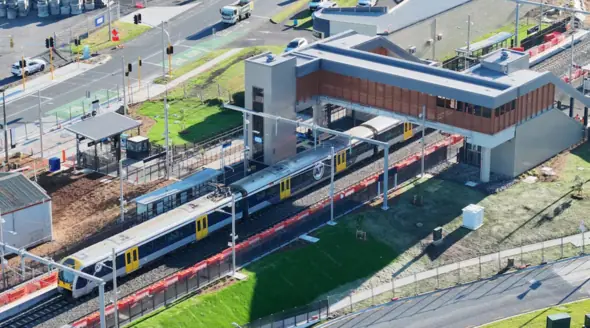

Passenger trains are returning to Drury and Paerātā after 54 years, following the official opening of two new railway stations in South Auckland on Saturday, August 1.
Rail Minister Winston Peters and Transport Minister Chris Bishop opened the facilities ahead of regular passenger services beginning on Sunday, August 2. The development reconnects communities that have not had scheduled passenger stops since their original stations closed in 1972.
The new stops will serve Drury, Paerātā, Franklin and surrounding growth areas, giving more residents direct access to Auckland’s electrified rail network.
First train times for Drury and Paerātā
The first passenger service will leave Pukekohe at 6.11am on Sunday. It is scheduled to reach Paerātā at 6.17am, Drury at 6.25am and central Auckland at 7.24am.
Weekday peak trains will stop at both locations every 10 minutes from Monday. Weekend schedules and planned maintenance may vary, so passengers should confirm their journey using the official Auckland Transport timetable information.
Parking, platforms and bus connections
Each facility has two platforms, 350 car parks and local bus connections. The combined 700 parking spaces will provide another option for commuters who previously travelled to Papakura or Pukekohe before boarding a train.
Two new bus services also begin on Sunday, connecting Paerātā Rise and Ramarama with the railway. These feeder routes extend the benefits beyond people living within walking distance of the stations.
Frequency alone will not determine long-term usage. Reliable transfers, available parking and affordable fares will influence whether residents regularly choose public transport. That affordability question is already part of the debate surrounding a proposed public transport fare cap and its estimated cost.
Why passenger rail is returning after 54 years
The original Drury and Paerātā stations closed in 1972. Their replacements have arrived as southern Auckland prepares for major residential and commercial development.
Officials expect approximately 130,000 additional people to live in this part of Auckland over the coming decades. Peters said infrastructure should be delivered before growth rather than being added years after new communities are established.
Electrification of the line to Pukekohe allows electric trains to operate along the full southern route. It removes the former requirement for passengers to transfer between electric and diesel services at Papakura.
How the stations fit Auckland’s wider rail upgrade
Drury and Paerātā are among the final elements of a recent NZ$2.4 billion government investment in Auckland rail. Peters said more than NZ$500 million had been directed toward bringing the network up to standard, increasing capacity and enabling more frequent services.
The Auckland Rail Network Rebuild has been completed ahead of the City Rail Link opening. Level crossings are being replaced to support additional trains, while the Third Main Line provides greater separation between freight and passenger movements.
New infrastructure must still be supported by reliable operations. An earlier system failure across Auckland’s rail network demonstrated how signalling problems and unavailable travel information can disrupt thousands of journeys even when the physical network is in place.
Auckland Lantern Festival 2026: Free Public Transport and Train Updates
KiwiRail Director Paid NZ$44,630 Despite Conflicts and Missed Agenda Items
What changes next for South Auckland?
Drury and Paerātā are the first two of three new stations planned between Papakura and Pukekohe. Ngākōroa is scheduled to open in 2027, extending rail access to developing communities west of the existing corridor.
For current residents, the immediate effect is a closer boarding point, 10-minute peak services and new bus connections. Over time, the investment could ease demand at neighbouring park-and-ride facilities and provide an alternative to car-only commuting.
The practical test will be whether train reliability, bus coordination and station capacity keep pace as the population grows. Sunday’s first service begins that next phase for South Auckland’s transport network.

Make Swikblog your go-to source on Google for reliable updates, smart insights, and daily trends.