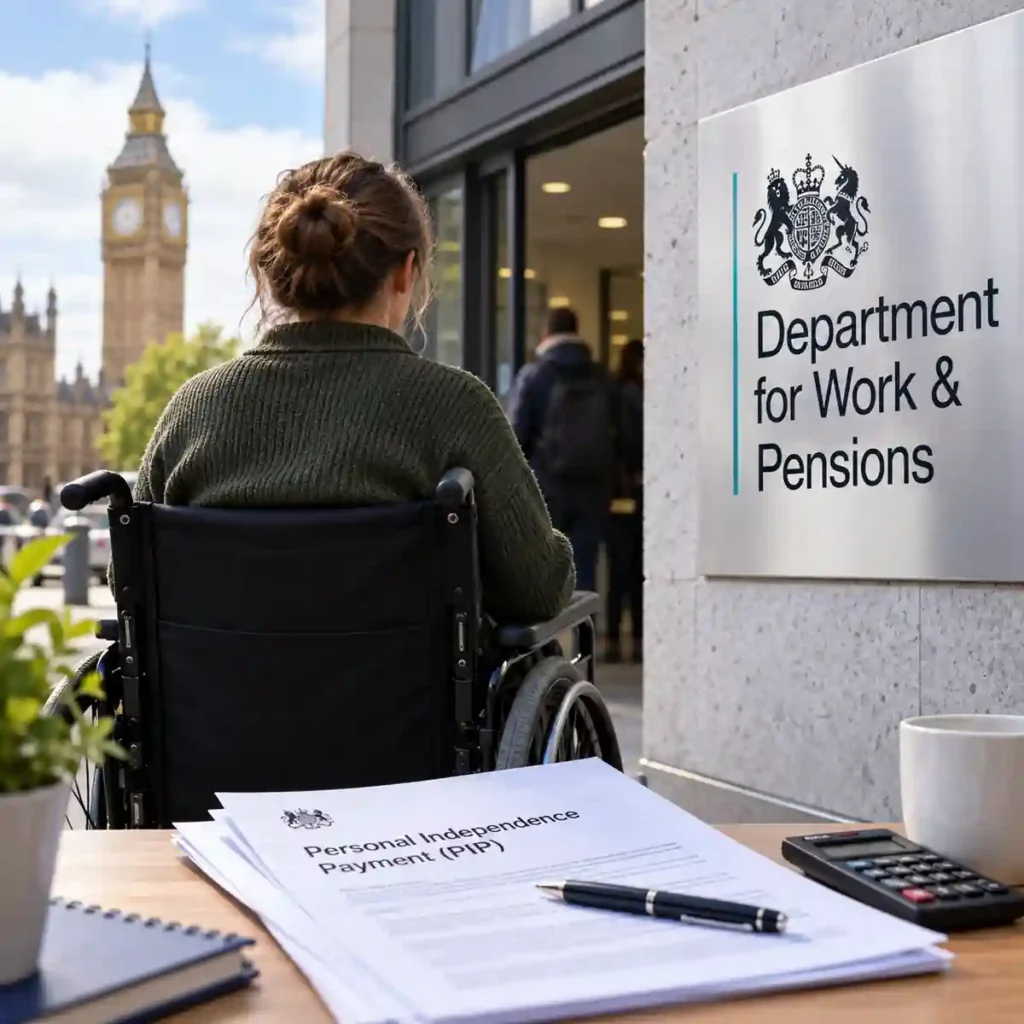

LONDON — Department for Work and Pensions figures have put fresh attention on 12 broad medical condition groups with some of the highest rates of long-term Personal Independence Payment (PIP) claims, as thousands of households navigate new disability benefit review periods introduced in 2026.
Visual disease leads the list, with 68% of claimants receiving PIP for five years or longer. Psychiatric disorders have the largest number of long-term claimants, at 617,281. Across the 12 groups, 1,804,025 people have received PIP for at least five years out of 3,926,015 claimants represented in the figures.
Full list of 12 PIP condition groups
Here are the long-term claimant numbers and percentages highlighted in the data:
- Visual disease: 40,809 of 60,360 — 68%
- Neurological disease: 273,628 of 494,817 — 55%
- Hearing disorders: 22,317 of 41,155 — 54%
- Musculoskeletal disease (general): 398,534 of 740,225 — 54%
- Respiratory disease: 71,941 of 141,072 — 51%
- Musculoskeletal disease (regional): 220,169 of 469,641 — 47%
- Skin disease: 11,936 of 26,676 — 45%
- Endocrine disease: 22,297 of 51,089 — 44%
- Cardiovascular disease: 42,925 of 102,889 — 42%
- Psychiatric disorders: 617,281 of 1,523,811 — 41%
- Gastrointestinal disease: 13,121 of 38,987 — 34%
- Malignant disease: 32,044 of 127,423 — 25%
These are broad disability categories rather than 12 specific diagnoses. A high percentage also does not necessarily mean a category has the most claimants: psychiatric disorders, for example, have a lower percentage than visual disease but substantially more people receiving PIP long term.
Five years on PIP does not necessarily mean a five-year award
A crucial distinction is that someone recorded as receiving PIP for five years or longer has not necessarily held one five-year award. They may have remained entitled through reviews or subsequent award decisions.
Likewise, the statistics should not be treated as a list of diagnoses that guarantee PIP. Entitlement depends on the effect of a claimant’s physical or mental health condition on specific daily living and mobility activities.
The DWP’s official PIP statistics provide further information on claimants, award types, conditions and review outcomes.
10-year light-touch PIP reviews
At the longest end of the system are ongoing awards. These have no fixed end date and are normally subject to a light-touch review at the 10-year point.
They are generally used where a claimant’s needs are unlikely to improve, including circumstances involving severe or stable long-term needs. Most PIP recipients who reach State Pension age are also generally moved to ongoing awards.
The 10-year process uses the shorter AR2 light-touch review form. An ongoing award can still be reviewed, so it should not be interpreted as a lifetime guarantee that the rate of PIP will never change.
UK Immigration Figures 2026: Asylum, Small Boats and Latest Visa Data
PIP review periods changed in 2026
The figures are particularly relevant now because review periods have been extended for many claimants.
Since April 2026, most new awards for people aged 25 or over are intended to last four years, with a review after three years. Following a successful review, subsequent awards are generally intended to run for six years with another review after five years.
Changes for the existing caseload began on June 16, 2026. Different review periods can still be used where individual circumstances justify them, including 10-year light-touch arrangements.
The move also addresses pressure on the review system. Government evidence considered in 2026 showed around 40,000 award-review invitations a month, while 72% of reviews in the analysis resulted in no change to the award.
How much PIP claimants can receive
PIP consists of daily living and mobility components, each available at standard or enhanced rates. For 2026/27, daily living pays £76.70 or £114.60 per week, while mobility pays £30.30 or £80 per week.
A claimant receiving both enhanced components can therefore receive £194.60 a week. Payment level and award duration are separate decisions — receiving the highest payment does not automatically result in the longest award.
New applicants should also distinguish award duration from processing time. The latest information on PIP claim waiting times and delays provides additional context for people waiting for a decision.
Claimants should check their individual award letter
The most important information for an existing claimant is contained in their own PIP decision letter, including the components awarded, payment rate, award period and any planned review.
A review can leave an award unchanged, increase it, reduce it or end entitlement. Claimants who disagree with a decision can normally request a Mandatory Reconsideration and may later have the option of appealing.
PIP recipients may separately be following changes around DWP bank monitoring rules for benefit claimants, but those measures are distinct from the health and functional criteria used to determine PIP.
For the 12 condition groups, the figures provide evidence of where long-term PIP receipt is most common. They do not provide an automatic route to a maximum-length award: each claimant’s functional needs and expected changes remain central to the DWP decision.

Make Swikblog your go-to source on Google for reliable updates, smart insights, and daily trends.