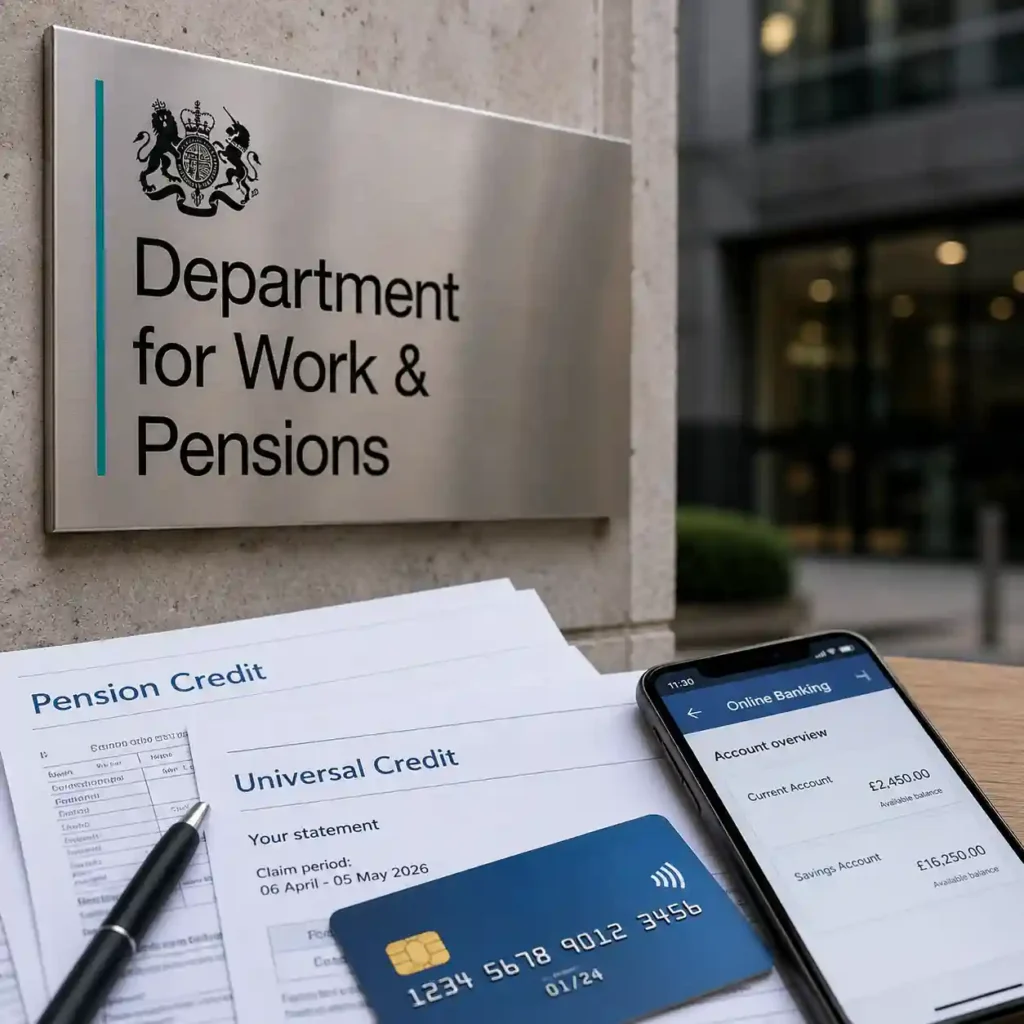

Millions of people receiving DWP benefits could be affected by new bank-checking powers, after the Department for Work and Pensions published guidance explaining how its Eligibility Verification system will work. The first phase is expected to focus on Universal Credit, Pension Credit and Employment and Support Allowance, making the rules important for both working-age claimants and older people on low incomes.
The powers are aimed at spotting possible benefit overpayments earlier, especially where savings, residency or other eligibility conditions may no longer match a claim. But the guidance also draws a clear line around privacy: banks will not be allowed to send the DWP full statements, transaction histories or details of what people are buying.
What the new DWP bank checks are
The system is known as the Eligibility Verification Measure, or EVM. It allows the DWP to send an Eligibility Verification Notice to a bank or financial institution, asking it to check accounts against specific benefit-related indicators.
The official DWP Code of Practice on Eligibility Verification Notices says the measure is intended to support lawful and proportionate checks where information may help identify incorrect benefit payments.
In practical terms, this means the bank carries out the check inside its own systems. The DWP does not get open access to a claimant’s online banking account.
Which benefits are included first?
The initial rollout is expected to cover:
- Universal Credit
- Pension Credit
- Employment and Support Allowance
These benefits are being prioritised because entitlement can depend on savings, income, residency rules or changes in personal circumstances. Pension Credit is especially important because many older claimants may have joint accounts, savings built up over time, or money moving between family members for care and household support.
What banks may be asked to flag
The DWP may ask banks to look for accounts that match defined eligibility indicators. One example is capital. For Universal Credit, savings above £16,000 can normally affect entitlement, so an account appearing to exceed that level could be flagged.
Another example is time spent outside the UK. If a benefit has rules about how long someone can be abroad, a bank may be asked to identify signs that an account has been accessed from outside the UK for longer than the rules usually allow.
These indicators do not prove fraud by themselves. They are signals that may lead to further checks.
What information could be sent to the DWP?
If an account matches an eligibility indicator, the bank may provide limited details. That could include account information, the name linked to the account, date of birth, and an explanation of how the account met the indicator.
For example, the response may show that an account appeared to hold savings above a specified threshold, or that it appeared to be accessed repeatedly from outside the UK.
This is different from handing over a full bank statement. The aim is to identify a possible eligibility issue, not to create a detailed picture of someone’s private spending.
What banks cannot share
The guidance is clear that financial institutions cannot provide transaction information under this power. That means the DWP should not receive details of purchases, card payments, cash withdrawals, subscriptions or where a claimant shops.
Banks also cannot share:
- full transaction histories;
- spending patterns;
- financial statements;
- details of individual purchases;
- special category data, including health, religion, ethnicity or political opinions.
The DWP also cannot ask a bank to search for one specific claimant by name. Instead, banks must apply the eligibility indicators set out in the notice and only return limited information where an account matches.
Can benefits be stopped automatically?
No. A bank flag is not the same as a benefit decision. The DWP guidance says decisions on entitlement will not be made automatically from this information alone.
That matters because there may be legitimate explanations for a flagged account. Savings may be temporary, jointly held, already reported, disregarded under benefit rules, or connected to another person in the household.
If the DWP needs more information, the claimant may be contacted and asked to provide evidence. Ignoring that contact could create problems, but receiving a query does not automatically mean someone has committed fraud.
Why the Government is introducing the checks
The DWP says the powers are part of a wider effort to reduce fraud and error in the welfare system. The department has said benefit overpayments linked to fraud and error cost billions of pounds each year, and that earlier checks could stop some people building up large debts that later have to be repaid.
The policy will still be closely watched by privacy campaigners, banks and claimant groups because it creates a new route for financial information to be used in benefit checks. The strength of the safeguards, and how accurately banks apply the indicators, will be central to public trust.
How the rollout will happen
The DWP has said the system will begin with a Test and Learn phase involving a limited number of financial institutions before any wider expansion.
During that phase, the department is expected to assess whether the process is accurate, whether data is useful, and whether safeguards are working properly. That testing stage is important because inaccurate matches could cause unnecessary stress for claimants who have done nothing wrong.
Read More
What pensioners and claimants should do now
People receiving Universal Credit, Pension Credit or ESA should make sure their claim details are up to date. That includes reporting changes in savings, income, household circumstances, living arrangements and travel abroad where the rules require it.
For Pension Credit recipients, the key message is not to assume a bank flag means entitlement is wrong. Pension Credit rules are different from Universal Credit rules, and older people may have more complex household or savings arrangements.
For wider household finance updates, readers can also follow related coverage of government payment and support measures, as changes to public payments can affect how families plan their budgets.
The practical takeaway is that the new DWP powers are targeted checks, not open-ended surveillance of everyday spending. Claimants should keep records, report changes on time and respond carefully if the DWP asks for evidence.

Make Swikblog your go-to source on Google for reliable updates, smart insights, and daily trends.