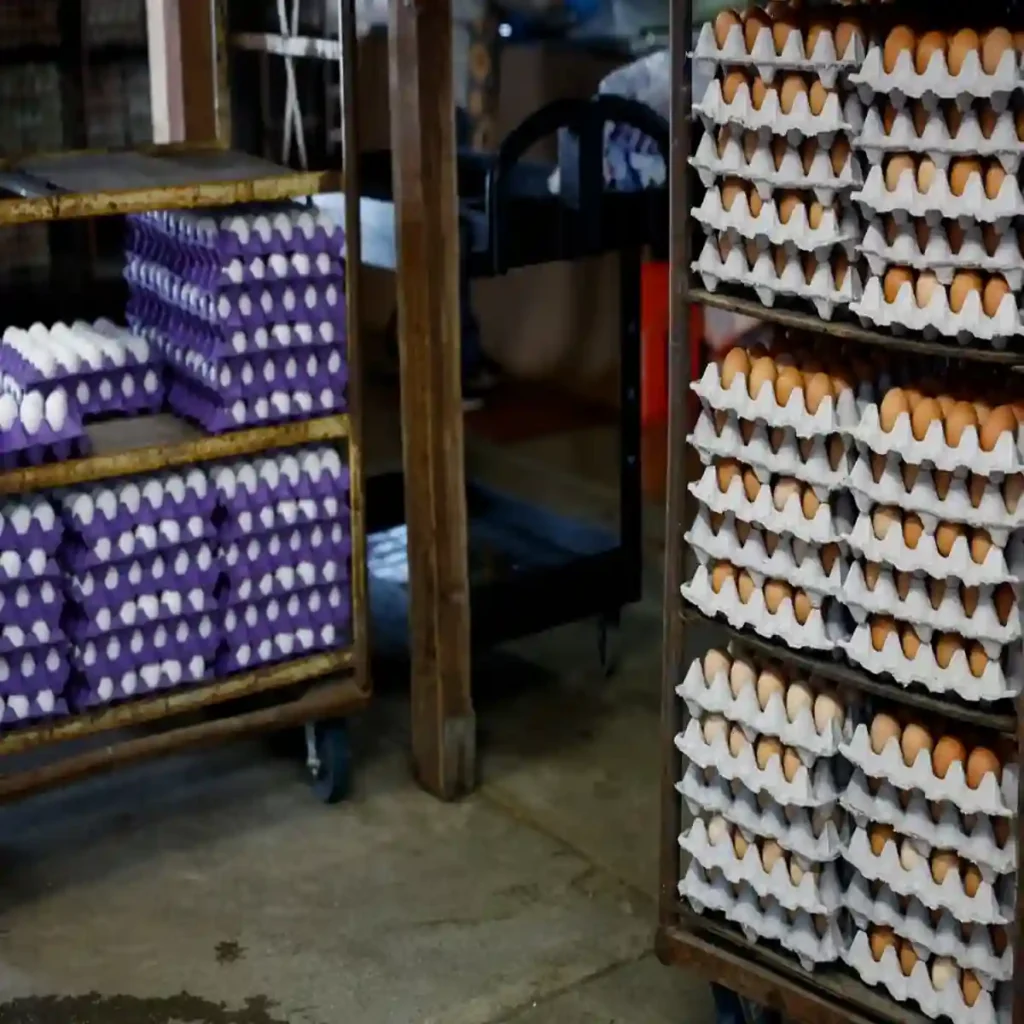

Update: August 18, 2026 — Nearly 19.1 million eggs remain under recall after federal investigators linked shell eggs from Midwest Poultry Services to a multistate Salmonella Enteritidis outbreak. The FDA continues to list the investigation as ongoing, with 98 confirmed illnesses across 17 states, 26 hospitalizations and no reported deaths.
The recall covers 1,589,577 dozen white shell eggs and brown cage-free shell eggs produced and distributed from Texas farms. Although the recalled cartons carried sell-by or best-by dates only through August 17, 2026, consumers are still being urged to check refrigerators because affected eggs may remain in homes, restaurants or businesses.
Latest FDA update on the egg recall
The FDA’s investigation remains open. Its latest outbreak case count continues to show 98 illnesses, 26 hospitalizations and zero deaths. Illnesses have been reported in Arizona, California, Colorado, Georgia, Illinois, Louisiana, Michigan, Missouri, Mississippi, North Carolina, New Mexico, Nevada, New York, Oklahoma, South Carolina, Texas and West Virginia.
The most recent reported illness began on June 30, 2026, but foodborne illness investigations can continue after the last known onset date as officials review laboratory results, traceback records and additional reports.
Investigators have determined that recalled Midwest Poultry Services eggs are a likely source of illnesses. However, the FDA says the producer does not account for every case in the outbreak, and officials are continuing to investigate whether there are additional sources.
The recall was initiated on July 22 after Midwest Poultry Services shared laboratory results showing that samples collected at its Texas farms tested positive for salmonella. Whole-genome sequencing showed that some of those samples matched the strain responsible for the outbreak.
The FDA later classified the recall as Class I, the agency’s most serious recall category, indicating that exposure to the affected product could potentially cause serious health consequences.
Brands, plant codes and dates to check
The affected eggs were sold under several labels, including Kroger, Simple Truth, Brookshire’s, Country Morning and Cal-Maine Sunups. Retail packages include cartons containing six, 12, 18, 24, 30, 36 and 60 eggs, while larger bulk cases were distributed to food-service customers.
Consumers should look for plant code P-1950 or 0840962, which may also appear as 840962 on some packages. Recalled eggs carry Julian dates ranging from 157 through 184.
The affected cartons have sell-by or best-by dates between July 20 and August 17, 2026. While the final listed date has now passed, that does not mean the recall is over. Anyone who still has matching eggs should not eat them.
The identifying codes are printed in date-coding ink on either the left or right side of the carton. Consumers should check the brand, package size, plant code and Julian date because not every egg sold under these brands is included.
The complete package list, UPC numbers and product photographs are available through the FDA’s official salmonella egg outbreak investigation.
Where the recalled eggs were sold
The recalled eggs were produced and distributed from Texas farms between June 6 and July 3, 2026.
The FDA says affected eggs were shipped to food-service and retail customers in Texas, Oklahoma and Louisiana. Consumers could also buy recalled eggs at Kroger stores in Texas and Louisiana and at Brookshire Grocery stores in Texas, Oklahoma, Arkansas and Louisiana.
Other smaller retailers and food-service outlets in those states, as well as Mississippi and New Mexico, also received affected products. Confirmed product distribution currently covers Arkansas, Louisiana, Mississippi, New Mexico, Oklahoma and Texas, although the FDA says products may have travelled farther.
The much wider 17-state illness map does not mean recalled cartons were necessarily sold at stores in every state reporting infections. Patients may have travelled, eaten at restaurants or consumed eggs obtained across state lines.
Evidence linking the outbreak to Midwest Poultry Services
Investigators used epidemiological interviews, product traceback and laboratory testing to establish the connection.
Of 44 people interviewed about foods they consumed before becoming ill, 40 people, or 91%, reported eating eggs.
Traceback investigations identified Midwest Poultry Services as a common source of eggs consumed by multiple patients. Samples collected at the company’s Texas farms subsequently tested positive for salmonella, with genetic testing finding that some matched the outbreak strain found in patients.
Midwest Poultry Services shared third-party laboratory results with the FDA on July 21 and initiated the recall the following day. Fresh eggs from the affected farms were removed from normal distribution, with production diverted for treatment such as pasteurization.
Federal investigators have stressed that Midwest Poultry Services does not explain every illness currently included in the outbreak. That distinction remains important because the investigation is still classified as ongoing.
The recall follows other recent food-safety alerts, including a salmonella recall affecting several packaged-food products, highlighting why consumers should check production and lot information rather than relying solely on a brand name.
Nearly 30,000 Pounds of Beef Recalled: 5 Products Affected
Cadbury Dairy Milk Oreo Recall in Canada: What Consumers Need to Know
What consumers should do now
Consumers should not eat, cook, serve, donate or sell eggs that match the recalled product information. Return them to the place of purchase for a refund or dispose of them securely.
If eggs were removed from their original carton and their plant code and date cannot be confirmed, the FDA recommends throwing them away if there is reason to believe they could be part of the recall.
Refrigerator shelves, containers, countertops and utensils that came into contact with recalled eggs should be thoroughly cleaned and sanitized. Hands should also be washed with soap and water after handling eggs or contaminated packaging.
Cooking recalled eggs is not recommended as an alternative to disposal because bacteria can spread to hands, kitchen surfaces and other foods while contaminated eggs are being handled.
Salmonella symptoms and warning signs
Salmonella infection commonly causes diarrhea, fever and abdominal cramps. Symptoms generally begin within 12 to 72 hours after eating contaminated food and usually last between four and seven days.
Children younger than five, older adults and people with weakened immune systems have a greater risk of developing severe illness.
People experiencing severe or persistent symptoms should contact a healthcare provider. Warning signs can include bloody diarrhea, persistent vomiting, dehydration or a high fever.
This outbreak is separate from the earlier California egg recall linked to salmonella infections. Checking the producer code, Julian date and package information is the most reliable way to determine which recall may apply.
As of August 18, 2026, federal officials have not announced an increase beyond 98 illnesses and 26 hospitalizations. The FDA continues to classify the investigation as ongoing and says additional information will be released if investigators identify more cases or other sources of illness.

Make Swikblog your go-to source on Google for reliable updates, smart insights, and daily trends.