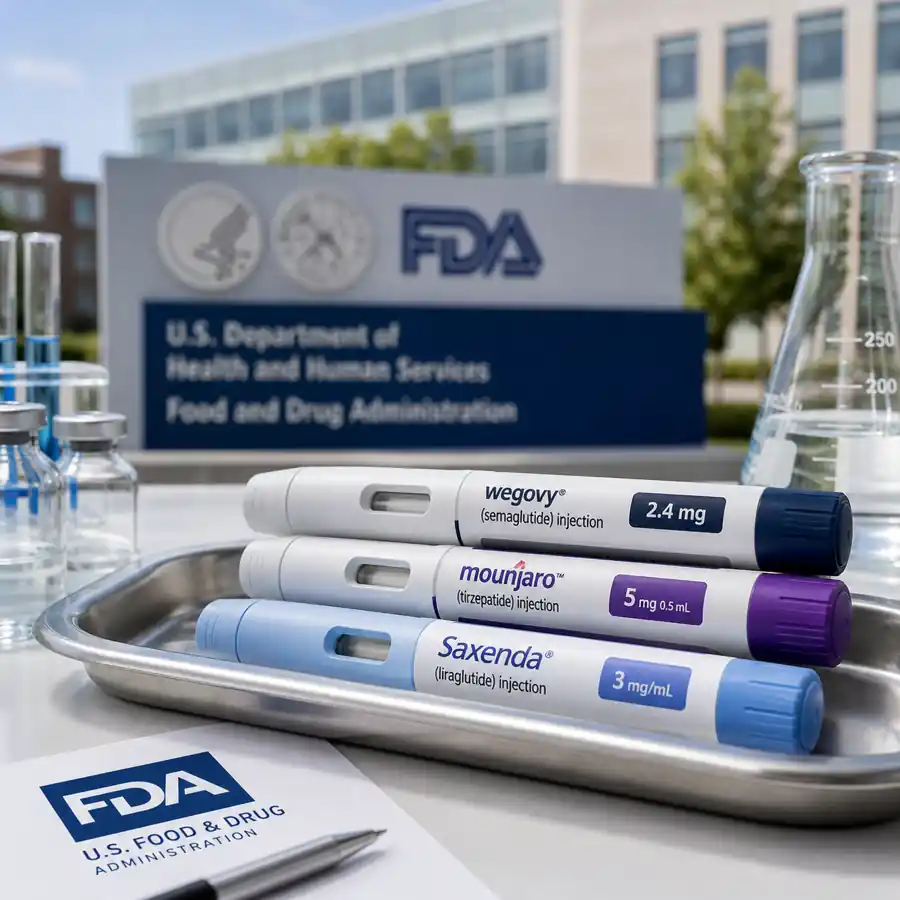

The U.S. Food and Drug Administration has signaled a major shift in how some of the world’s most sought-after weight-loss and diabetes drugs are handled, proposing to block outsourcing facilities from compounding key ingredients behind blockbuster treatments like Ozempic, Wegovy, and Mounjaro.
The agency announced it is moving to exclude semaglutide, tirzepatide, and liraglutide from the federal 503B bulks list — a regulatory pathway that currently allows certain facilities to produce compounded versions of drugs using raw ingredients under specific conditions.
Regulatory move targets booming GLP-1 drug demand
The proposal comes as demand for GLP-1 receptor agonists continues to surge globally, driven by their effectiveness in managing type 2 diabetes and supporting weight loss. Drugs containing these compounds have become some of the most prescribed and talked-about treatments in recent years.
However, the FDA made clear that when approved drugs are already available, compounding from bulk substances should only happen if there is a proven clinical necessity — something the agency says is currently lacking.
In its review, the FDA found no sufficient medical evidence to justify continued compounding of these substances at scale by outsourcing facilities.
Patient safety and drug approval integrity in focus
The decision reflects a broader effort to maintain safety standards and protect the drug approval system. Compounded medications, while useful in certain cases, do not undergo the same rigorous review process as FDA-approved drugs.
Officials emphasized that allowing widespread compounding without clear clinical need could raise risks for patients and potentially undermine trust in approved treatments.
The move also reinforces the principle that outsourcing facilities can only use bulk substances if they appear on the 503B list or if the drug is officially listed as being in shortage at the time it is produced and dispensed.
More details on the regulatory framework and compounding rules are outlined in the FDA’s official drug compounding guidance.
Public feedback window now open
The proposal is not yet final. The FDA has opened a public comment period until June 29, 2026, inviting healthcare providers, manufacturers, and stakeholders to submit feedback before a final decision is made.
This step could prove significant, particularly for compounding pharmacies and outsourcing facilities that have played a role in meeting demand during periods of supply constraints.
For patients, the development signals a tightening regulatory environment around access to compounded versions of popular treatments — especially as supply chains stabilize and approved products remain available.
The outcome of the review is expected to shape how these high-demand medications are accessed in the months ahead, with implications for both affordability and availability across healthcare systems.

Make Swikblog your go-to source on Google for reliable updates, smart insights, and daily trends.