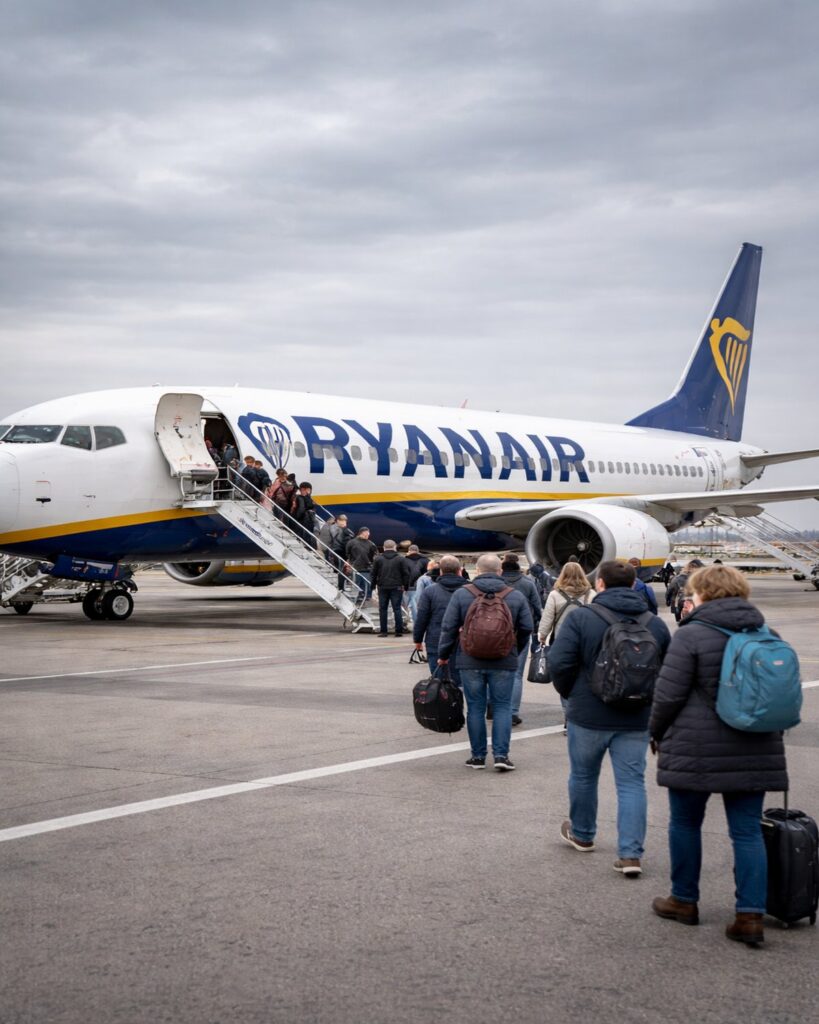

Budget airline Ryanair has warned that fares are likely to move higher in 2026, even after its latest quarterly profit was hit by a one-off charge linked to an Italian competition case. For travellers planning a spring city break or a summer holiday, the message is clear: the cheapest seats may sell out earlier than usual.
The Irish carrier said demand across Europe remains strong, with passenger numbers rising and average fares already increasing. Ryanair’s official Q3 FY26 results showed traffic grew 6% to 47.5 million passengers, while fares rose 4% during the quarter.
Why Ryanair’s profit figure looked weaker
Ryanair reported a Q3 profit after tax of €115 million before exceptionals. However, the headline result was reduced by an €85 million exceptional charge connected to a provision for part of an Italian competition fine. The airline says it is appealing the case and believes the fine should be overturned.
That accounting charge matters for investors because it lowers the reported profit figure. For passengers, the more important point is Ryanair’s pricing outlook. The airline is still carrying more people, filling aircraft, and signalling stronger fares despite the regulatory setback.
Strong bookings are giving airlines pricing power
Ryanair expects to carry about 208 million passengers in its current financial year. That scale gives a clear picture of travel demand across Europe, especially on leisure routes used by families, students, workers and short-break travellers.
When flights fill earlier, airlines have less need to discount seats close to departure. The lowest fare buckets usually disappear first, leaving later bookers to pay more for the same route.
The pressure is not limited to Ryanair. Across the airline industry, delayed aircraft deliveries and maintenance bottlenecks have limited how quickly carriers can add extra seats. When demand stays firm but capacity cannot expand fast enough, fares tend to rise.
What this means for travellers
For anyone booking flights in 2026, the safest strategy is to compare prices early, especially for school holidays, bank holidays and peak summer routes. Last-minute deals may still appear, but they are less reliable when aircraft are already close to full.
- Book earlier for peak travel dates.
- Check nearby airports before paying more for a popular route.
- Travel midweek where possible.
- Compare the full cost after baggage, seats and add-ons.
- Use fare alerts, but do not assume prices will fall later.
Travel disruption can also affect holiday planning, so passengers may want to review recent updates such as Royal Caribbean cancelling an Anthem of the Seas cruise after a technical issue before finalising wider travel plans.
Where to check Ryanair’s official figures
Ryanair’s passenger numbers, fare commentary and Italy-related charge are listed in the airline’s official Q3 FY26 results page. The update shows why the company can report pressure on profits while still warning that fares are likely to stay firm.
Ryanair is not moving away from its low-cost model. The bigger issue is that low fares depend on spare capacity. When demand is strong and aircraft availability is tight, the lowest prices become harder to find. For travellers, booking early may be the simplest way to protect the budget.

Make Swikblog your go-to source on Google for reliable updates, smart insights, and daily trends.