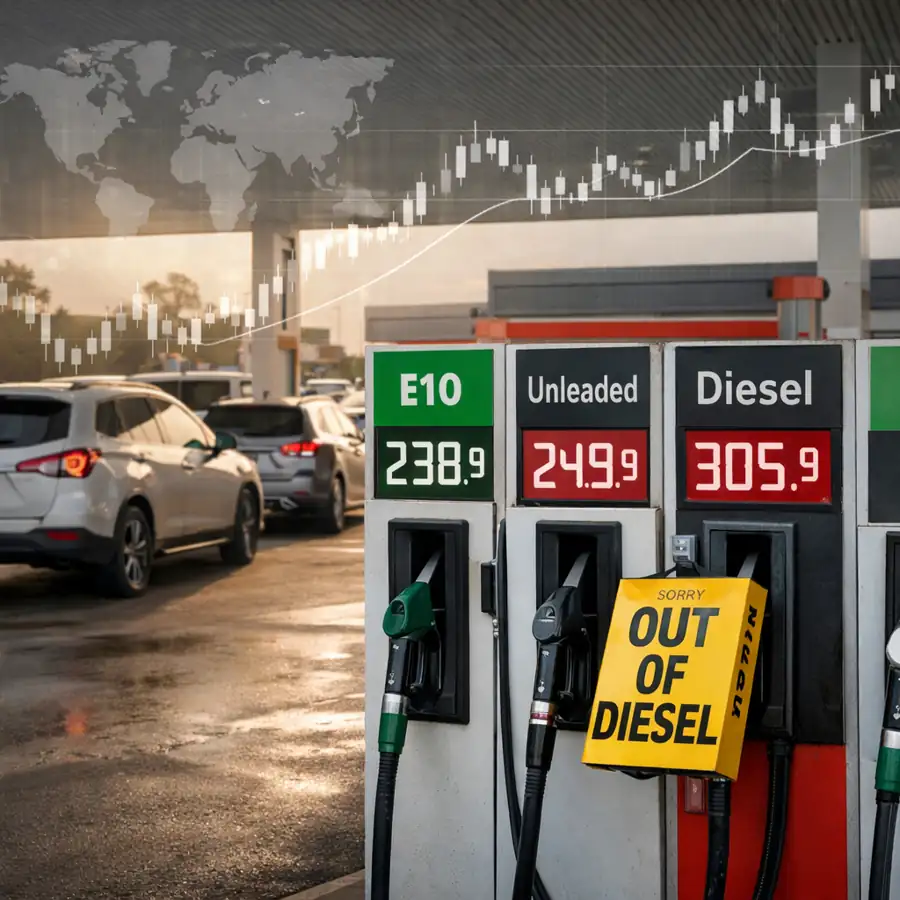

Fuel prices across New South Wales have surged to alarming levels, with diesel shortages now affecting dozens of petrol stations and prices climbing past $3 per litre in some regions. The disruption is beginning to ripple through businesses, households, and supply chains, raising concerns about broader economic pressure in the weeks ahead.
Diesel Shortages Spread Across NSW
About 80 petrol stations across the state were left without diesel supplies, while another 40 outlets struggled to access petrol. With roughly 3,000 stations operating across NSW, the shortages remain uneven but increasingly visible.
Regional areas have been hit hardest. In Broken Hill, diesel climbed to 305.9 cents per litre, while prices in Tibooburra reached an even higher 315.9 cents, highlighting the strain on remote communities.
In Sydney, petrol prices jumped by 5 cents in just 24 hours, bringing the average to $2.38 per litre, adding to cost-of-living pressure for commuters and small businesses.
Supply Disruptions and Panic Buying Drive Pressure
Authorities have pointed to distribution challenges rather than a complete supply breakdown, but rising demand is intensifying the problem. Panic buying has significantly increased consumption levels, with some estimates suggesting demand has surged sharply in recent days.
Officials have urged motorists to avoid unnecessary purchases, warning that excessive buying could worsen shortages and disrupt supply chains further.
Global uncertainty linked to ongoing tensions in the Middle East is also feeding into the crisis, with fears of prolonged disruption to oil flows pushing prices higher worldwide. According to a report by Reuters energy market updates, geopolitical risks continue to influence fuel pricing and supply volatility.
Government Response and Market Scrutiny
The federal government has launched a coordinated fuel supply taskforce aimed at stabilising distribution and ensuring consistent availability across states and territories.
At the same time, regulators have begun examining the conduct of major fuel suppliers amid allegations of anti-competitive practices. The investigation reflects growing public concern about pricing behaviour during the crisis.
Authorities maintain that national fuel reserves remain intact, with shipments continuing to arrive as scheduled, but acknowledge that distribution bottlenecks and demand spikes are creating short-term imbalances.
Businesses and Farmers Face Rising Costs
The impact is already being felt across industries heavily reliant on fuel. Tradespeople, logistics operators, and farmers are among the most exposed.
One small business owner commuting 110 kilometres daily reported paying $170 for a single tank of diesel, with uncertainty about future costs making planning increasingly difficult.
In agriculture, concerns are mounting that higher diesel costs will eventually translate into increased food prices. Industry leaders warn that if shortages persist for several weeks, the pressure could move quickly from farms to supermarket shelves.
Independent Fuel Retailers Under Pressure
Independent petrol stations are facing the greatest challenges in securing consistent supply, raising fears about long-term competition in the fuel market.
Industry representatives stress that losing independent operators could reduce price competition across Australia, potentially locking in higher fuel costs over time.
The situation highlights a delicate balance between supply logistics, consumer behaviour, and global energy markets, all converging to create one of the most volatile fuel environments seen in recent years.
As uncertainty continues, households and businesses alike are adjusting to a reality where fuel prices remain elevated and supply stability cannot be taken for granted.

Make Swikblog your go-to source on Google for reliable updates, smart insights, and daily trends.