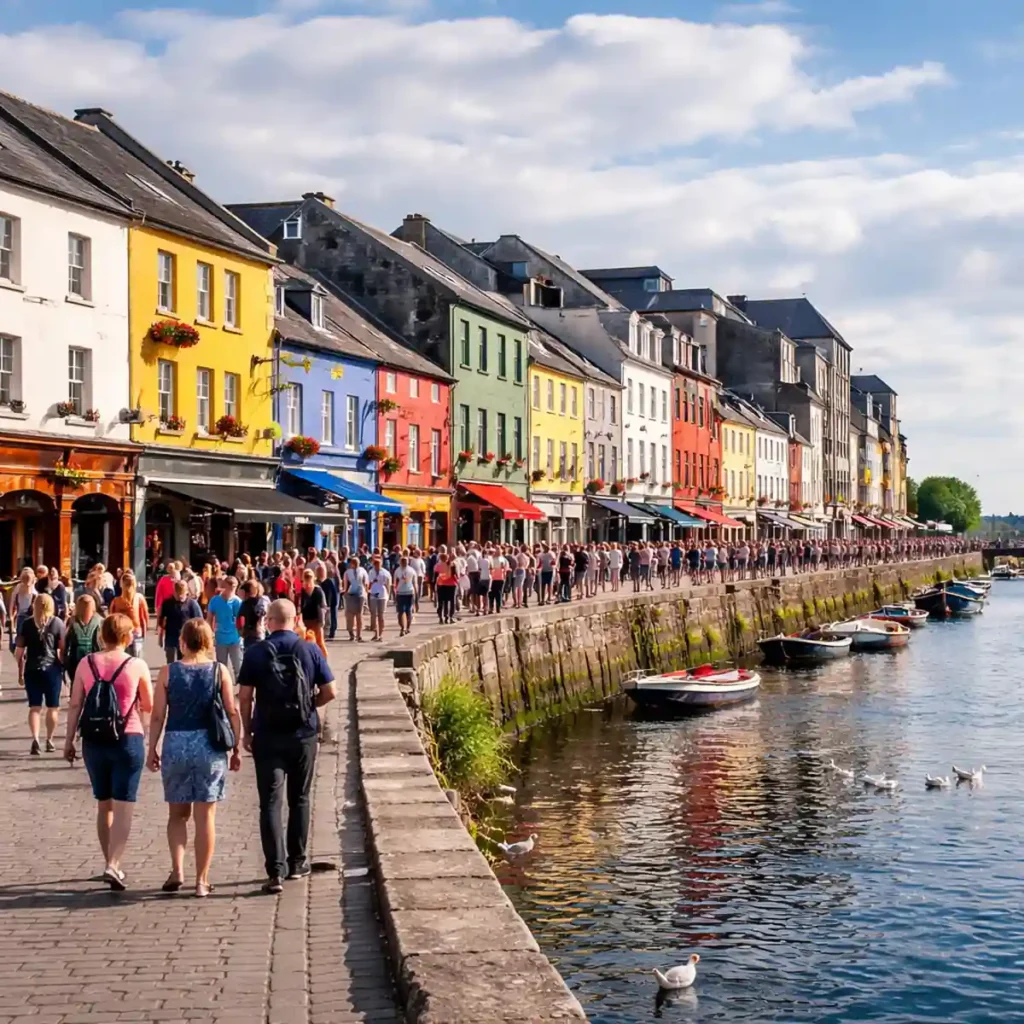

Galway city is moving closer to introducing a new tourist charge, with officials estimating that even a small nightly fee could generate more than €2 million annually. The proposal, discussed during an April meeting of Galway City Council, would see visitors pay around €1 per night for accommodation, marking the first time such a levy could be applied in the city.
The plan is still in early stages, but councillors have agreed to seek support from Ireland’s Tourism Department to move the idea forward. With more than 2 million visitors each year and a steady tourism flow across seasons, council officials believe the city is well positioned to introduce a modest fee without significantly impacting demand.
Director of Finance Helen Kilroy told councillors that even a small charge could deliver meaningful returns. “A modest levy of €1 per night could bring in over €2 million a year,” she said, highlighting the scale of potential income from Galway’s strong visitor numbers.
Where the €2 million could be spent
The proposed tourist tax is not just about raising revenue — it is also about how that money would be used. According to council officials, the income would be ringfenced and directed back into services that directly affect visitors and residents alike.
This includes street cleaning, public safety measures, and funding for festivals, all of which play a central role in Galway’s appeal as a cultural destination. The city’s busy streets, events calendar and coastal attractions bring in large crowds, but maintaining those spaces has become increasingly expensive.
Sally-Ann O’Brien, Galway City Council’s Head of Tourism, pointed out that such charges are already common across Europe. She noted that tourists are generally familiar with accommodation levies, as similar systems are in place in 21 European countries. For many international visitors, especially those travelling within the EU, paying a small nightly fee is already part of the travel experience.
The proposal also comes at a time when Galway continues to receive one of the lowest Local Property Tax (LPT) baselines from central government funding. For some councillors, the tourist tax represents a way to boost local income without placing additional pressure on residents.
Concerns over sustainability and perception
Despite broad agreement that additional funding is needed, the proposal has sparked debate among councillors. One of the biggest concerns is how reliable tourism-based income would be over time.
Councillor Alan Curran warned that fluctuations in visitor numbers could make budgeting more difficult. “The potential inconsistency of tourism numbers could severely impact our ability to budget effectively,” he said, adding that the city needs to protect itself from economic shocks.
Others raised concerns about how the levy would be perceived by tourists. Some councillors suggested that the word “tax” itself could create a negative impression, especially at a time when travellers are already facing rising costs for accommodation and transport.
There were also questions about long-term sustainability. While €2 million in annual revenue is significant, critics argue that relying on tourism-related income could expose the city to risks if travel demand weakens.
The debate is not just about the levy itself, but about broader funding challenges facing Galway. Several councillors pointed to the current Local Property Tax system as a larger issue, arguing that the city’s funding tier should be revised at a national level.
Councillor Michael Crowe said the focus should be on addressing structural funding gaps. “The biggest problem we have here is the tier ranking in the LPT system,” he said, calling for discussions with the Oireachtas to change how Galway is funded.
That sentiment reflects a wider frustration within the council — that while a tourist tax could help, it does not solve the underlying issue of limited central government support.
Still, Galway City Council Chief Executive Leonard Cleary described the tourist tax proposal as one of the local authority’s top priority projects for the current term. A detailed report on the plan is expected to be shared with national departments, including Housing and Finance, as well as the Oireachtas.
Any final decision will require approval at the national level, meaning the proposal could still face delays or changes before being implemented.
The discussion in Galway reflects a broader shift across Europe, where cities are increasingly looking at tourism levies as a way to manage the costs of high visitor numbers. From infrastructure maintenance to crowd management, the financial burden of tourism is becoming more visible, pushing local authorities to explore new revenue streams.
For travellers, the proposed €1 fee may appear minor. But for Galway, the combined impact could be substantial, offering a new funding source at a time when pressure on public services continues to grow. More details about how tourist taxes work across European destinations can be found on the official EU travel portal.
As discussions continue, the focus will remain on balancing the benefits of additional revenue with the risks of changing how visitors perceive the city. Galway’s popularity has long been one of its strengths, but managing that success is becoming an increasingly complex challenge.
In a related update, this CRA $5 million refund error case has also drawn significant attention.

Make Swikblog your go-to source on Google for reliable updates, smart insights, and daily trends.