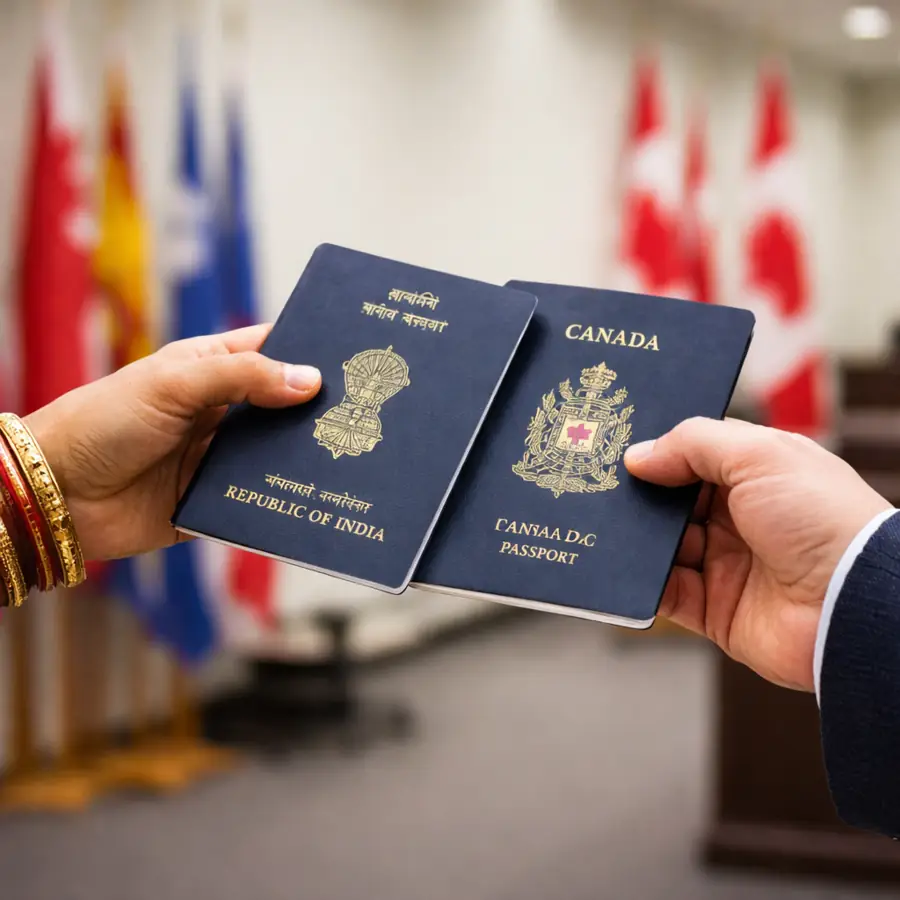

A short video from a Canadian citizenship ceremony has ignited a global online debate, after a woman of Indian origin was seen performing Garba inside what appeared to be an official setting. The clip, widely circulated across social media, quickly moved beyond a moment of celebration and into a flashpoint discussion about identity, decorum, and the expectations placed on immigrants.
In the video, the woman, dressed in traditional attire, smiles and performs a few Garba steps while holding what looks like a citizenship certificate. Behind her, Canadian provincial flags and a formal ceremony setup are visible. The moment appears brief and spontaneous, but its reception online has been anything but.
A viral moment that divided the internet
Within hours of being shared, the clip drew thousands of reactions, ranging from admiration to sharp criticism. Some viewers saw the act as a joyful expression of cultural roots, calling it a reminder that identity does not disappear with a passport change. Others, however, questioned whether such behavior was appropriate in a formal setting.
Critics argued that a citizenship ceremony represents a serious civic milestone and should be treated with restraint. The idea of dancing in that context, they said, reflected a lack of awareness about the solemn nature of the occasion. The tone of criticism escalated quickly, with some comments veering into broader and more uncomfortable conversations about migration and national identity.
Supporters pushed back just as strongly. They pointed out that Canada prides itself on multiculturalism and inclusion, and that moments like these reflect the lived reality of immigrants who carry their heritage with them. To them, the dance was not disruptive but symbolic—an expression of joy marking a life-changing achievement.
Cultural pride or misplaced timing
The debate has exposed a familiar tension. On one side is the expectation that official ceremonies maintain a certain level of decorum. On the other is the belief that cultural expression is inseparable from personal milestones, especially for those navigating multiple identities.
Citizenship ceremonies in Canada are designed to be formal yet celebratory. Participants take an oath, receive certificates, and mark the culmination of years of effort. While there are no widely known rules explicitly banning cultural gestures, the setting naturally carries an expectation of respect and order.
This is not the first time such a moment has gone viral. Similar instances—whether involving traditional clothing, regional celebrations, or cultural rituals—have previously drawn both praise and criticism. Each case tends to spark the same underlying question: where should the line be drawn between personal expression and public protocol?
The broader conversation around identity
What makes this incident resonate is not just the act itself, but what it represents. Migration today is rarely about leaving one identity behind. Instead, it often involves layering cultures, where traditions continue to exist alongside new national affiliations.
For many immigrants, moments like a citizenship ceremony are deeply emotional. They mark the end of one journey and the beginning of another. Expressions of joy—whether through dance, attire, or language—can be instinctive rather than calculated.
At the same time, public reactions highlight how quickly such expressions can be judged through different cultural lenses. What feels natural to one group may appear out of place to another, especially in a formal institutional setting.
The viral Garba clip has, in many ways, become less about one individual and more about the ongoing negotiation between belonging, respect, and self-expression. It reflects a world where identities are increasingly fluid, but expectations around behavior remain rooted in tradition.
As the debate continues to unfold online, the moment stands as a reminder of how even a few seconds of video can capture a much larger story—one that sits at the intersection of culture, migration, and the meaning of celebration.
For more context on how citizenship ceremonies are structured in Canada, you can explore the official guidelines on Canada’s immigration website.

Make Swikblog your go-to source on Google for reliable updates, smart insights, and daily trends.