
A premium egg label built on “pasture-raised” trust is facing a fresh wave of scrutiny online, after renewed debate about what hens are fed—and what shoppers think they’re paying for.
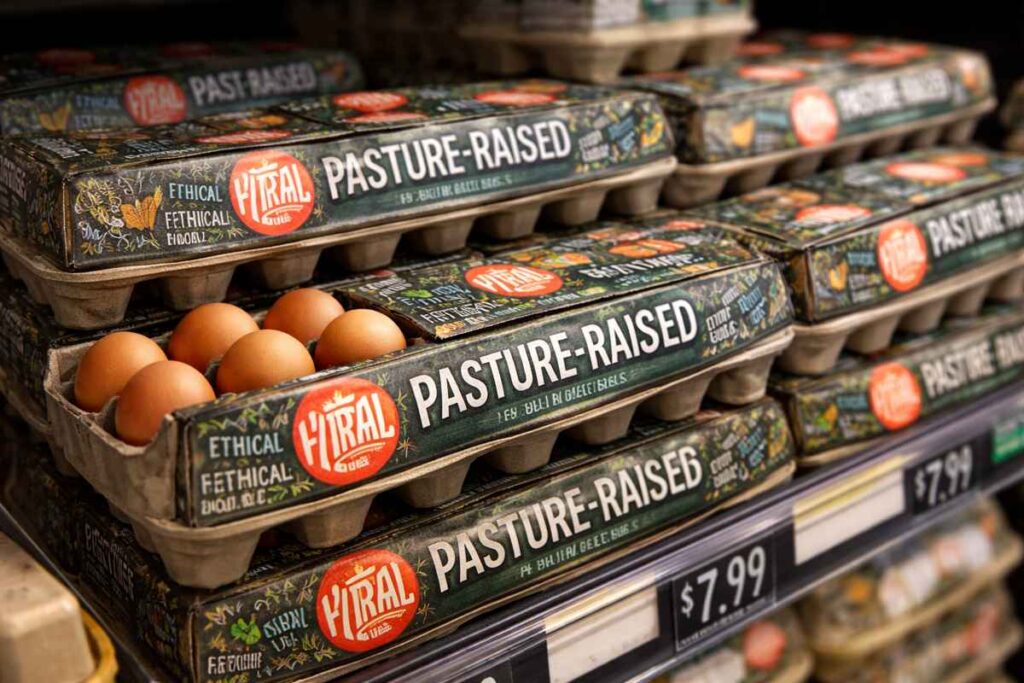
The latest backlash centres on Vital Farms, a well-known US brand that sells premium cartons of “pasture-raised” eggs and markets itself as unusually transparent. Supporters say the brand made it easier to feel confident about animal welfare and sourcing. Critics now argue that the story on the carton doesn’t match the full reality of modern egg production—especially when it comes to feed.
Online, the argument has taken on a familiar shape: a lab test is shared, a health debate follows, and “boycott” posts spread faster than any packaging explanation can keep up. Some shoppers say they feel misled by marketing they read as “clean,” “natural,” or “better-for-you,” even if the company’s claims are technically accurate. Others push back, saying the outrage ignores how most large-scale egg systems operate—and how hard it is to scale any alternative.
What sparked the controversy? Much of the current dispute traces back to discussion of a third-party lab analysis circulated online, described as being conducted in collaboration with Michigan State University, focusing on fatty-acid markers in eggs. The specific number that caught attention was linoleic acid, an omega-6 fatty acid that is essential in small amounts but frequently debated in nutrition circles because modern diets can be heavily skewed toward omega-6 intake.
In the version of the test being widely shared, the conclusion presented to consumers is simple: some eggs may contain higher linoleic acid levels than people expect, and that could be linked to what hens are fed. From there, the leap on social media is bigger: if feed includes corn and soy, some claim, “pasture-raised” becomes more marketing than meaningful difference.
Why “greenwashing” is being mentioned: People aren’t only debating nutrition. They’re also debating language—what “pasture-raised” signals to shoppers, what it doesn’t guarantee, and whether the overall impression created by branding is more eco-friendly than the underlying inputs.
What does the brand say about feed? Vital Farms has long stated that its hens have outdoor access and can forage, while also receiving supplemental feed. The feed described by the company includes ingredients such as corn and soybean meal, along with natural pigments—often mentioned in the context of yolk colour—like paprika or marigold. None of that is unusual in the egg industry, but it collides with consumer expectations shaped by premium pricing and “bullsh*t-free” messaging.
Also read: Canned tuna recall warning: botulism risk and what the FDA says
Why the yolk colour argument gets emotional fast: Shoppers often treat deep golden yolks as a shorthand for “better.” But yolk colour can be influenced by diet and pigments, even when production systems are otherwise similar. That doesn’t automatically mean anyone is cheating—it does mean that appearance isn’t a simple truth test.
On social media, critics say the use of corn and soy is the opposite of what they believed they were buying. Many are also reacting to the price: in many US stores, a carton of premium eggs can land in the $7 to $14 range, depending on size and region. When people pay more, they expect less ambiguity—and the debate is really about whether the label left too much unsaid.
How the company has responded: In public comments and brand messaging, Vital Farms has framed the issue as a balancing act—explaining that it has explored alternatives to soy over the years, but that other options can come with tradeoffs. Those tradeoffs, the company argues, include taste, sourcing constraints, and the practical challenge of scaling across a large network of partner farms while keeping supply steady for national retailers.
The company is also frequently described as a certified B Corporation, which is meant to signal standards around social responsibility and environmental impact. But certifications don’t stop consumer backlash once trust has been shaken—especially in a moment when shoppers are increasingly sceptical of “feel-good” claims on packaging.
So is this actually “greenwashing”? The hard truth is that “greenwashing” is often argued in the space between what a company literally claims and what the average shopper thinks the claim implies. That gap is exactly why US regulators have guidance on environmental marketing—what brands should avoid implying and how “eco” language can mislead even without explicit lies. If you want a clear baseline for what counts as potentially deceptive environmental advertising, the Federal Trade Commission’s overview of the Green Guides is a useful reference point.
What shoppers can realistically take away: In most grocery aisles, “pasture-raised” tells you something, but not everything. Outdoor access and animal-welfare standards can vary widely. Feed formulas can still include common grains and meals, even for premium brands. And regulations, labelling language, and marketing cues can blur together quickly when you’re making a fast decision at the fridge case.
If avoiding corn or soy is your priority, the simplest step is to look for cartons that explicitly state “corn-free” and “soy-free” rather than assuming premium branding covers it. Those products may be harder to find in mainstream supermarkets and often cost more, but the label is clearer about the one detail driving this particular debate.
The bigger lesson may be less about one brand and more about the modern grocery shelf: people are trying to buy their values, their health goals, and their budget—all at once. When a product positions itself as the honest option, shoppers hold it to a higher standard. That’s not always fair, but it’s real. And in a food system where so much depends on what isn’t printed on the front of the carton, the backlash shows how quickly confidence can crack when consumers feel they’ve been asked to trust without being given the full context.

Make Swikblog your go-to source on Google for reliable updates, smart insights, and daily trends.