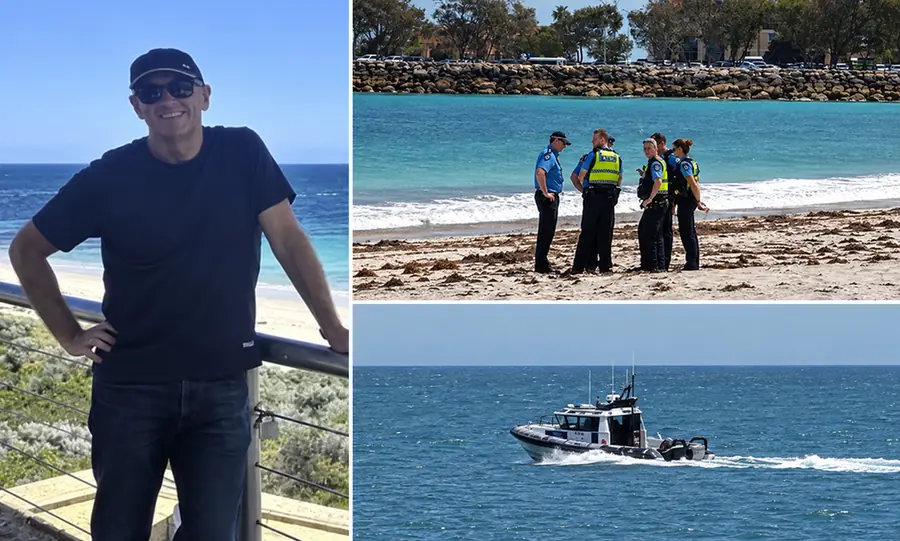

PERTH, Western Australia — The Western Australian government has issued a rare catch-and-kill order for the great white shark believed to have killed 63-year-old swimmer Greg James O’Neill at Sorrento Beach.
The targeted order was authorised by Fisheries Minister Jackie Jarvis after Water Police reportedly identified the shark and observed it remaining near the area following Friday morning’s fatal attack.
Mr O’Neill was swimming close to the shoreline at Sorrento Beach, in Perth’s northern suburbs, when the attack occurred at approximately 10:15am on Friday, September 18.
Police, fisheries officers, boats and a rescue helicopter were deployed to the area. Another swimmer who was reportedly in the water with Mr O’Neill escaped and returned safely to shore.
Mr O’Neill’s family remembered him as a devoted husband, father, grandfather-to-be and passionate swimmer.
“Our family is deeply shocked and devastated by the terrible tragedy,” the family said in a statement reported by ABC News.
They described him as a generous and witty family man who loved the ocean, sport and spending time with those closest to him.
Why WA issued the catch-and-kill order
Jarvis described the decision as an extraordinary response to exceptional circumstances. She said the shark had been positively identified, remained in the vicinity and was considered an ongoing danger.
“I considered the exceptional circumstances of the attack, the hazard posed by the shark, and the potential recovery of coronial evidence,” Jarvis said.
Capture equipment similar to a drum line was deployed on Friday. Authorities were unable to redeploy it on Saturday because choppy water and unfavourable weather made operations difficult.
Jarvis said the authorisation may be the first catch-and-kill order issued in Western Australia in approximately a decade. However, she stressed that it applied to the individual shark connected with the attack and did not represent the return of a widespread shark-culling policy.
White sharks are protected, and Jarvis said a general cull would not be appropriate. The government is instead considering whether greater use of drones, tagging programs, patrols and swimming enclosures could reduce the risk to beachgoers.
More than 300 sharks, including 227 white sharks, have reportedly been tagged in Western Australia. Authorities are also awaiting updated research into the number of white sharks moving along the state’s coast.
The official SharkSmart WA alert said beaches from the Marmion BEN sign in the south to the Iluka BEN sign in the north remained closed. People were told to obey closure notices and report shark sightings to Water Police.
The Sorrento tragedy occurred only days after surfer Mel Ismail was seriously injured during a separate shark attack at Glenfield Beach near Geraldton.
Catch-and-kill decision divides social media
The order has produced an intense debate online, with some people supporting the action as a necessary public-safety measure and others warning that officials may capture the wrong shark.
“Bad decision on so many levels,” one Instagram user wrote beneath a report about the order, questioning why killing the animal had become the response to the tragedy.
Another commenter asked how authorities could be certain that any captured shark was the animal involved. Others argued that removing an apex predator could disrupt the marine ecosystem and called for increased tagging, drone surveillance and beach patrols instead.
“This is wrong on so many levels,” one highly supported comment read, claiming that sharks do not deliberately seek out humans and remain important to the ocean’s natural balance.
Not everyone opposed the decision. Some users argued that an animal believed to have remained near a populated swimming beach after a fatal attack presented an unacceptable danger. Other comments bluntly suggested that swimmers must recognise the inherent risks of entering the ocean.
The comments reflect public anger and concern but do not establish what happened or whether the targeted shark can be conclusively linked to the attack. Those determinations remain with fisheries officers, police and shark experts involved in the operation.
For Sorrento residents, the debate is unfolding alongside grief. Flowers have been placed near the closed beach as Mr O’Neill’s family and the wider community mourn a man remembered for his love of the ocean.

Make Swikblog your go-to source on Google for reliable updates, smart insights, and daily trends.