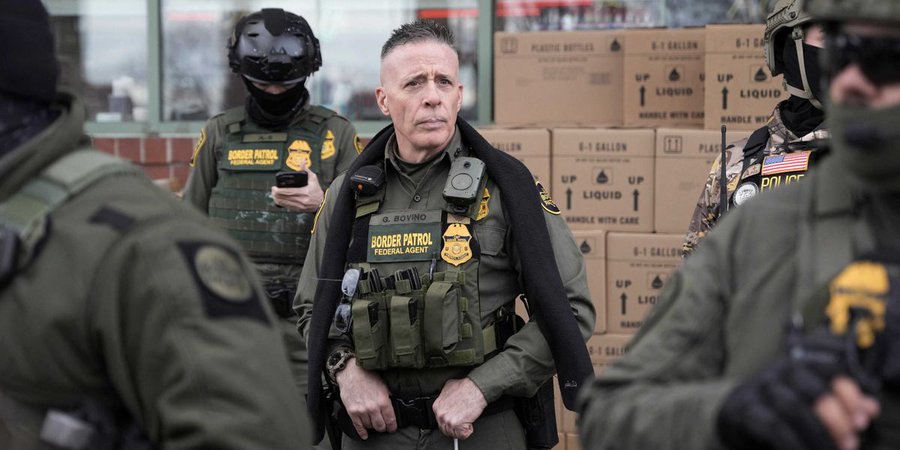
Gregory Bovino, a senior U.S. Border Patrol official, has become one of the most visible faces of the Trump administration’s immigration enforcement push in Minneapolis, where federal operations have drawn protests, legal scrutiny and national attention.
Bovino’s arrival in the city has turned him into a symbol of a wider debate over immigration enforcement far from the southern border. Supporters see him as a firm law-enforcement commander. Critics see him as the public face of an aggressive federal campaign unfolding in American neighborhoods.
The Minneapolis operation has become especially sensitive after recent federal enforcement actions and public anger over the tactics used by officers. Local leaders, civil rights groups and residents have questioned how the operation is being run, how force is being used, and whether the federal presence is making communities safer or more fearful.
The central issue is bigger than one official: Minneapolis has become a test case for how far interior immigration enforcement can expand, and how much oversight the public should expect when federal teams operate in major cities.
Who is Gregory Bovino?
Gregory Bovino is a longtime U.S. Border Patrol official who joined the agency in the 1990s and later moved through senior enforcement roles. In recent years, he has been placed in high-profile assignments connected to the Trump administration’s immigration agenda, including operations away from traditional border areas.
Unlike many federal officials who remain mostly behind the scenes, Bovino has become highly public. He has appeared in field operations, press briefings and social media videos that present immigration enforcement as a visible show of federal power.
That visibility is one reason his name is now closely tied to the Minneapolis crackdown. His presence signals that the administration wants the operation to be seen, not just carried out quietly.
For more background on the Minneapolis enforcement controversy, see this related report on the Minneapolis ICE shooting investigation.
Why his role is controversial
Bovino has drawn criticism not only for the operations he has helped lead, but also for the way those operations are presented. His blunt public comments, tactical appearance and use of staged-looking media clips have made him a lightning rod in the national immigration debate.
Critics argue that the approach makes civil immigration enforcement look more like a military-style campaign. They say that can heighten fear in immigrant communities, increase the risk of confrontation and make it harder for the public to judge what is happening on the ground.
Supporters argue that federal officers are working under pressure and need strong leadership when operations attract crowds, protests or threats. They say visible enforcement is meant to deter violations and protect agents carrying out federal law.
Bovino’s record in Chicago has also followed him to Minneapolis. A federal judge previously criticized the government’s account of force used during Operation Midway Blitz, adding to questions about transparency and credibility in major enforcement actions. Background on that legal dispute is available from ABC News.
Another public dispute has focused on Bovino’s long green coat, which critics online compared to authoritarian imagery. Bovino has said the coat is standard outerwear he has owned for years. The clothing debate may seem secondary, but it reflects a larger concern: how federal power looks and feels when deployed inside U.S. cities.
The deeper question is whether immigration enforcement should be carried out with a lower-profile, administrative approach or with highly visible tactical teams. Minneapolis has pushed that argument into the national spotlight.
For now, Bovino remains a key figure because he represents both the administration’s message and the backlash against it. To supporters, he projects control. To opponents, he represents escalation. That tension is why one Border Patrol official has become central to a much larger fight over immigration, policing and public trust.
This is a developing story. Court filings, official statements and local investigations may add new details to the timeline.

Make Swikblog your go-to source on Google for reliable updates, smart insights, and daily trends.