
KATHMANDU, Nepal — An avalanche struck the Himlung Himal expedition area in Nepal’s Manang district on Sunday, triggering an urgent high-altitude rescue operation after Nepali climbers and support workers went missing during severe Himalayan weather.
Ten climbers missing after avalanche hits Himalayan base camp https://t.co/Gzd4flrPNN
— BBC News (UK) (@BBCNews) September 27, 2026
Ten expedition workers were initially reported missing on September 27 after the avalanche hit near the base camp of the 7,126-metre (23,380-foot) mountain in the remote Nar Phu region, close to Nepal’s border with Tibet. The initial count included eight people associated with Himalayan Holidays Nepal and two from Imagine Nepal.
The situation remained fluid as rescuers tried to account for everyone on the mountain. Three people initially listed as missing later contacted their families and expedition organisers, highlighting the difficulty of establishing an accurate toll while communications remained unreliable.
Nepali team was preparing Himlung for foreign climbers
The workers were part of advance teams preparing Himlung Himal before international expedition clients arrived.
Himalayan Holidays had sent a 22-member Nepali team to establish camps, transport supplies, prepare the climbing route and fix ropes. Foreign climbers connected with the expedition were expected several days later and were not at the affected camp when the avalanche struck.
The personnel included Sherpa guides and other expedition support workers. Such teams often spend days preparing high-altitude routes before clients begin climbing, leaving them exposed to rapidly changing mountain conditions.
Emergency call requested a rescue helicopter
Expedition organisers said they received an emergency call from Himlung at about 9:40 a.m. Sunday requesting a rescue helicopter after members of the team could no longer be located.
Eight Himalayan Holidays workers were initially unaccounted for, while two Imagine Nepal staff were also reported missing. Communications subsequently became difficult, and later reports indicated that organisers temporarily could not contact additional personnel.
The changing numbers do not necessarily mean every person who lost contact was caught in the avalanche. Poor mobile and radio coverage can leave expedition companies unable to immediately determine whether workers have reached another camp or safer ground.
Avalanche reaches base camp as heavy snow hits region
Avalanche debris reportedly reached tents around the Himlung base-camp area as heavy snowfall created dangerous conditions across Nepal’s high mountains.
Teams elsewhere in the Himalayas had already been moving toward safer elevations following warnings of deteriorating weather and avalanche danger.
Fresh snowfall can place additional weight on unstable layers of existing snow. A failure within those layers can send snow rapidly downhill, threatening climbing routes and camps below.
Mount Mizhirgi Avalanche in Russia Leaves Climbers Dead and Missing
Specialist rescuers deployed to Himlung
Poor weather initially prevented helicopters waiting in Kathmandu and Pokhara from reaching Himlung, making visibility and flying conditions critical to the rescue effort.
A specialist team led by veteran mountaineer Mingma Gyalje Sherpa, known as Mingma G, later reached the base-camp area to assess conditions and search for those still unaccounted for. Additional qualified mountain guides were placed on standby.
Three workers initially reported missing — Kaji Sherpa, Chheten Bhote and Chhebi Bhote — later made contact with their families and expedition organisers, according to subsequent reports.
The development underscored why early missing-person figures should be treated as provisional until rescuers complete a physical headcount.
Severe weather disrupts Nepal’s climbing season
The Himlung emergency comes during a period of persistent rain and snowfall across Nepal, with flooding and landslides affecting lower elevations while snow increases risks higher in the Himalayas.
Nepal’s Department of Tourism, which oversees mountaineering activities, has published weather information for people travelling into trekking and climbing areas.
Dangerous conditions have also affected other major Himalayan expeditions. Earlier this month, climbers were caught in a separate avalanche on Manaslu, demonstrating the risks that heavy snowfall can create during the climbing season.
Himlung’s remote location complicates rescue
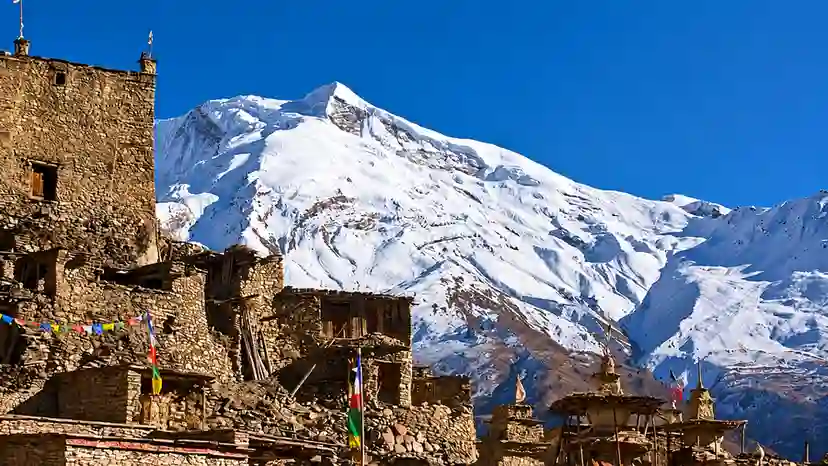
Himlung Himal rises 7,126 metres in the isolated Nar Phu area of Manang. Although lower than Nepal’s 8,000-metre peaks, climbing it still requires acclimatisation, fixed ropes, multiple camps and extensive logistical support.
Its remoteness makes emergency response particularly difficult. Ground access is slow, while helicopters can operate safely only when visibility, cloud and wind conditions permit.
The avalanche also comes as Nepal responds to other weather-related emergencies. Flooding and landslides have disrupted communities and transport routes, following other serious Himalayan disasters this year. Swikblog has also covered the Nepal rescue operation following destructive flooding.
For families and expedition operators, the immediate priority remains accounting for everyone who was in the Himlung expedition area. With several people initially listed as missing later establishing contact, the number still unaccounted for could change as rescuers obtain direct information from the mountain.
Any casualty or missing-person count remains provisional until confirmed by rescuers, expedition organisers or Nepalese authorities.

Make Swikblog your go-to source on Google for reliable updates, smart insights, and daily trends.