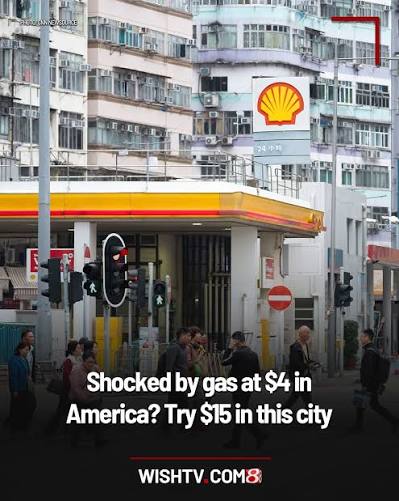

Hong Kong has become the clearest symbol of just how punishing the latest energy shock has been for import-dependent cities. Motorists there are now paying roughly US$15.60 per gallon for gasoline, a level that leaves pump prices in the city far above those seen in the United States, Europe and most of Asia. For a place already known for expensive housing, tight road space and steep car ownership costs, the latest jump has sharpened pressure on households and small operators who cannot easily absorb another essential bill moving higher.
The headline number is startling, but the deeper story is that Hong Kong’s fuel market was already structurally expensive before the latest global tensions sent crude and refined product prices higher. The city imports nearly all of its energy, a large share of its petroleum products comes via mainland China, and motorists buy fuel in one of the world’s most expensive real estate markets. Add taxes, shipping exposure and a small group of dominant forecourt operators, and a global oil spike lands harder in Hong Kong than in many other major financial centres.
That is why the current move matters beyond private car owners alone. Hong Kong is not a car-heavy city in the way Los Angeles or Dubai is. Public transport remains efficient, dense and widely used. But the cost of fuel still touches delivery firms, logistics operators, tradespeople, cross-border drivers and app-based workers whose margins are thin even in calmer times. When petrol rises from an already elevated base, the effect can ripple into meal delivery, light freight, service calls and eventually consumer prices in other corners of the economy.
Why pump prices in Hong Kong stay so high even when global oil markets cool
The immediate trigger behind the latest surge has been the renewed shock across global energy markets. Concerns around Middle East supply routes and higher crude prices have lifted wholesale fuel costs internationally. Yet in Hong Kong, motorists are not only paying for the current oil rally. They are also paying for a local cost structure that has long made retail petrol unusually expensive.
One major factor is tax. Fuel duty remains a meaningful slice of the pump price, which means any rise in the underlying product cost gets stacked on top of an already expensive baseline. Another is land. Petrol stations in Hong Kong operate in a city where commercial land values are exceptionally high, and those site costs feed into retail pricing. Analysts and consumer advocates have also pointed to the city’s concentrated market structure, where a handful of major brands dominate filling stations, limiting the kind of aggressive price competition that might otherwise give drivers more relief.
There is also the product mix. Hong Kong motorists largely fill up with higher-octane petrol, and the city’s supply arrangements are built around that premium structure. That makes the market less flexible when consumers are hunting for lower-cost alternatives. For many drivers, discounts and loyalty schemes soften the blow a little, but they do not fundamentally change the equation. Even after promotions, fuel remains extremely expensive by international standards.
Consumers can track local pricing through Hong Kong’s Oil Price Watch platform, which has become a useful benchmark as drivers compare listed pump rates and available discounts. The problem is that transparency alone does not create affordability. It merely makes the gap easier to see.
Why the squeeze could spread from drivers to the wider economy
The most visible response has been practical rather than political. More Hong Kong motorists have reportedly been driving north to refill in mainland China, where fuel can cost dramatically less. That cross-border workaround makes economic sense for those who can do it, but it also underlines how distorted the local pricing picture has become. A city that prides itself on efficiency is now watching some residents spend time and travel effort simply to avoid buying fuel at home.
For businesses that do not have that option, the pain is harder to escape. Delivery drivers, small fleet operators and service businesses are exposed first. Their fuel bill rises immediately, but customer pricing often adjusts more slowly. That gap can eat into earnings, especially for independent contractors and smaller firms already dealing with rent, wage and financing pressures. In a slow-growth environment, those extra transport costs can quietly weaken consumer demand elsewhere because businesses either pass the burden on or cut back in other areas.
The irony is that Hong Kong’s broader transport system remains one of its strengths. MTR links, buses, minibuses and ferries give the city a resilience many richer economies would envy. That cushions the social impact of expensive petrol because most residents do not depend on private cars for daily commuting. Even so, the current surge still matters as an inflation signal. When a city with Hong Kong’s infrastructure cannot shield delivery networks and commercial transport from fuel shocks, price pressure can still leak into daily life.
For now, the government’s message has focused on supply stability rather than direct price relief. That may calm fears of shortage, but it does not answer the affordability problem facing drivers and small operators. Unless global crude retreats sharply and stays there, Hong Kong is likely to remain the outlier that investors, policymakers and consumers point to when they talk about the real-world cost of energy dependence. In a city built on speed and efficiency, the world’s highest gasoline prices are becoming more than a transport story. They are a reminder that even a wealthy hub can feel exposed when global shocks collide with local structural costs.

Make Swikblog your go-to source on Google for reliable updates, smart insights, and daily trends.