
The Tour de France 2026 begins on Saturday, July 4, and this year’s race gives viewers a full three-week storyline from the opening team time trial in Barcelona to the final ride into Paris on Sunday, July 26. For U.S. fans, live coverage will be available on Peacock, with selected programming also carried by NBC and NBCSN.
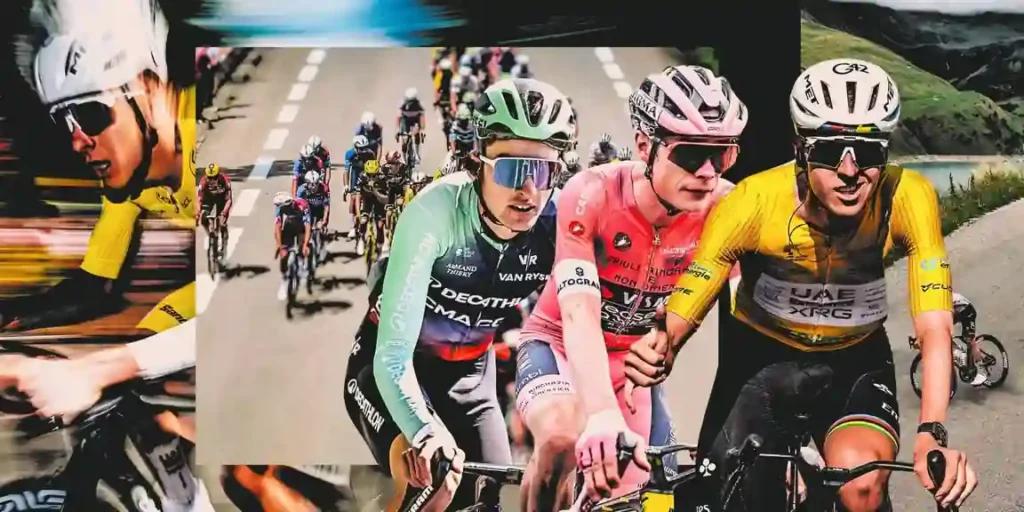
The 113th edition arrives with one central question: can Tadej Pogačar add another yellow jersey and move closer to the all-time greats, or can Jonas Vingegaard, Remco Evenepoel and a younger group of challengers turn a demanding route into a genuine fight? With 21 stages, 23 teams, 184 riders and two time trials, this is not a race that should be judged only by the final climb. The first week may already shape the entire Tour.
Dates: July 4–26
Start: Barcelona, Spain
Finish: Paris, France
Teams: 23
Riders: 184
Stages: 21
Watch in U.S.: Peacock, NBC and NBCSN
How to watch Tour de France 2026 live
Viewers in the United States can stream the Tour de France 2026 on Peacock. Selected stages and related race coverage will also be available through NBC and NBCSN. Because stage lengths, terrain and race speeds vary, daily finish times can shift, especially on mountain days when attacks can begin far from the line.
Most U.S. viewers should expect live racing in the morning, with highlight and recap shows helping fans catch up later in the day. Casual viewers who do not have time for every stage should prioritize the opening team time trial, the first Pyrenean mountain day, the individual time trial and the final Alpine weekend.
The confirmed course is available through the official Tour de France route page, which lists the stage cities, race profiles and overall route structure.
Why the 2026 route is built for drama
The race starts in Barcelona with a team time trial, a format that immediately rewards organized squads. That matters because Pogačar and Vingegaard are not only racing each other; their teams must protect them from the first day. A small loss in Barcelona could force a favorite to ride more aggressively before the mountains.
The route then moves quickly into climbing territory. Stage 3 reaches Les Angles, while Stage 6 from Pau to Gavarnie-Gèdre is the first serious mountain test. That early arrival in the Pyrenees means no contender can hide poor form for long.
The final week may be even more decisive. Stage 16 is the only individual time trial, and then the race moves into the Alps. The headline feature is the rare back-to-back finish at Alpe d’Huez on Stages 19 and 20. If the yellow jersey battle is still close, those two stages could decide the race.
Full Tour de France 2026 stage schedule
| Date | Stage | Route | Stage Type |
|---|---|---|---|
| July 4 | Stage 1 | Barcelona to Barcelona | Team time trial |
| July 5 | Stage 2 | Tarragona to Barcelona | Hilly |
| July 6 | Stage 3 | Granollers to Les Angles | Mountain |
| July 7 | Stage 4 | Carcassonne to Foix | Hilly |
| July 8 | Stage 5 | Lannemezan to Pau | Flat |
| July 9 | Stage 6 | Pau to Gavarnie-Gèdre | Mountain |
| July 10 | Stage 7 | Hagetmau to Bordeaux | Flat |
| July 11 | Stage 8 | Périgueux to Bergerac | Flat |
| July 12 | Stage 9 | Malemort to Ussel | Hilly |
| July 13 | Rest Day | Cantal | Rest |
| July 14 | Stage 10 | Aurillac to Le Lioran | Mountain |
| July 15 | Stage 11 | Vichy to Nevers | Flat |
| July 16 | Stage 12 | Circuit Nevers Magny-Cours to Chalon-sur-Saône | Flat |
| July 17 | Stage 13 | Dole to Belfort | Hilly |
| July 18 | Stage 14 | Mulhouse to Le Markstein Fellering | Mountain |
| July 19 | Stage 15 | Champagnole to Plateau de Solaison | Mountain |
| July 20 | Rest Day | Haute-Savoie | Rest |
| July 21 | Stage 16 | Évian-les-Bains to Thonon-les-Bains | Individual time trial |
| July 22 | Stage 17 | Chambéry to Voiron | Flat |
| July 23 | Stage 18 | Voiron to Orcières-Merlette | Mountain |
| July 24 | Stage 19 | Gap to Alpe d’Huez | Mountain |
| July 25 | Stage 20 | Le Bourg-d’Oisans to Alpe d’Huez | Mountain |
| July 26 | Stage 21 | Thoiry to Paris Champs-Élysées | Flat |
Stages that matter most for viewers
Stage 1 is the first must-watch day because a team time trial can create early time gaps. Strong squads can give their leaders a clean start, while weaker teams may spend the rest of the opening week repairing damage.
Stage 6 is the first major climbing checkpoint. The Pau to Gavarnie-Gèdre route should show whether the main contenders are comfortable in the mountains or already under pressure.
Stage 16 is the individual time trial. This is where riders such as Remco Evenepoel can gain time, while pure climbers must limit losses before the Alps.
Stages 19 and 20 are the biggest race-shaping stages on paper. Two consecutive finishes at Alpe d’Huez give the final week a rare double climax. If Pogačar and Vingegaard are close, the Tour could remain open until the final mountain weekend.
Who are the favorites for Tour de France 2026?
Tadej Pogačar starts as the leading favorite. He is the defending champion and already one of the defining riders of this generation. His biggest advantage is not just his climbing; it is his ability to attack, time trial, recover and win on different types of terrain.
Jonas Vingegaard is the most proven challenger. He has already won the Tour twice and has shown he can handle the unique pressure of three-week racing. If he reaches the final week within striking distance, the high mountains give him a clear path to attack.
Remco Evenepoel brings a different threat because of his time-trial strength. If he survives the hardest climbing days, Stage 16 could put him back into the podium picture. Isaac del Toro, Florian Lipowitz, Paul Seixas, Juan Ayuso and Tom Pidcock are also riders who could shape the overall race or target major stage results.
Teams to watch at the Tour de France
The Tour de France is often described through individual stars, but team strength can decide the race. UAE Team Emirates-XRG enters with a powerful structure around Pogačar, including climbing support and riders capable of controlling flat and rolling stages.
Visma-Lease a Bike will be central to Vingegaard’s challenge. Even without every preferred support rider available, the team remains one of the most disciplined units in the sport. Their ability to isolate Pogačar in the mountains could be one of the race’s key tactical questions.
Other squads to follow include teams built around sprinters, breakaway hunters and young general classification riders. In a three-week race, teams not fighting for yellow can still dominate headlines by winning stages or targeting the green, polka-dot or white jersey.
How Tour de France teams work
Each team starts with eight riders. One rider is usually the leader, while the others work in support roles. These supporting riders are called domestiques. They protect the leader from wind, bring food and drinks from team cars, chase dangerous attacks and pace climbs when the race becomes difficult.
Teams can also change strategy. A rider who begins as a helper may be allowed to chase a stage win if the team’s general classification hopes fade. A team with a top sprinter may focus heavily on flat stages, while a mountain-focused team may save energy for the Alps and Pyrenees.
For readers who enjoy major sports rivalries, the Tour’s mix of individual brilliance and team control has similarities to other global competitions, including the tension around the World Cup Golden Boot race, where star performance depends heavily on the wider contest.
What the Tour de France jerseys mean
The yellow jersey is the most important prize. It goes to the rider with the lowest total time across all stages. This rider is the overall leader of the Tour.
The green jersey is the points classification. It usually favors sprinters and fast finishers because flat stages award the most points at the finish. Intermediate sprints also matter.
The polka-dot jersey is for the mountains classification. Riders earn points on categorized climbs, with harder climbs carrying more value.
The white jersey is for the best young rider. It works like the yellow jersey but only includes riders who meet the age requirement.
Points, time bonuses and time cuts explained
Tour stages do not all reward the same type of rider. Flat stage finishes can award the highest points for the green jersey, while hilly and mountain finishes offer smaller points totals. Intermediate sprints also help riders build their points classification total.
Time bonuses can reduce a rider’s overall time. Stage winners and top finishers may receive bonus seconds, and some key points on the route can also offer time premiums. In a close race, those seconds can matter.
The time cut is another important rule. Riders must finish inside a limit based on the difficulty of the stage and the winner’s speed. If they miss the cut, they can be eliminated, although race officials can make exceptions in unusual circumstances.
Prize money at the Tour de France 2026
The total prize fund is just over €2.3 million. The overall Tour winner receives €500,000, while second place earns €200,000 and third receives €100,000.
Stage winners receive €11,000. The winners of the green jersey and mountains classification receive €25,000 each, while the white jersey winner receives €20,000.
There is also a team prize. The best teams share a separate prize pool, and daily team rewards can be earned when a squad wins a stage. In many teams, prize money is shared among riders and staff rather than kept only by the winner.
Sprinters and green jersey riders to watch
Jasper Philipsen is one of the headline sprinters and a major green jersey candidate. He has the speed and team support to dominate flat finishes if his lead-out works smoothly.
Tim Merlier is another dangerous fast finisher, especially in messy sprint finishes where positioning and timing matter. Mads Pedersen and Mathieu van der Poel are more versatile threats who can win on tougher sprint days and reduced bunch finishes.
Biniam Girmay, Olav Kooij, Michael Matthews, Arnaud De Lie and Dorian Godon are also names to follow when the race profile favors speed, strength or late attacks.
White jersey contenders and rising stars
The white jersey battle could be one of the most interesting parts of the 2026 Tour. Isaac del Toro brings major climbing ability and may be strong enough to finish high overall, even if his main role is helping Pogačar in the mountains.
Paul Seixas carries huge French attention as one of the brightest young riders in the sport. The question is not only whether he can climb with the best, but whether he can handle the pressure and recovery demands of three weeks.
Juan Ayuso, Cian Uijtdebroeks and Kevin Vauquelin also make the young rider race worth watching. The white jersey fight may overlap with the podium battle if one of these riders survives the final week near the front.
Major riders missing from the race
Wout van Aert is one of the biggest absences. His versatility usually gives Visma-Lease a Bike strength on flat roads, rolling terrain and selective stages. Without him, Vingegaard loses one of the most valuable support riders in modern cycling.
Oscar Onley is also missing after injury disruption. Primož Roglič and Giulio Pellizzari are not part of this Tour picture after focusing on other race plans, while João Almeida is not included as one of Pogačar’s main UAE helpers.
American riders to follow
Several American riders could influence the race even if they are not overall favorites. Matteo Jorgenson and Sepp Kuss are important support riders for Vingegaard, especially once the race reaches the mountains.
Brandon McNulty is part of the UAE structure around Pogačar and could be valuable in both time-trial and climbing contexts. Quinn Simmons may be one of the better American stage-hunting options, while Matthew Riccitello and Sean Quinn add further U.S. interest.
Recent Tour de France winners
| Year | Winner | Country |
|---|---|---|
| 2025 | Tadej Pogačar | Slovenia |
| 2024 | Tadej Pogačar | Slovenia |
| 2023 | Jonas Vingegaard | Denmark |
| 2022 | Jonas Vingegaard | Denmark |
| 2021 | Tadej Pogačar | Slovenia |
| 2020 | Tadej Pogačar | Slovenia |
| 2019 | Egan Bernal | Colombia |
| 2018 | Geraint Thomas | United Kingdom |
| 2017 | Chris Froome | United Kingdom |
| 2016 | Chris Froome | United Kingdom |
| 2015 | Chris Froome | United Kingdom |
| 2014 | Vincenzo Nibali | Italy |
| 2013 | Chris Froome | United Kingdom |
| 2012 | Bradley Wiggins | United Kingdom |
| 2011 | Cadel Evans | Australia |
Tour de France rules new viewers should know
The Tour is won by total time, not by stage wins. A rider can win the race without winning many individual stages if he stays consistent and avoids major losses.
Riders must wear official team clothing and helmets. They cannot push off cars, motorcycles or other riders. Team cars can assist with mechanical issues and supplies, but they must follow race rules and keep proper distance.
Riders can eat during stages, but feeding is restricted to designated areas and specific race conditions. Littering is banned outside approved zones. Anti-doping tests are also conducted throughout the race.
Restroom stops are allowed, but riders are expected to stop away from spectators. On calmer sections, groups of riders may ease the pace briefly for natural breaks.
Read More
Tour de France 2026 FAQs
When does Tour de France 2026 start?
The race starts on Saturday, July 4, 2026, in Barcelona.
When does Tour de France 2026 finish?
The race finishes on Sunday, July 26, 2026, in Paris.
How many stages are in the Tour de France 2026?
There are 21 stages, including flat, hilly, mountain and time-trial stages.
How many teams are in the race?
There are 23 teams with eight riders each, for a total of 184 riders.
Who is the favorite to win Tour de France 2026?
Tadej Pogačar is the leading favorite, with Jonas Vingegaard considered the strongest direct challenger.
What is the biggest stage of the race?
Stages 19 and 20 are likely to be decisive because both finish at Alpe d’Huez in the final week.
Where can U.S. viewers watch Tour de France 2026?
U.S. viewers can watch on Peacock, with selected coverage also on NBC and NBCSN.
Do riders sleep during the Tour?
Yes. Riders sleep in hotels along the route, and recovery is one of the most important parts of surviving a three-week race.
Can riders stop during a stage?
Yes. Riders can stop for mechanical issues, crashes, restroom needs or team support, but race rules still apply.
For viewers choosing only a few days to watch, the safest picks are Stage 1, Stage 6, Stage 16, Stage 19 and Stage 20. Those stages should reveal the most about the yellow jersey fight, the strength of the teams and whether the 2026 Tour becomes a controlled Pogačar defense or a genuine three-week battle.

Make Swikblog your go-to source on Google for reliable updates, smart insights, and daily trends.