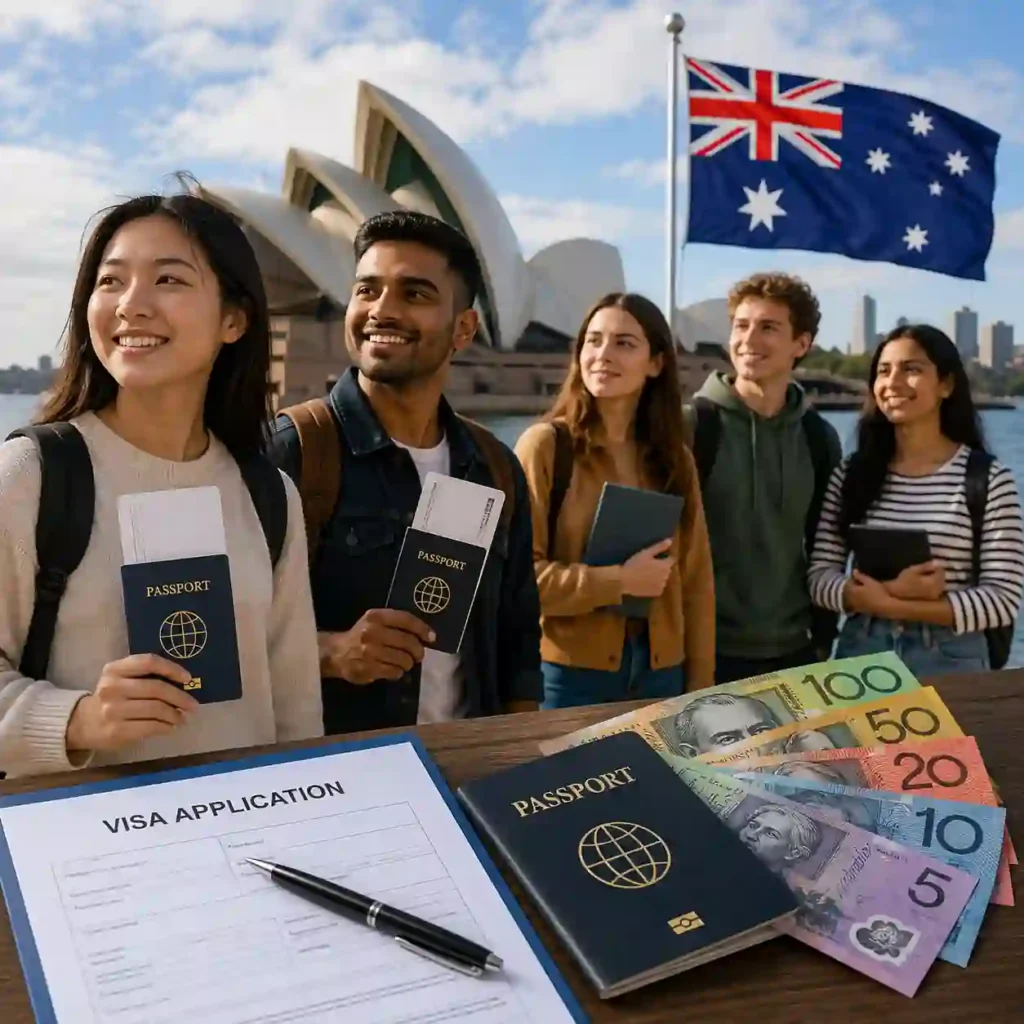

Australia has increased visa application fees from July 1, 2026, with international students, temporary graduates, partner visa applicants and New Zealand family applicants among those facing significantly higher charges. The changes have drawn criticism from Australia’s peak business body, which warns the higher costs could make the country less attractive for students, skilled workers, visitors and employers already competing in a tight global talent market.
The fee changes apply to applications lodged from July 1. While many visa categories have increased by around 25%, some have gone much higher. The New Zealand Family Relationship Visa has nearly tripled, increasing by 198% from A$445 to A$1,330.
New Australia Visa Fees from July 1, 2026
| Visa category | Previous fee | New fee | Change |
|---|---|---|---|
| Student Visa subclass 500 | A$2,000 | A$2,500 | A$500 increase |
| Temporary Graduate Visa subclass 485 | A$4,750 | A$5,750 | A$1,000 increase |
| Partner Visa | Varied by stream | A$11,710 | Higher family migration cost |
| New Zealand Family Relationship Visa | A$445 | A$1,330 | 198% increase |
| Most other visa applications | Varies | Varies | About 25% increase |
The student visa fee increase means international students now face an upfront application charge of A$2,500, before paying for tuition, health insurance, travel, accommodation and living costs. For graduates, the subclass 485 visa has increased by A$1,000 to A$5,750, making the post-study pathway more expensive for those hoping to build a career in Australia.
Read More
Why Business Groups Are Concerned
Australian Chamber of Commerce and Industry chief executive Andrew McKellar said the increases go well beyond inflation and risk sending a poor message to the global market.
He said Australia already had the most expensive student visa fees in the world, and raising the charge so sharply could make the country a harder sell for students, visitors and skilled migrants.
The warning matters because many Australian industries depend on international workers, students and graduates. Tourism, hospitality, education, healthcare, aged care, construction, agriculture and regional employers often rely on overseas arrivals to fill roles that are difficult to staff locally.
Impact on Students, Graduates and Families
For students, the higher fee adds another cost at a time when Australia is already competing with Canada, the UK, New Zealand and other study destinations. A higher application charge may not stop every applicant, but it can influence families comparing total study costs before choosing a country.
Temporary graduates may also feel pressure from the new subclass 485 charge. Many former students use this visa to gain Australian work experience after completing eligible studies. A fee of A$5,750 means graduates may need to plan their finances earlier and more carefully.
Family applicants are also affected. Partner visa charges have increased to A$11,710, while the New Zealand Family Relationship Visa has recorded the largest percentage increase. For families applying with multiple related costs, the total expense can become a major financial hurdle.
Migration Debate Adds Political Pressure
The visa fee increase comes as migration remains a major political issue in Australia. Labor has argued that part of the recent migration pressure was linked to COVID-era processing backlogs, while also tightening migration integrity and character-related checks.
At the same time, the Coalition and One Nation continue to push immigration policy as a key national debate. That makes visa pricing more than a routine administrative change. It affects universities, employers, families and applicants who often plan months before lodging documents.
What Applicants Should Do Now
Anyone planning to apply for an Australian visa should check the latest government fee before lodging an application, because the amount payable depends on the date the application is received. Applicants should also budget for possible extra costs, including health checks, biometrics, English tests, police certificates and additional applicant charges.
For readers following wider immigration and international education updates, visit our latest global news updates for related developments.
Applicants can check the official visa pricing table on the Australian Department of Home Affairs.

Make Swikblog your go-to source on Google for reliable updates, smart insights, and daily trends.