
A humpback whale rescue off the NSW Central Coast has ended successfully after crews removed fishing gear from the animal’s tail near Forrester’s Beach. The operation, carried out between Terrigal and Bateau Bay, came during a demanding weekend for marine wildlife responders as several whales were reported in trouble along the New South Wales coastline.
The incident matters beyond one successful rescue. It shows how Australia’s recovering humpback population is creating new challenges for rescue groups, coastal authorities, fishers and the public during migration season. More whales moving through busy coastal waters means more chances of contact with ropes, lines, floats, drum lines and other marine hazards.
How the Central Coast rescue unfolded
The humpback was reported by a member of the public who noticed fishing gear trailing from the whale’s tail. That early sighting helped alert ORRCA, the Organisation for the Rescue and Research of Cetaceans in Australia, before the whale moved farther along the coast.
Rescuers tracked the whale off Forrester’s Beach, a stretch of coast between Terrigal and Bateau Bay. The operation was not straightforward. The line had affected the whale’s tail fluke, leaving the animal unable to lift its tail normally. That made it harder to see exactly where the gear was sitting and created a more complicated disentanglement job for crews on the water.
Drone monitoring helped the response team observe the whale from above, giving rescuers a better view of the line, the tail movement and the animal’s direction of travel. After working through the afternoon, crews managed to remove the remaining fishing line and the whale was released.
Why removing fishing gear is so risky
Freeing a whale from fishing gear is not like cutting rope from a fixed object. A humpback is powerful, unpredictable and often stressed when entangled. Lines can tighten around the tail or body, and even a tired whale can suddenly dive, roll or accelerate.
That is why trained disentanglement teams rely on distance, timing and observation before moving in. Aerial views, boat positioning and experienced decision-making can reduce risk, but the work remains dangerous. The goal is to remove enough gear to give the whale a real chance of survival without causing further injury or putting people in harm’s way.
Five whale incidents put pressure on rescuers
The Central Coast rescue was part of a wider pattern across the weekend. ORRCA reported five whale entanglement incidents along the NSW coastline, including locations near Sussex Inlet, Cook Island, Merewether Beach and an unconfirmed report around Lennox Head.
The timing stretched response capacity because some ORRCA and National Parks teams were also dealing with a live stranding at Stockton Beach near Newcastle. When multiple incidents happen at once, rescue groups must prioritise locations, available crews, animal condition, weather, sea conditions and how recently the whale was seen.
For coastal communities, that means accurate public reports can become critical. A clear location, direction of travel and visible description of the gear can help rescuers decide where to send crews first.
Separate Stockton Beach stranding had a sad outcome
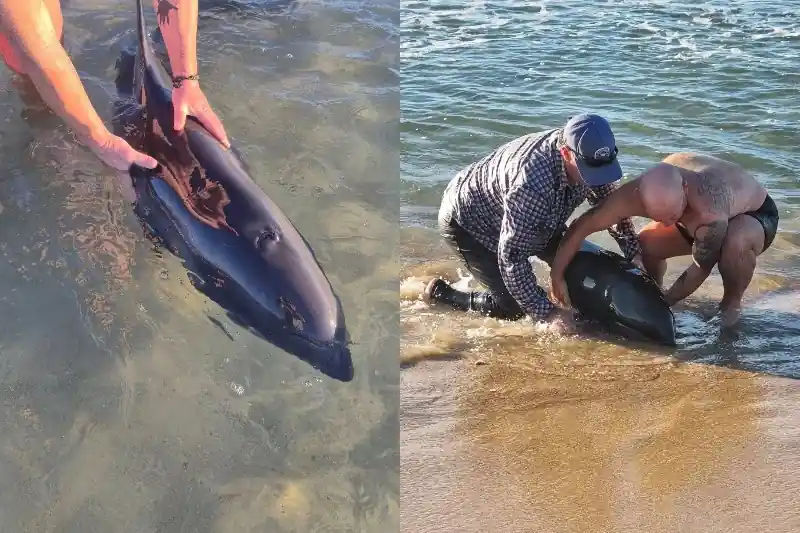
The weekend also included a separate stranding at Stockton Beach, where a small melon-headed whale was found in distress. The animal was about 1.8 metres long and was discovered by local resident Darius Malisauskas during a morning walk.
Local residents helped support the whale in shallow water while waiting for experts to arrive. Malisauskas and another local, Phil, stayed with the animal for about two hours, following step-by-step phone guidance from ORRCA and keeping the whale’s blowhole above the water.
The whale was breathing every eight to 15 seconds and showed short bursts of energy, but it was not strong enough to swim away. Despite efforts from locals, veterinarians and rescue crews, the animal was later humanely euthanised after experts determined it could not recover.
Why this is happening more often
Humpback whales have made a major recovery along Australia’s east coast after historic whaling pressure. That recovery is good news for conservation, but it also means more animals are now passing through areas where fishing activity, coastal infrastructure and marine debris are present.
ORRCA has said it responded to 28 whale entanglements on the NSW coastline last year. By early July this year, it had already responded to 24. That pace suggests rescue teams could face another heavy season if reports continue through migration.
Official NSW marine safety information notes that whale migration creates extra pressure on disentanglement teams and coastal responders. The NSW Government whale disentanglement program outlines how trained crews prepare for humpback migration and work with fishers to reduce risks from gear in the water.
Read More:
- Delta flight reports suspected firework strike in Chicago
- National Fried Chicken Day deals 2026
- Visit the Swikblog homepage for more latest news
What people should do if they see an entangled whale
Anyone who sees a whale caught in gear should report it quickly and avoid getting close. Members of the public should not try to cut rope, enter the water or chase the animal. An entangled whale can move suddenly, and rescue attempts without training can make the situation more dangerous.
The most useful details include the whale’s exact location, direction of travel, size, behaviour, visible gear and whether floats, ropes or buoys are attached. Photos or video taken from a safe and legal distance can also help rescue teams assess the situation before arriving.
Boat operators should slow down near the whale and leave room for trained crews. Crowding the animal can increase stress and make a rescue harder.
Why the rescue matters for NSW
The successful release near Forrester’s Beach shows how fast action from the public and trained responders can change the outcome for a whale in trouble. It also shows why whale season is becoming a larger operational challenge for coastal rescue groups.
For NSW residents, the story is a reminder that marine wildlife protection is not only about conservation policy. It often depends on ordinary people noticing something unusual, reporting it quickly and allowing trained teams to do the dangerous work.
Australia’s coast frequently brings together public sightings and official emergency response, including unusual beach events such as suspected debris found on a Queensland beach. In this case, a timely report helped rescuers reach the humpback and remove the fishing gear before the injury risk became worse.

Make Swikblog your go-to source on Google for reliable updates, smart insights, and daily trends.