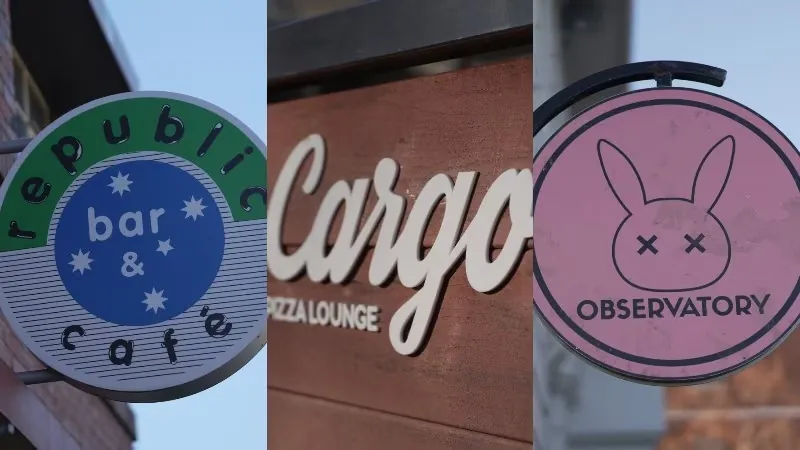

Seven popular hospitality venues across Hobart have closed after the companies operating them entered voluntary administration, leaving more than 80 employees facing uncertainty while administrators work to find new owners. The affected businesses are spread across Salamanca Place, Franklin Wharf and North Hobart, making the closures one of the city’s most significant hospitality disruptions in recent years. Administrators say their immediate priority is to preserve the businesses and secure buyers capable of reopening the venues.
The closures involve businesses linked to Pub Banc Group and Hotel Banc Group. Rather than moving straight into liquidation, the companies have entered a legal restructuring process that places independent administrators in control while options such as a sale, recapitalisation or reopening are explored.
Seven well-known venues close across Hobart
The businesses affected by the administration are:
- Cargo Bar
- Jack Greene
- Post Street Social
- Observatory Bar
- Republic Bar
- Franklin Wharf Restaurant & Bar
- Franklin Wharf Function Centre
These venues have long been part of Hobart’s dining, nightlife and tourism scene. Several operate along the busy Salamanca waterfront, while Republic Bar has built a strong reputation within North Hobart’s live entertainment district.
Rising operating costs added pressure
The companies said the decision followed sustained financial pressure from increasing food and beverage costs, higher utility bills, insurance expenses and other day-to-day operating costs. Those challenges have coincided with tighter household budgets, reducing discretionary spending across the hospitality sector.
Large venues often carry significant fixed expenses, including staffing, rent, maintenance and security. Even established businesses can struggle when operating costs rise faster than customer spending.
Similar financial pressures have affected businesses across Australia as higher living costs continue to weigh on consumers and employers. Recent economic concerns have been highlighted in reporting on Australia’s recession risk and slowing consumer spending.
Administrators aim to keep the businesses operating
Corporate restructuring firm Apex Advisory has been appointed as administrator. Managing director Tim Booker said the focus is on completing a sale or recapitalisation as quickly as possible while protecting business value and delivering the best outcome for creditors.
According to the administrator, the venues remain attractive because they occupy prominent locations, have established brands and continue to benefit from strong public recognition. Those factors could encourage interest from potential buyers looking to re-enter the hospitality market.
More than 80 employees affected
Over 80 staff members are connected to the seven businesses. Employees were informed before the public announcement, while suppliers and creditors are now being contacted as part of the administration process.
If suitable buyers are found quickly, some venues could reopen with many existing jobs preserved. A longer sale process, however, would increase uncertainty for workers, suppliers and nearby businesses that depend on hospitality trade.
Why these closures matter to Hobart
The closures extend beyond individual businesses. Salamanca Place and Franklin Wharf attract thousands of visitors throughout the year, while North Hobart is recognised for its restaurants, pubs and live entertainment. Losing several established venues at the same time reduces dining choices and may temporarily affect surrounding businesses that benefit from evening foot traffic.
Republic Bar, in particular, has been closely associated with Hobart’s live music scene, providing a venue for local performers and community events over many years.
Hospitality industry warns margins remain tight
Hospitality Tasmania chief executive Steve Old described the closures as a major setback for the city’s hospitality sector. He said many businesses continue to operate on extremely tight margins despite ongoing demand for dining and entertainment.
Hospitality remains one of Tasmania’s largest employment sectors, meaning financial pressure on restaurants, pubs and bars can quickly affect workers, suppliers and local communities.
Government support and what happens next
Tasmania’s Minister for Tourism, Hospitality and Events, Roger Jaensch, said supporting affected employees is the government’s immediate priority. Jobs Tasmania has begun working with the administrator to connect displaced workers with available employment assistance and support services.
Voluntary administration does not necessarily mean a business will close permanently. Instead, an independent administrator assesses whether the company can continue operating, be restructured or be sold. The Australian Securities and Investments Commission (ASIC) explains that the process is designed to give financially distressed businesses an opportunity to achieve the best possible outcome for employees, creditors and other stakeholders.
Over the coming weeks, the success of the sale process will determine whether these well-known Hobart venues return under new ownership or become a lasting loss for the city’s hospitality industry.
More News:
- Delta flight reports suspected firework strike in Chicago
- National Fried Chicken Day deals 2026
- Latest news homepage

Make Swikblog your go-to source on Google for reliable updates, smart insights, and daily trends.