
Updated: December 11, 2025 • Rome / New Delhi • Swikblog News Desk
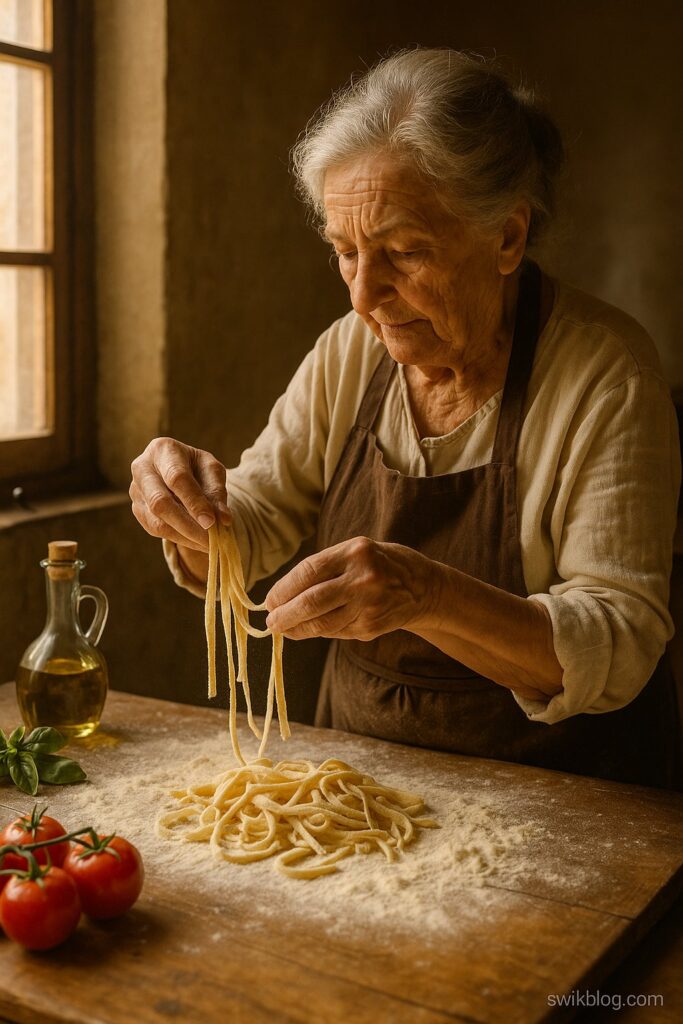
Italian food has always felt like more than just something on a plate. It’s the clinking of glasses at Sunday lunch, the steam rising from a pot of ragù, the quiet authority of a nonna showing a child how thin the pasta dough should be. Now, that living tradition has received one of the highest cultural honours in the world.
UNESCO has officially added Italian cuisine to its Intangible Cultural Heritage of Humanity list, making Italy the first country ever to have its entire national cuisine recognised as a cultural treasure. The decision was announced during a UNESCO assembly in New Delhi, where “Italian cooking: between sustainability and biocultural diversity” was formally inscribed.
What UNESCO Actually Recognised
This is not just about pizza, pasta or gelato. UNESCO’s listing covers the rituals, knowledge, skills and social practices that sit behind Italian cooking — from choosing seasonal ingredients and using regional products, to the act of gathering around the table to share a meal.
According to the nomination, Italian cuisine is defined by:
- Respect for local and seasonal ingredients
- Regional diversity, from Sicilian seafood to Piedmontese truffles
- Intergenerational transmission of recipes, especially from grandparents to grandchildren
- Communal meals that strengthen family and community bonds
UNESCO highlighted the way Italian cooking brings people together, describing it as a “cultural and social blend of culinary traditions” that promotes sharing, identity and a sense of belonging.
‘A Gesture of Love’: How Italy Reacted
In Italy, the decision has been greeted with open pride. Italian Prime Minister Giorgia Meloni hailed the inscription as a victory for a tradition that “tells the story of who we are”, while President Sergio Mattarella said it strengthens Italy’s global prestige and recognises the work of farmers, winemakers, bakers and cooks across the country. :contentReference[oaicite:3]{index=3}
Italy already had dozens of cultural sites and practices on various UNESCO lists, from the Colosseum to the art of the Neapolitan pizzaiuolo. But this is the first time that a whole national cuisine – in all its regional variety – has been recognised as a single cultural element. :contentReference[oaicite:4]{index=4}
For many Italians, the news simply confirms what they’ve always believed: that the recipes passed down through families and the everyday rituals of cooking and eating together are just as important as monuments or museums.
Tourism, Trattorias and a New Wave of Food Pilgrims
Tourism experts expect the UNESCO stamp to act as a powerful magnet for visitors in 2026 and beyond. Even before the listing, Italy’s UNESCO sites and food regions were driving record visitor numbers; now, tour operators are predicting a surge in culinary itineraries built around local dishes, vineyards and traditional food festivals.
From Rome’s trattorias and Bologna’s markets to family agriturismos in Tuscany, the label could help small producers and restaurants that lean into tradition rather than chasing trends. Some regions are already talking about new food trails and educational experiences that immerse visitors in olive harvesting, cheesemaking or fresh pasta workshops.
At the same time, Italian officials and UNESCO specialists caution that the recognition is not a marketing logo but a responsibility: it is meant to protect authenticity and diversity, not turn the country into a “gastronomic theme park” built only for tourists. :c
Why Italian Cuisine Was First – and Who Could Be Next
Italy’s success will inevitably raise questions elsewhere. French, Japanese, Mexican, Turkish, Peruvian and Indian cuisines all have strong arguments for similar recognition. Many already have specific dishes or methods on the UNESCO list, but none has yet seen its entire national cuisine accepted in this way.
Italy’s application built on years of academic work and previous listings, including the Mediterranean diet and Neapolitan pizza-making. Food historians argue that Italian cuisine is uniquely placed because it combines deep local roots, a strong culture of written recipes and an enormous global diaspora that helped spread dishes around the world while keeping ties to home.
That global reach is part of why this story is trending far beyond Europe. From New York pizzerias to Melbourne espresso bars, millions of people now eat forms of Italian food every day — and feel personally connected to the UNESCO decision.
From Floods to Food: How Heritage Shapes Our Sense of Home
Cultural heritage doesn’t exist in isolation. At the same time as Italy celebrates this culinary milestone, other parts of the world are grappling with extreme weather, displacement and loss. In Canada’s British Columbia, for example, communities in the Fraser Valley have been facing flood emergencies and evacuation orders as rivers rise and farmlands go under water. You can follow our live coverage of the B.C. flood emergency here , including how residents are fighting to protect both lives and livelihoods.
What connects these stories is the idea of place, memory and belonging — whether that’s a kitchen table in Naples or a family farm in Canada. UNESCO’s recognition of Italian cuisine underlines how powerful those everyday rituals are in shaping who we are and what we choose to protect.
What Happens Next for Italy’s Food Culture
The inscription now obliges Italy to invest in safeguarding the traditions it has proudly showcased. That includes supporting small-scale producers, protecting biodiversity, promoting food education in schools and resisting the pressure to oversimplify regional cuisines for mass tourism.
For home cooks and restaurant diners, though, the message is beautifully simple: sit down, eat slowly, and remember that this meal is part of a living heritage.
Written by Swikblog News Desk

Make Swikblog your go-to source on Google for reliable updates, smart insights, and daily trends.