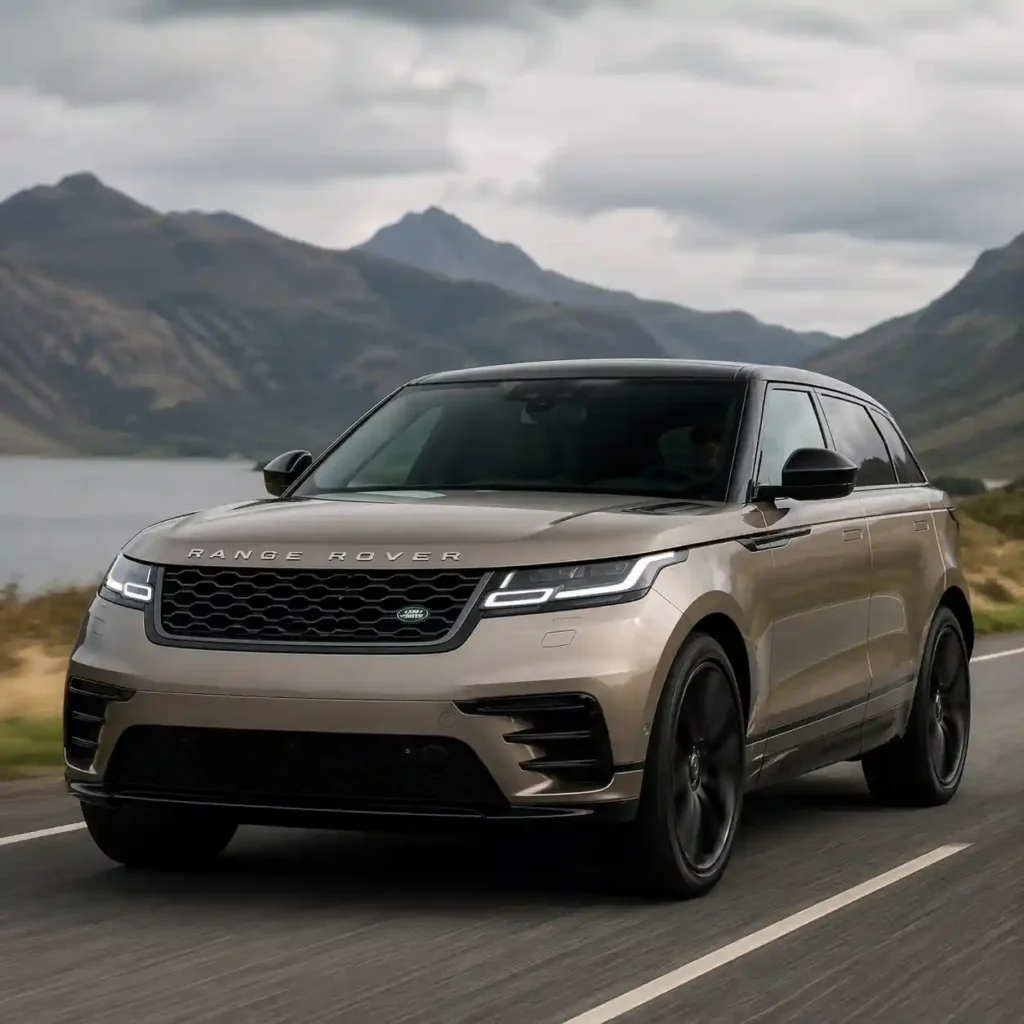

Jaguar Land Rover has launched a major U.S. safety recall covering 170,169 vehicles after regulators identified a defect that can trigger a sudden loss of drive power. For owners, this is the kind of recall that feels more urgent than routine because it is tied directly to how the vehicle behaves on the road, not to a cosmetic issue or a minor software inconvenience. The problem can also affect exterior lighting, which makes the risk more serious in real driving conditions.
The recall involves a wide spread of Jaguar and Land Rover vehicles sold in recent years, including some of the company’s most visible models in the American market. The issue centers on the DC-DC converter, a component that helps support the vehicle’s 12-volt electrical system. If that converter fails, the 12-volt battery system can stop charging properly. Once that happens, the chain reaction can be severe: the vehicle may lose drive power, and important functions such as exterior lighting may also be affected.
That combination matters. A vehicle losing propulsion is already a serious safety concern. Add reduced lighting to the picture, and the risk becomes even more obvious, especially in traffic, at highway speed, or during night driving. This is why recalls involving electrical faults tend to draw close attention from the National Highway Traffic Safety Administration. Owners who want to monitor recall status or search by VIN can use the official NHTSA recall database.
Affected models stretch across key Jaguar and Land Rover nameplates
The recall is broad enough to touch both luxury SUV buyers and customers who moved into Jaguar Land Rover’s newer electrified lineup. The vehicles covered include the 2021-2024 Land Rover Range Rover Velar and Land Rover Discovery, the 2020-2023 Range Rover Evoque, the 2019-2024 Range Rover Sport, the 2020-2024 Range Rover, the 2020 Discovery Sport, the 2020-2024 Defender, the 2021-2024 Jaguar F-Pace, and the 2021-2022 Jaguar E-Pace mild-hybrid electric vehicles.
That model mix says a lot about the scale of the issue. These are not fringe products. Several of them sit at the center of JLR’s U.S. business, which means the recall lands at a sensitive point for the brand. It also highlights how modern vehicle architecture works today. One shared component, when used across multiple models and production years, can create a much wider problem than drivers might expect.
Why the 12-volt system still matters so much
It is easy to assume that in a modern luxury vehicle, the 12-volt system is just a background detail. In reality, it remains essential. Even in mild-hybrid and electronically advanced vehicles, the 12-volt side of the system supports vital functions. When charging is interrupted, the vehicle can quickly move from normal operation to a high-risk situation.
That is why the defect is more than a technical footnote about a converter chip. The reported issue involves an internal fault in the boost control microchip within the DC-DC converter. Put simply, a relatively small electronic failure can have outsized consequences. For drivers, the practical takeaway is straightforward: a vehicle that feels refined and technologically advanced can still be sidelined by one vulnerable component in the power system.
This also reflects a bigger shift in the auto industry. As vehicles become more software-heavy and more dependent on layered electronics, reliability questions are no longer only about engines, transmissions, or suspension parts. Electrical systems now sit much closer to the center of the safety conversation than they did a decade ago.
What makes this recall especially frustrating for owners
One reason this recall stands out is that the remedy is still under development. Jaguar Land Rover has acknowledged the issue, but the final fix has not yet been rolled out. That leaves owners in an uncomfortable middle ground. The defect is known, the affected vehicles have been identified, and the risk has been described clearly, but the repair path is not yet complete.
For many drivers, that uncertainty can be almost as disruptive as the defect itself. A recall without an immediate remedy forces owners to stay alert for updates, watch for official notices, and think twice about peace of mind during everyday driving. It also creates a practical problem: many people rely on these vehicles for school runs, commuting, business travel, and weekend trips. When a recall involves sudden power loss, it is difficult to treat it casually.
Owners should make sure their contact details are current with dealers, keep an eye on mailed notices, and check recall status through official channels rather than waiting to hear secondhand information. A VIN-based lookup is the best way to confirm whether a specific vehicle is included.
What this means for Jaguar Land Rover and Tata Motors
Beyond the garage, the recall carries reputational weight. Jaguar Land Rover remains one of Tata Motors’ most important global businesses, and large U.S. safety recalls inevitably attract investor attention. Premium automakers trade heavily on trust. Buyers in this segment are paying not only for design and badge value, but also for the expectation of durability, smooth engineering, and confidence behind the wheel.
That does not mean every recall permanently damages a brand. The real test is often in the response. Companies are judged on how quickly they communicate, how clearly they explain the issue, and how efficiently they deliver a repair. In that sense, this story is not only about a component fault. It is also about whether Jaguar Land Rover can reassure owners before frustration hardens into lost confidence.
For now, the recall is a reminder that modern vehicles can be sophisticated yet still exposed to very basic questions of dependability. Drivers do not think in terms of converters and microchips when they start the engine. They think about whether the vehicle will keep moving safely and predictably. That is exactly why this recall matters, and why the fix will be watched closely in the weeks ahead.
You may like: Harley-Davidson Softail recall: 17,000 motorcycles flagged in US over brake defect

Make Swikblog your go-to source on Google for reliable updates, smart insights, and daily trends.