After nearly five years of silence, America’s most enduring missing piece of the January 6 story may finally be moving toward resolution. The FBI confirmed on Thursday that a suspect has been arrested in connection with the pipe bombs placed outside the Democratic National Committee and Republican National Committee headquarters in Washington, D.C., on the night before the Capitol riot.
The arrest marks a decisive breakthrough in a case that had become symbolic of the many unresolved crimes linked to one of the darkest political days in modern U.S. history. For investigators and the public alike, the pipe bomber was a ghost: visible on CCTV, yet maddeningly unidentifiable — until now.
A crime overshadowed by chaos
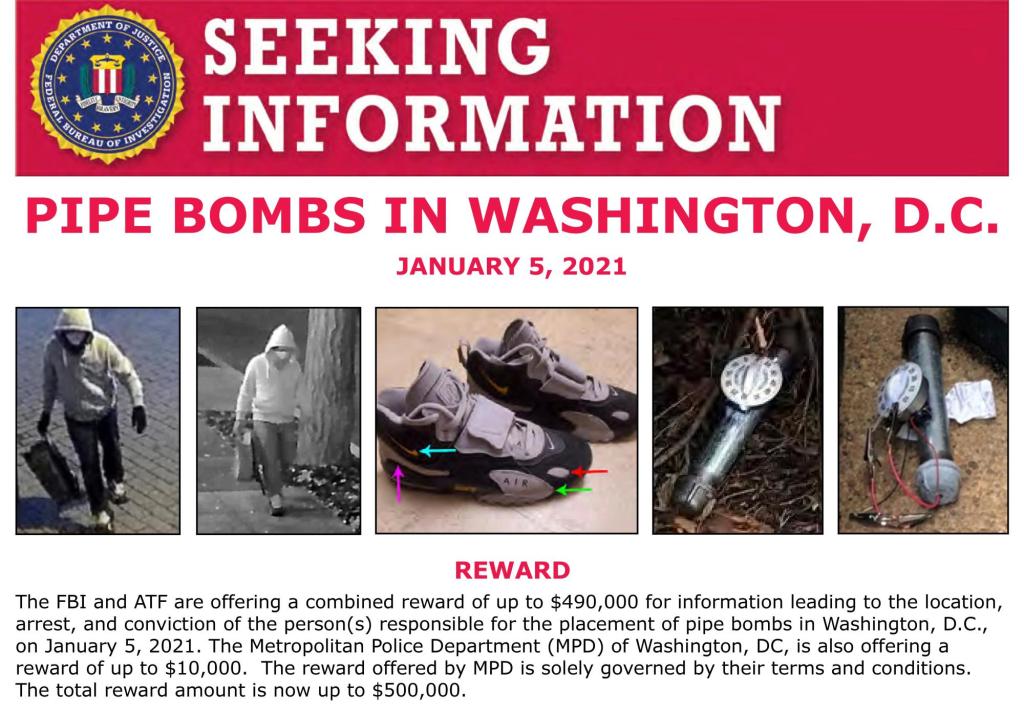
On the evening of January 5, 2021, a hooded figure wearing gloves and a grey sweatshirt was captured on surveillance footage moving casually through Capitol Hill. The individual stopped outside both party headquarters and placed pipe bombs, complete with timers, before disappearing into the streets.
The next day, as thousands of rioters overran the U.S. Capitol, police quietly discovered the devices. Bomb squads managed to safely disable both, but authorities later confirmed the explosives were real and capable of causing serious injuries or death.
For years, the FBI offered few public updates but frequently insisted the case had not gone cold. It eventually posted a $500,000 reward, urging the public to help identify the suspect from grainy footage and rare shoe-brand clues.
A long hunt finally ends
According to Reuters, the arrest followed months of renewed investigative pressure and the reassessment of key evidence. Law enforcement officials have yet to reveal the suspect’s name or outline formal charges, though court filings are expected in the coming days.
BREAKING – The FBI has arrested a Virginia man tied to the D.C. pipe bomb case involving devices planted at the RNC and DNC the day before January 6.
— Right Angle News Network (@Rightanglenews) December 4, 2025
Sources say the suspect was identified years ago, but a fresh review of documents led to today’s arrest. pic.twitter.com/t09aHdi9s4
The FBI has similarly confirmed to Associated Press that the person taken into custody is believed to be the same individual seen on video planting both devices.
Investigators reportedly re-examined overlooked tips, recalibrated digital analysis tools and returned to surveillance archives that had grown to include tens of thousands of hours of footage. Officials describe the case as one of the most resource-intensive domestic investigations in the Bureau’s recent history.
Unanswered motive
Perhaps the largest remaining question is why the bombs were placed in the first place. For years, speculation focused on whether the devices were designed as distractions — deliberately positioned to draw police away from the Capitol.
Authorities have not publicly supported that theory, but neither have they ruled it out. A prosecutor-led case may now provide clarity on whether the suspect acted alone, followed ideological motivations, or sought to influence events beyond the building entrances where the bombs were left.
Political violence has not faded
The arrest comes as political division in the United States remains intense, with immigration, race and national identity dominating the American conversation once again. Similar underlying tensions can be seen reflected in recent rhetoric surrounding deportation policy, explored in Swikblog’s coverage of Trump’s renewed attacks on Somali immigrants and proposed migration crackdowns .
Civil rights groups warn that unresolved violence from past flashpoints only deepens distrust. Many victims of January 6 have expressed frustration that symbolic figures behind the violence remained unaccountable far longer than those who entered the Capitol.
What happens next
The suspect is expected to appear in federal court within days. Prosecutors may bring charges ranging from illegal possession of destructive devices to attempted use of a weapon of mass destruction — a label that reflects legal classification, not necessarily scale.
If convicted, the individual could face decades in prison.
For a nation still wrestling with the legacy of January 6, the arrest delivers something rare: closure — if incomplete — to one of the final unsolved moments from a day that reshaped U.S. democracy.

Make Swikblog your go-to source on Google for reliable updates, smart insights, and daily trends.