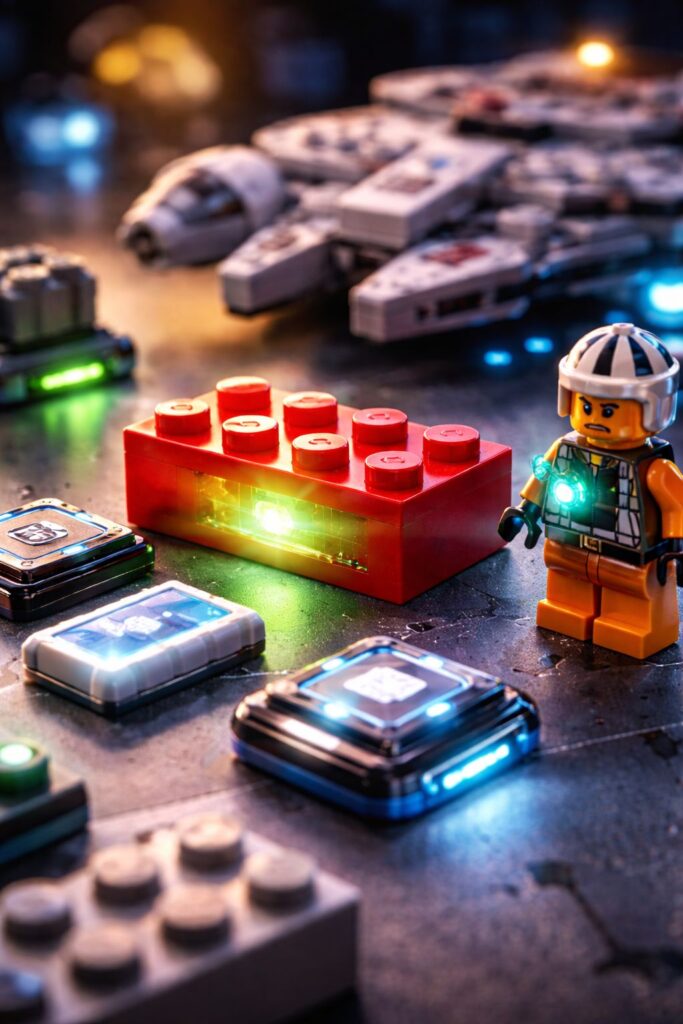

At CES 2026, The Lego Group unveiled a new “Smart Brick” initiative that places a tiny computer inside a classic 2×4 brick — designed to add light, sound, sensing, and real-time reactions to physical builds without turning Lego play into a screen-first experience.
A Lego brick that reacts to how kids actually play
The Smart Brick is built to look and build like an ordinary Lego piece, but internally it’s designed to detect motion, orientation, and nearby tagged elements — then respond with effects that match what’s happening in the moment. Lego says the first wave will roll out in select Lego Star Wars sets starting March 1, 2026, aiming to make scenes feel more “alive” as kids move figures, vehicles, and builds around a room.
The idea is simple: instead of pressing buttons or relying on a phone, the build itself becomes the trigger. Lift a ship and you might hear engines roar; flip it and the soundscape can switch to crash effects. Place a specific character into a specific spot, and the set can react as if the story just advanced a scene.
Smart tags, smart minifigures, and bricks that “know” each other
Lego’s system pairs Smart Bricks with NFC-enabled smart tags embedded in new tiles and new Lego minifigures. That means the brick can recognize certain nearby pieces and trigger context-based effects — like themed music cues when a particular figure sits in a specific location, or interactive battles when multiple builds are set up together.
The Smart Bricks are also designed to form a Bluetooth mesh network with other Smart Bricks, which lets them coordinate effects across a build. In practice, this could enable larger play moments: ships and figures that respond to each other’s presence, vehicles that detect race outcomes, or scenes that shift audio and lighting based on how a set is arranged.
No AAAs: wireless charging and “ready after years” battery design
One of Lego’s clearest goals is removing the friction that made earlier “smart toy” attempts feel bulky. The Smart Brick is wirelessly charged, using a charging pad that can power multiple bricks at once. Lego also says the battery is designed to still perform even after long periods of inactivity — a key promise for toys that often sit in bins between play phases.
That matters because it shifts “smart” Lego away from being a novelty you must constantly maintain. If the charging experience is painless and the bricks reliably wake up when needed, it becomes easier for families to treat these as normal Lego pieces — just with extra magic hidden inside.
Why this could be Lego’s biggest leap in decades
Lego has experimented with digital play before, but the Smart Brick approach is different because it tries to keep the “center of gravity” physical. Instead of a toy that depends on a screen, the brick adds subtle intelligence: sensing, reacting, and linking multiple elements into a single play system.
If it scales beyond Star Wars, it could open new kinds of sets where motion, placement, and interaction become part of the storytelling. Think racing builds that recognize finish-line moments, vehicles that change sounds based on speed and movement, or play worlds that respond when specific characters enter specific spaces.
Early reporting and details were shared by The Verge, which described the Smart Brick as a major step toward bringing sets to life while keeping Lego’s core “build-first” identity intact.

Make Swikblog your go-to source on Google for reliable updates, smart insights, and daily trends.