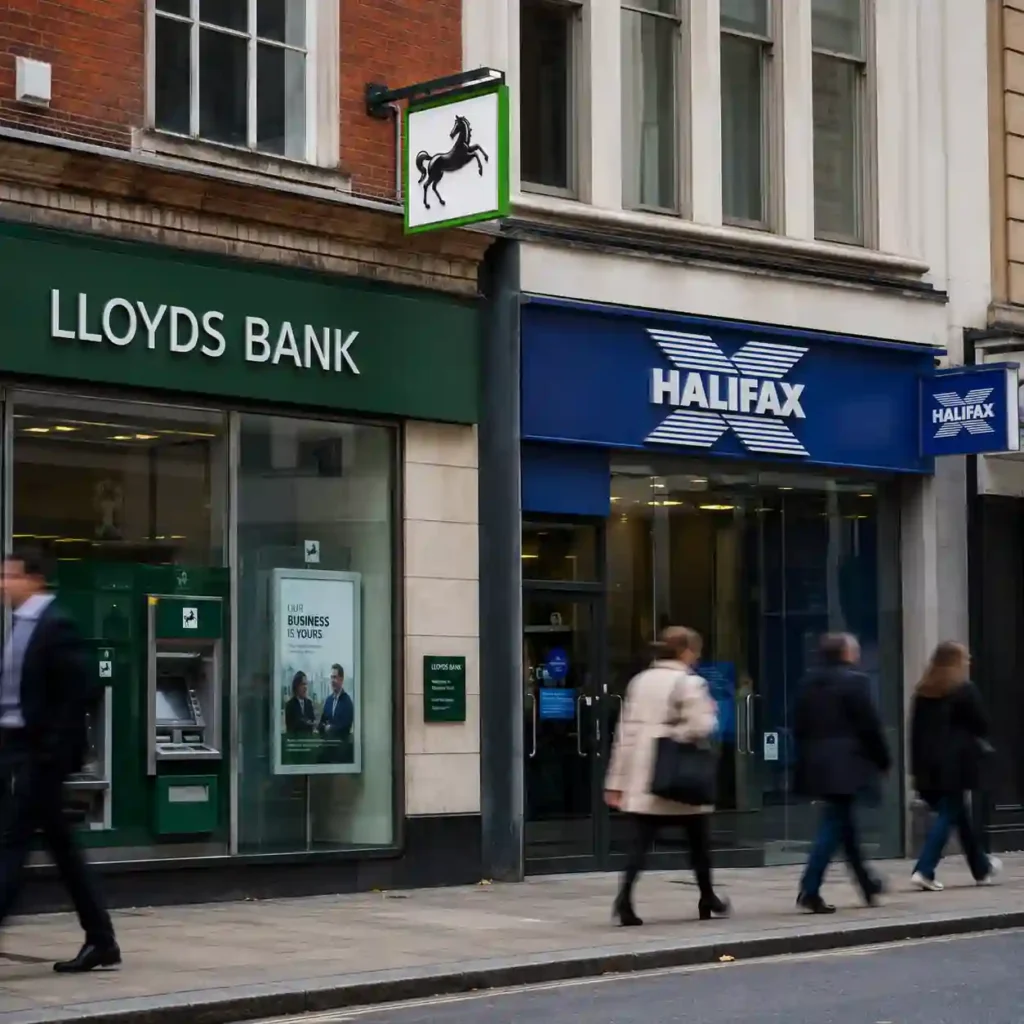

The UK’s banking network is shrinking again after Lloyds Banking Group confirmed plans to close 79 additional Lloyds Bank and Halifax branches, extending a years-long shift away from traditional high street banking.
The latest announcement covers 31 Lloyds Bank locations and 48 Halifax branches across Britain. It follows an earlier decision to close 95 sites, taking the group’s planned branch reductions to 166 across 2026 and 2027.
While branch closures have become increasingly common in recent years, the latest figures highlight how quickly banking habits are changing. With customers carrying out more transactions through smartphones and online platforms, lenders are continuing to reduce their physical footprints despite concerns about access to face-to-face services.
Britain’s bank branch network is getting smaller
The latest Lloyds and Halifax closures are part of a much larger transformation happening across the UK banking sector.
Industry figures show that 245 bank branches are scheduled to close during 2026 alone. By the beginning of June, 138 branches had already shut their doors, while June is expected to be the busiest month for closures, with another 82 locations due to disappear.
The trend stretches far beyond a single year. Since February 2022, more than 2,167 bank branches have either closed or announced plans to close, reflecting a major shift in how customers interact with financial institutions.
For many consumers, mobile banking apps now provide instant access to transfers, payments, account management and customer support without requiring a branch visit. Banks argue that maintaining large branch networks no longer reflects how most customers manage their finances.
Lloyds Banking Group continues its digital-first strategy
Lloyds Banking Group says changing customer behaviour is behind the latest closures. The lender points to increasing use of digital banking services and declining footfall across many branches.
The group maintains that customers still have access to a wide range of services through online banking, mobile apps, telephone support, Post Office locations, PayPoint services and community bankers.
Once the latest closure programme is completed, Lloyds Banking Group is expected to operate approximately 531 branches across Britain.
The move mirrors broader changes across the industry as banks focus investment on digital platforms while reducing operational costs associated with underused branch networks.
Other major banks are also cutting branches
Lloyds and Halifax are not the only banks reducing their physical presence.
Santander has announced plans to close 54 branches during 2026, while NatWest is shutting 35 locations. Bank of Scotland branches are also included within Lloyds Banking Group’s wider restructuring plans.
Together, these decisions demonstrate how the banking industry is responding to customer demand for digital services while attempting to balance accessibility for those who still depend on local branches.
The latest Lloyds Banking Group closures will affect communities throughout the UK, with the North West and South East among the hardest-hit regions. London is also expected to lose multiple branches as lenders continue to reshape their networks.
What branch closures mean for customers
For customers who regularly use banking apps, branch closures may have little immediate impact. However, the situation is different for people who rely on in-person support.
Older customers, individuals with limited digital skills, rural communities and cash-dependent businesses are among those most likely to be affected. Many still visit branches for services that are difficult to replicate online, including large cash deposits, identity verification, financial guidance and support during fraud investigations.
The concerns come at a time when many pensioners are also managing significant financial changes, including recent State Pension and benefit payment increases, making access to trusted banking services particularly important for some households.
Consumer groups have repeatedly warned that the closure of local branches can leave vulnerable customers feeling isolated from essential financial services.
The growing role of banking hubs
As branch numbers decline, banking hubs are becoming an increasingly important part of the UK’s financial infrastructure.
LINK, the organisation responsible for protecting cash access, reviews branch closures to determine whether replacement services are needed. Where significant gaps emerge, shared banking hubs can be recommended to provide cash withdrawals, deposits and basic banking services for customers of multiple banks.
LINK has already recommended 277 banking hubs across the UK. Industry experts believe that figure could rise significantly if future access assessments take a broader view of community banking needs.
The Government has also launched an independent review into access to banking services. Led by former Which? Director General Richard Lloyd, the review is examining whether closure assessments should look beyond cash access and consider wider banking requirements.
Some experts believe changes resulting from the review could increase the number of banking hubs from an original target of 350 to around 550 nationwide.
What affected customers should do next
Customers concerned about upcoming branch closures should check whether their local Lloyds or Halifax branch appears on the latest closure schedule and review alternative banking options available nearby.
Read More
Options may include neighbouring branches, Post Office banking services, community bankers, digital support programmes and future banking hubs where available.
Official closure information and support options can be found through the Lloyds Bank branch closure information page.
With nearly 250 bank branches set to close across the UK this year and more changes likely in the years ahead, the future of British banking is increasingly moving online. The challenge for banks, regulators and policymakers will be ensuring that customers who still need local services are not left behind as that transition accelerates.

Make Swikblog your go-to source on Google for reliable updates, smart insights, and daily trends.