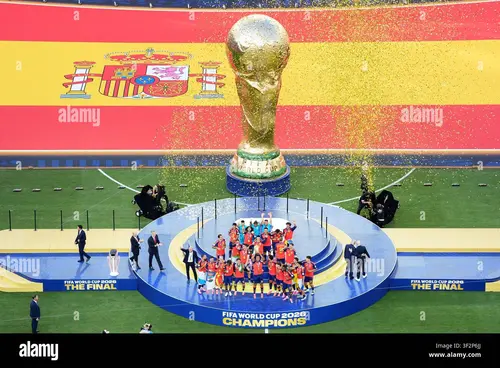
Who owns the World Cup final grass at MetLife Stadium? That unexpected question has triggered a dispute between FIFA, New Jersey officials and the regional host committee after pieces of the Spain–Argentina final pitch were placed on sale for as much as $3,000.
The natural grass used for the July 19, 2026 final is being turned into individually numbered collectibles after the match. However, New Jersey lawmakers argue that FIFA and tournament organizers should not be allowed to sell material installed on state-controlled property with millions of dollars in taxpayer funding.
The controversy has created a complicated ownership debate. FIFA says the sale is a regional host-city initiative from which it receives only a small royalty, while New Jersey officials maintain that taxpayers deserve a direct share of any proceeds.
How much does the World Cup final grass cost?
The official FIFA Store lists four versions of its “Piece of the Pitch” collection. Prices begin at $450 for the Foundation Edition, followed by a $900 Stadium Edition, a $1,200 Legacy Edition and a $3,000 Hero Edition.
Each collectible contains an authentic fragment of the surface used for the World Cup final between Spain and Argentina. The grass is permanently preserved inside an acrylic display and will be shipped only after the tournament has ended.
The $450 edition includes a USB keepsake containing authenticity material and comes in a presentation box. The premium Hero Edition reportedly includes additional display items, including a gold-etched replica ticket and a crystal-cut glass trophy.
Reports say each of the four editions is limited to 2,026 pieces. If every item were sold at its listed price, the complete collection would have a maximum gross retail value of approximately $11.24 million.
That figure should not be confused with FIFA’s profit. It represents possible retail sales before manufacturing, preservation, packaging, distribution and other costs. FIFA has also denied that it will receive the full amount.
The memorabilia comes from a pitch installed specifically for the tournament. MetLife Stadium, temporarily called New York New Jersey Stadium under FIFA’s naming rules, normally uses an artificial playing surface for New York Giants and New York Jets games.
A natural-grass system therefore had to be designed, installed and maintained to satisfy FIFA’s tournament standards. The New Jersey Sports and Exposition Authority reportedly spent more than $13 million on the field project.
The authority operates the Meadowlands Sports Complex and holds the stadium’s land lease. That connection is central to New Jersey’s claim that the removed grass cannot be treated as FIFA’s property without examining the rules covering publicly funded assets.
Why New Jersey says taxpayers should benefit
Governor Mikie Sherrill’s office argues that New Jersey paid millions toward the pitch and that taxpayers should consequently share in the money generated from selling it.
Republican Assemblyman Michael Inganamort has gone further, alleging that the sale may violate state rules governing the disposal of public property. He has called on the Sherrill administration to consider seeking a restraining order.
“It is American-grown grass paid for by the taxpayers of New Jersey and planted at a state-owned complex,” Inganamort said in a statement published by the New Jersey Assembly Republicans.
Inganamort contends that any sale must follow the rules applied to surplus state property and directly benefit New Jersey taxpayers. His position has not yet been confirmed by a court, meaning it would be premature to declare the sale illegal.
FIFA has disputed the suggestion that it is turning the taxpayer-funded field into an $11 million windfall. According to its response reported by The Athletic, the turf program is being led by the New York New Jersey World Cup Host Committee rather than FIFA itself.
FIFA says it will receive a royalty of less than 5% for the use of its branding and intellectual property. It also says only about five square yards of the field will be used and that a larger share of the revenue will go to the host committee.
The host committee says proceeds will enter its general fund and support its regional work, but it has not publicly provided a complete breakdown showing how much each party will receive.
Its representatives have defended the broader investment in the tournament, arguing that spending by New Jersey, New York, the federal government and private partners has produced significant economic activity, regional tax revenue and permanent infrastructure improvements.
The grass controversy nevertheless exposes a familiar tension surrounding major sporting events: local governments carry substantial hosting costs while international organizers retain control over many of the most valuable commercial rights.
The disagreement also arrives during a heavily commercialized final weekend. Along with match tickets and official merchandise, attention has surrounded the World Cup final closing ceremony and its performers, turning MetLife Stadium into the centre of both sporting and commercial activity.
Interest in the final has also been intensified by the remarkable connection between Lionel Messi and Lamine Yamal. A famous childhood photograph resurfaced before the match, adding another chapter to the story of Messi and Yamal meeting in the World Cup final.
The central legal question remains unresolved: does paying for and installing the grass make it New Jersey property, or did tournament agreements give the host committee the right to remove and sell part of it?
Until the contracts are disclosed or a court examines the issue, neither side has supplied a definitive public answer. What is clear is that a small section of grass has become a multimillion-dollar test of who pays for the World Cup—and who is allowed to profit once the final whistle blows.

Make Swikblog your go-to source on Google for reliable updates, smart insights, and daily trends.