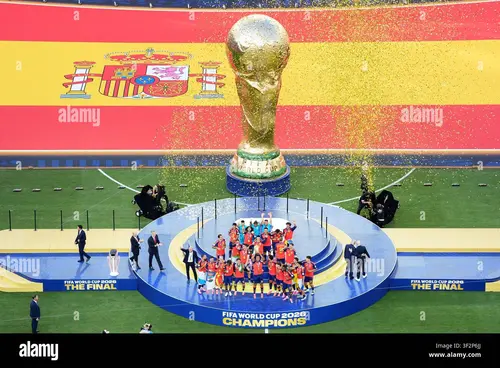
Toni Kroos’ “Football won” tweet became one of the biggest social media reactions after Spain defeated Argentina in the 2026 FIFA World Cup final. The former Germany and Real Madrid midfielder used just two words, but they immediately sparked debate over whether he was praising Spain or taking a swipe at Lionel Messi’s Argentina.
Kroos published the message shortly after Spain secured a 1–0 extra-time victory at New York New Jersey Stadium on July 19. At the time of the screenshot, the viral post had attracted approximately 21 million views, 1.3 million likes and 318,000 reposts.
Football won — Toni Kroos (@ToniKroos) July 19, 2026
Why did Toni Kroos say “Football won”?
Kroos did not explain his message or directly mention Argentina, Messi or any individual player. However, the timing suggested that he considered Spain the deserving winner after Luis de la Fuente’s team controlled most of the final.
Spain repeatedly tested Argentina goalkeeper Emiliano Martínez but could not find a breakthrough during normal time. Argentina’s task became even harder when Enzo Fernández received his second yellow card in second-half stoppage time, reducing the defending champions to 10 players.
The decisive moment arrived in the 106th minute. Substitute Ferran Torres reacted to a loose ball inside the penalty area and produced the finish that gave Spain its second men’s World Cup title. The country’s previous triumph came in South Africa in 2010.
According to the official FIFA match report, Torres’ extra-time goal separated the two teams. Spain created far more attacking opportunities, while Argentina spent long periods defending and relied heavily on Martínez’s saves to remain level.
That contrast is why many supporters interpreted Kroos’ comment as praise for Spain’s attacking and possession-based football. Others viewed it as criticism of Argentina’s physical approach and limited attacking ambition. However, describing it as a confirmed attack on Messi would go beyond what Kroos actually wrote.
Post-match confrontation added to the controversy
The meaning of the tweet appeared even more pointed after tempers flared at the final whistle. Leandro Paredes became involved in an altercation with Spanish players Eric García and Gavi as Spain began celebrating.
Paredes was subsequently shown a red card. The confrontation followed an already physical contest in which Slavko Vinčić’s decisions in the Spain–Argentina final attracted considerable attention.
Kroos also has a significant history with both countries. He was part of the Germany team that defeated Argentina 1–0 in the 2014 World Cup final, with Mario Götze scoring the extra-time winner. Kroos later spent a decade playing in Spain for Real Madrid and won numerous major trophies with the club.
There is another interesting connection: Spain ended Kroos’ playing career by defeating Germany in the Euro 2024 quarterfinals. Despite that painful exit, his viral reaction suggests considerable respect for how the Spanish national team plays.
Spain’s victory completed a remarkable period in which it followed its Euro 2024 title by winning the 2026 World Cup. Argentina, meanwhile, fell just short of successfully defending the trophy it captured in Qatar four years earlier.
The result also determined how the tournament’s enormous 2026 World Cup prize money would be distributed between the champions and runners-up.
Ultimately, Kroos’ post worked because of its ambiguity. “Football won” can be read as a straightforward compliment to Spain, a criticism of Argentina or both. Until Kroos offers a fuller explanation, the only confirmed fact is that he believed the team lifting the trophy represented the right outcome.

Make Swikblog your go-to source on Google for reliable updates, smart insights, and daily trends.