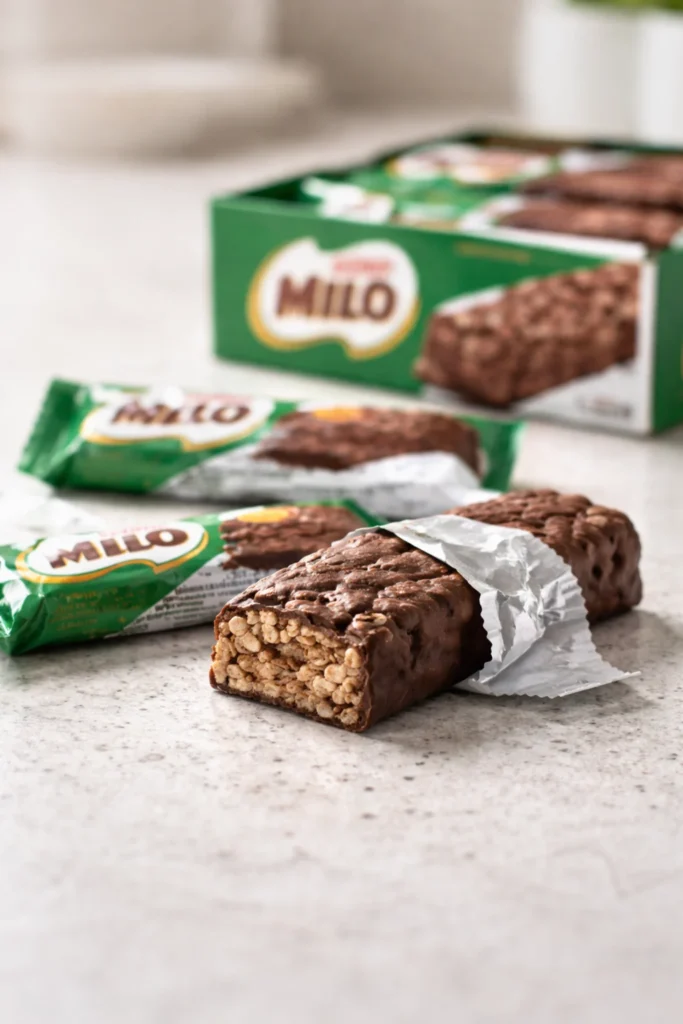

Nestlé Australia has recalled selected MILO Snack Bars after a manufacturing issue raised concerns that small pieces of black rubber may be present in some products. The affected bars were sold through major supermarkets, independent grocers and online channels across much of Australia, and consumers are being told not to eat any pack that matches the recall details.
Which MILO snack bars are affected
The recall applies only to specific batches of MILO Dipped Snack Bars and MILO Original Snack Bars. It does not mean every MILO snack bar is unsafe, but households should check packs carefully before eating them.
The affected products include MILO Dipped Snack Bars 270g, 960g and 160g boxes with Best Before End Aug 2026 and batch codes 5316TD15, 5317TD15, 5318TD15, 5321TD15 and 5322TD15.
The recall also includes MILO Original Snack Bars 210g box with Best Before End Aug 2026 and batch codes 5323TD15 and 5324TD15.
Where the recalled bars were sold
The products were available through ALDI, Coles, Woolworths and independent retailers including IGA. The recall covers sales in NSW, Queensland, Victoria, Tasmania, South Australia and Western Australia, as well as online purchases.
Because snack bars are often kept in lunchboxes, pantry drawers, office bags and sports kits, consumers should check both unopened boxes and individual wrappers where possible.
Why the recall was issued
Nestlé said the issue was linked to an equipment failure at a contract manufacturing facility. The concern is that small pieces of black rubber may have entered a limited number of bars during production.
Foreign material in food is treated seriously because it can cause injury or illness if swallowed. In this case, the key concern is a possible choking or injury risk, especially for children.
How to check your pack
Look for the best-before date and the batch code printed on the box or wrapper. If the product says Best Before End Aug 2026 and the batch code matches one of the affected codes, do not eat it.
A bar may look completely normal from the outside, so appearance is not a reliable safety check. The safest step is to compare the date and batch code with the recall information.
What consumers should do now
Anyone with an affected product should stop eating it immediately and return it to the place of purchase for a full refund.
Consumers who are worried about possible injury or illness after eating one of the affected bars should seek medical advice.
The official recall notice can be checked through Food Standards Australia New Zealand.
Why this matters for households
This recall is especially relevant for families because MILO snack bars are commonly packed for school, sport and quick snacks. Affected products may still be sitting at home even if they are no longer being picked up from shelves.
For another food safety update, see this report on the ALDI Fusia Kimchi and Tofu Kimbap recall.
If your product does not match the listed date and batch codes, no action is needed. If it does match, return it rather than eating it or sharing it with others.

Make Swikblog your go-to source on Google for reliable updates, smart insights, and daily trends.