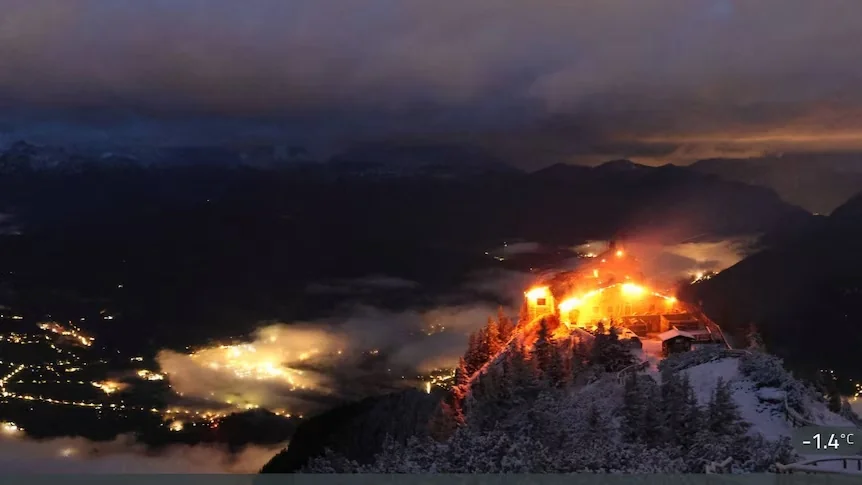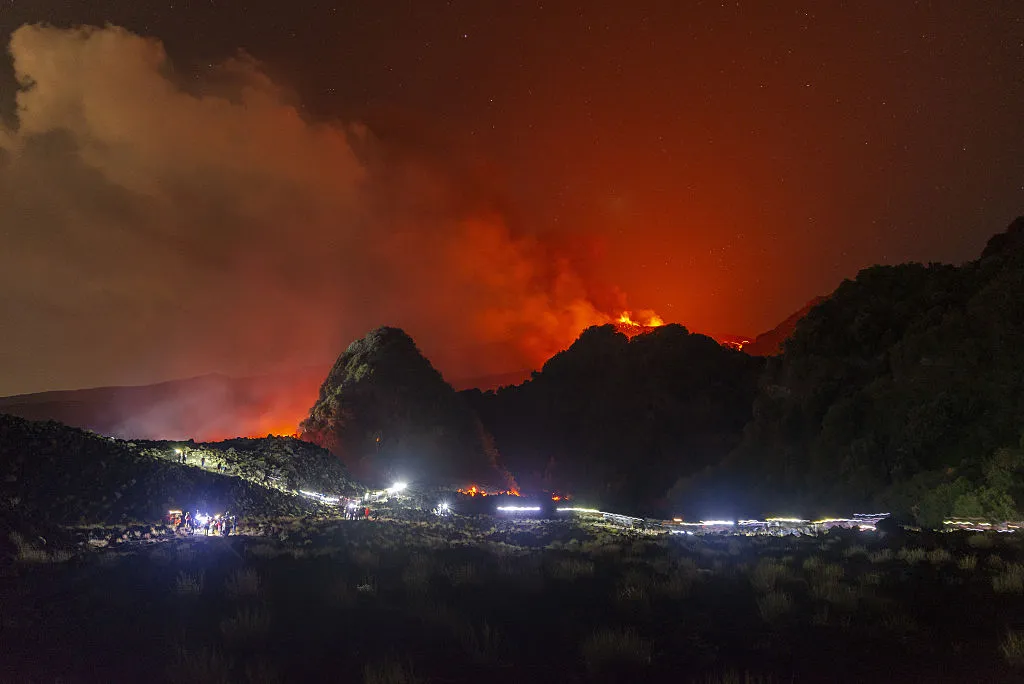

CATANIA, Sicily — Catania Airport suspended both arrivals and departures on Monday, September 14, after Mount Etna sent a fresh ash cloud toward eastern Sicily, forcing flight cancellations, diversions and another round of travel disruption at one of Italy’s busiest airports.
İtalya’nın Sicilya Adası’ndaki Etna Yanardağı’nın yoğun kül püskürtmesi nedeniyle Katanya Havalimanı’nda tüm uçuşlar geçici olarak durduruldu.
— Onedio (@onedio) September 14, 2026
📌 Yetkililer, pistlerin külden temizlenmesi için çalışmaların sürdüğünü belirtirken uçuşların durması nedeniyle binlerce yolcu… pic.twitter.com/IwiNAiKTcl
Airport operator SAC initially halted arriving flights until 4 p.m. local time, but later extended the suspension to 10 p.m. (20:00 GMT) and included departures as volcanic ash continued moving south toward the airport.
The shutdown affects passengers travelling through a major gateway for Catania, Taormina, Syracuse and other destinations across eastern Sicily. Travellers have been advised to check directly with their airline before heading to the airport because individual flights may be cancelled, delayed or diverted.
Catania Airport closure extended as ash moves south
The volcanic cloud was reported to have risen to around 4 kilometres, with winds carrying the ash south in the direction of Catania Airport.
SAC closed airspace sectors C1 and B3 as conditions deteriorated. National and international arrivals could be diverted to other Sicilian airports, including Palermo Falcone-Borsellino Airport.
The 10 p.m. cutoff should not be treated as a guaranteed reopening time. Restrictions can be extended if ash concentrations, wind direction or volcanic activity continue to make operations unsafe.
Mount Etna placed on RED aviation alert
Italy’s National Institute of Geophysics and Volcanology, INGV, issued a RED aviation colour code for Etna on September 14, reporting ongoing ash emissions.
The latest official INGV aviation notices are used by airlines, pilots and air-traffic authorities to assess volcanic risks to aircraft.
A RED aviation alert does not mean nearby communities are automatically under evacuation orders. It is focused on the threat volcanic ash can pose to aircraft, including reduced visibility, runway contamination and possible engine damage.
Etna activity continues at summit craters
Monitoring showed almost continuous ash emissions from Etna’s Northeast Crater, alongside variable degassing from the summit area.
Weak Strombolian activity was also observed, with sporadic ash emissions from the Bocca Nuova crater. Authorities are tracking the eruption using visible and thermal surveillance cameras.
Volcanic conditions can change quickly, meaning larger ash clouds or stronger explosive activity cannot be ruled out while Etna remains active.
Qatar Airways Melbourne-Doha Flight Disrupted After Gun Threat
Heathrow and Gatwick Flight Chaos After NATS Fault: Latest Updates
Passengers could face delays after reopening
Even if Catania Airport resumes operations after 10 p.m., passengers could continue facing delays well into the night.
Diverted aircraft, displaced crews and cancelled rotations can create knock-on problems after airspace restrictions are lifted. Similar network disruption was seen during recent Sydney Airport delays caused by air traffic control shortages, where operational problems continued beyond the initial disruption.
Passengers whose flights are diverted should follow airline instructions for baggage collection and onward transport, particularly if they are sent to Palermo or another airport elsewhere in Sicily.
Etna has repeatedly disrupted flights this summer
Monday’s shutdown is the latest in a series of Etna-related disruptions during the 2026 summer travel season.
Catania Airport faced repeated restrictions in August as ash emissions intensified, and Etna’s aviation alert has shifted between RED and ORANGE several times during September.
That repeated pattern matters for travellers because airport closures depend not only on how active Etna is, but also on where the ash plume is moving. Even a limited eruption can trigger serious aviation disruption if winds push ash across approach routes or airport airspace.
Other volcanic regions face the same risk. Recent flight disruption linked to Indonesia’s Anak Krakatau eruption showed how rapidly volcanic ash can affect airline routes and passenger schedules.
Travellers should check flights before leaving
Passengers booked to fly from Catania on Monday night or early Tuesday should continue checking live airline updates before travelling to the terminal.
Any reopening will depend on volcanic activity, ash concentration, wind direction and aviation safety assessments. Until those conditions improve, cancellations and diversions may continue even after the current suspension period ends.

Make Swikblog your go-to source on Google for reliable updates, smart insights, and daily trends.