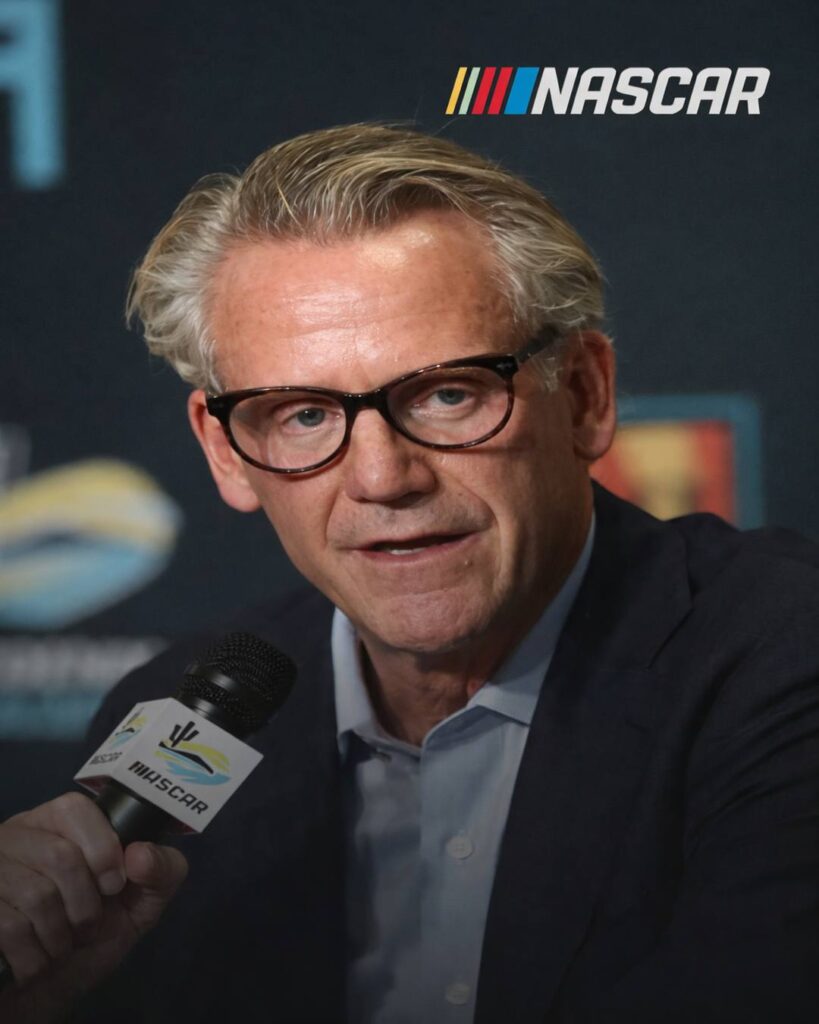

Steve Phelps will exit at the end of January after a bruising antitrust trial exposed inflammatory messages—and reignited long-simmering anger over NASCAR’s revenue model.
NASCAR’s top executive is leaving just as the sport tries to turn the page on one of its most damaging public reckonings in years. Commissioner Steve Phelps announced he will resign at the end of January, closing a two-decade run inside the sanctioning body and ending a short, historic tenure as NASCAR’s first commissioner. The trigger was not a single decision or poor season—but the slow-burn collapse of trust that followed the release of private text messages during a federal antitrust trial.
The trial, brought by 23XI Racing and Front Row Motorsports, pulled the curtain back on a negotiation process that had already stretched for years: how much money teams should receive, what long-term security they should get in return, and who truly holds power in a sport built on a franchise-style “charter” system. Yet it was not the legal arguments that drew the sharpest headlines. It was what Phelps wrote when he believed no one outside the room would ever see it.
In one exchange revealed through discovery, Phelps used derogatory language about Hall of Fame team owner Richard Childress, venting frustration at the pace and tone of revenue-sharing talks. The remarks detonated far beyond the courthouse. Childress is not just an influential owner—he is a living symbol of NASCAR’s modern identity, a bridge between the sport’s rough-edged past and its corporate present. When private contempt lands in public view, it doesn’t read as “venting.” It reads as culture.
The sponsor backlash arrived swiftly. Bass Pro Shops founder Johnny Morris—an outspoken supporter of NASCAR and of Childress’ race team—sent a letter demanding Phelps’ removal. Even in a business where sponsors are accustomed to controversy, the letter carried the weight of a warning: treat foundational figures with open disdain, and you risk turning fans into skeptics and partners into liabilities. Phelps later said he regretted the message and had apologized, but the damage had already escaped the track.
NASCAR’s official messaging has been careful, even warm. In his resignation statement, Phelps framed his time as a mission to connect traditional stakeholders with new partners—media companies, manufacturers, track operators, and drivers— and said he will pursue “new pursuits” in sports and other industries. NASCAR leadership praised him as an engine of modernization: new events, new “bucket list” experiences, expanded international reach, and the ability to restart racing early during the COVID-19 shutdown. You can read the broader outline of the resignation in this Associated Press report.
But the timing tells its own story. The resignation comes weeks after NASCAR reached a settlement with 23XI Racing and Front Row Motorsports, ending a courtroom fight that threatened to drag on for months and to keep airing internal communications along the way. NASCAR has not disclosed financial terms, and it doesn’t have to for the settlement to matter. In sports governance, the win is often not in the details—it’s in stopping the bleeding. NASCAR published a joint statement announcing the resolution, calling it a pathway to “long-term stability” for teams and the sport; that statement is available via NASCAR’s official settlement release.
Still, this episode isn’t just about a single executive’s choice of words. The antitrust dispute was, at its core, a battle over how value is divided in a multibillion-dollar ecosystem. Teams invest heavily and take enormous risk; NASCAR owns the structure that makes the risk worth taking. The charter system—granting guaranteed starting spots and associated benefits—has become the sport’s financial backbone, but teams have long argued that the balance of power remains lopsided and that their long-term security has been too fragile. When negotiations stall, resentment hardens. When resentment shows up in texts, the sport’s internal politics suddenly becomes a public story.
NASCAR also signaled it will not rush to replace the commissioner role immediately. Phelps’ responsibilities will be distributed internally through NASCAR president Steve O’Donnell and the executive leadership team. That decision may sound procedural, but it is also strategic. A quick outside hire would invite new scrutiny and fresh speculation, while an internal handoff offers calm—at least on paper— ahead of a season that must persuade fans, teams, and sponsors that the sport can evolve without tearing itself apart.
The bigger question now is whether the sport treats this resignation as a reset—or a warning light. NASCAR has spent the last decade trying to broaden its audience without losing its core. It has built new showcases, tried new venues, and leaned into spectacle. But if governance becomes the headline, spectacle can’t save you. Fans may forgive a controversial race finish; they are less forgiving when they sense contempt for the people who built the sport—or when they suspect the business model is rigged.
Phelps leaves with a résumé that NASCAR itself describes as transformative. Yet his exit lands in the shadow of a lesson that every modern sports league is learning, again and again: private messages are no longer private, and leadership credibility can vanish in a single revealed sentence. In a sport that sells authenticity and loyalty, trust is part of the product. Once it cracks, it’s harder to rebuild than any track surface.
Written by Swikriti for Swikblog

Make Swikblog your go-to source on Google for reliable updates, smart insights, and daily trends.