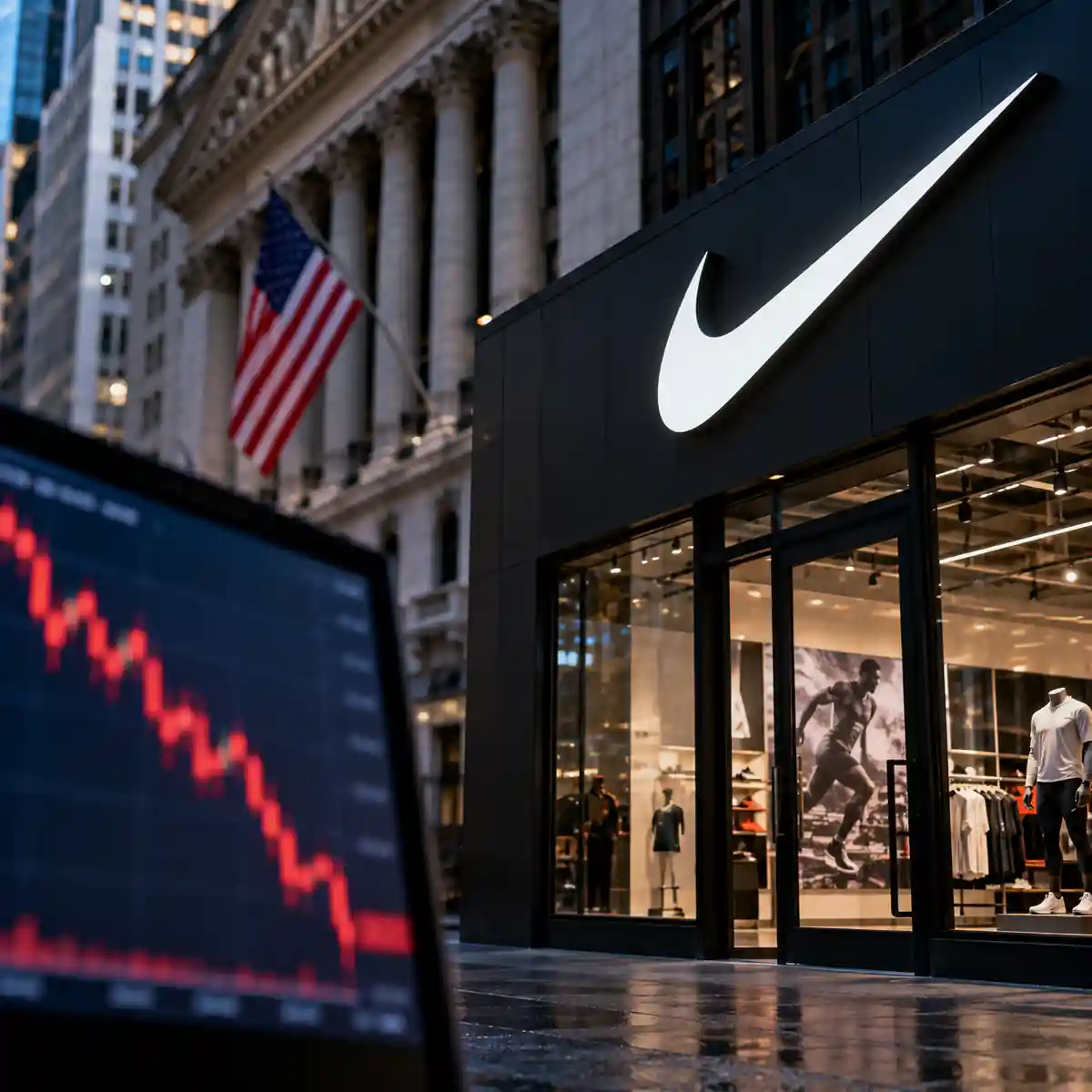
Netflix stock jumped after the streaming leader walked away from its bid for Warner Bros. Discovery, a move investors treated as a rare moment of public deal discipline in an auction that had become increasingly expensive. The exit clears the path for Paramount Skydance to take the lead with a sweetened proposal valued at roughly $111 billion, built around a $31-per-share offer that Warner’s board deemed superior.
The market reaction was immediate and loud: Netflix shares jumped by more than 13% in after-hours trading as the company declined to keep bidding. Warner Bros. Discovery shares slipped as traders stopped pricing in a prolonged bidding war, while Paramount-related shares were comparatively steady, shifting attention from headline price to the mechanics of financing, approvals, and integration.
Netflix steps aside and investors reward the decision
Netflix said it believed its transaction would have created shareholder value and could have passed regulatory review, but it wasn’t willing to chase a higher number. In the company’s words, it has “always been disciplined,” and at the price required to match Paramount Skydance’s latest terms, the deal was “no longer financially attractive.” That phrasing matters because it frames the exit as a strategic choice, not a forced retreat.
Netflix also underscored what it wants the market to focus on next: the core business. Management pointed to ongoing investment in growth and content, including about $20 billion earmarked this year for films, TV series, and other entertainment offerings. For shareholders, the message was that Netflix would rather fund its own engine than absorb a complex acquisition whose price had moved beyond its comfort zone.
Paramount wins with $31 per share and Warner reopens negotiations
Paramount Skydance’s revised offer pushed the contest back into motion by raising the bid to $31 a share and adding deal terms meant to look both richer and more “closeable.” Warner’s board response effectively reset the endgame, reopening talks and asking to see the upgraded bid details fully documented, while treating Paramount’s proposal as the new front-runner.
The dynamic is simple: once Paramount put a higher written number on the table, Netflix chose not to top it. That decision ended the auction pressure that had been building for months and turned the story into a two-track outcome: Paramount gets a clearer runway to finalize its package, while Netflix gets a relief rally for refusing to overpay.
The earlier Netflix agreement and why the math changed
Earlier in the process, Netflix had agreed to an estimated $82.7 billion deal (including assumed debt) to acquire Warner’s studio and streaming businesses, a structure designed to fit cleanly into Netflix’s operating model. But repeated counteroffers from Paramount for the entire company kept the door open and steadily lifted the “price-to-win” threshold.
As Paramount’s terms improved, the trade-off for Netflix shifted from strategic upside to financial risk: higher purchase cost, a broader footprint to manage, and a more complicated approval and integration story. When Paramount’s latest bid arrived, Netflix decided the incremental cost to stay in the fight outweighed the value of winning.
The deal protections and cash guarantees that made Paramount’s offer harder to ignore
Paramount’s bid wasn’t only about the headline $31-per-share figure. The structure also included significant “confidence” features meant to reduce Warner’s downside if regulators block the deal or if timelines extend. One of the most striking elements was a $7 billion regulatory termination fee—a commitment that raises the cost to Paramount if approvals fail, but gives Warner shareholders a stronger form of downside protection.
Another crucial piece: Paramount’s offer also accounted for the about $2.8 billion breakup fee Warner would owe Netflix if it unwound the prior agreement. Absorbing that penalty is a powerful signal that Paramount is willing to pay not just to win, but to make the transition from Netflix’s deal track to Paramount’s deal track financially viable.
How the $111 billion package gets financed
With a deal of this scale, investors quickly look past the headline price and ask one question: where does the money come from? The financing mix described in the reporting is substantial. The plan includes roughly $45.7 billion in equity funding tied to the Ellison Trust, alongside about $57.5 billion in debt financing arranged with banks.
That blend helps explain why the market response is more complicated for Paramount than it is for Netflix. For Paramount, the win is now about execution: locking financing terms, managing leverage optics, and navigating the regulatory gauntlet without costly delays. For Netflix, the biggest execution risk was removed the instant it chose not to raise its bid.
Boardroom and shareholder reaction turns the page
Warner’s leadership emphasized the process and the end goal. Board Chair Samuel A. Di Piazza Jr. said he was proud of the rigorous work over the past five and a half months and framed the transaction as a “cusp” moment for combining two storied companies with long-term audience upside.
Activist investor Ancora, a Warner shareholder, also weighed in with a notable endorsement, arguing that Netflix stepping aside creates a clearer path for shareholders to receive meaningfully more cash and a more viable path to government approvals—calling the outcome a “win-win” for the industry and investors.
Washington visits underline the regulatory sensitivity
The takeover fight has played out in Hollywood and in Washington, with dealmakers actively working the approval narrative. Reports described Netflix co-CEO Ted Sarandos and Paramount CEO David Ellison traveling to the US capital to meet with lawmakers as the battle intensified. Sarandos also met with officials in the Trump administration as the final decisions were taking shape.
That backdrop helps explain the emphasis on “closeability” in Paramount’s bid: beyond price, the offer needed to look like it could survive scrutiny, withstand political noise, and still make financial sense after integration.
The takeaway for Netflix shareholders
Netflix didn’t need to win the auction to win the tape. The stock’s jump suggests investors preferred the company’s decision to protect its balance sheet and keep strategic flexibility rather than chase a deal whose costs were rising in real time. Paramount, meanwhile, has the lead—now it must prove the $31-per-share win can be financed, approved, and executed without the kind of delays and complications that punish mega-mergers.
For the clearest breakdown of the upgraded bid terms, the financing mix, and the key protections that shaped the outcome, see Reuters reporting on Paramount’s $31-per-share offer and Netflix’s decision to step aside.
You May Also Like
Walmart Stock (WMT) Today Slips to $124.88 After $100M FTC Settlement Over Spark Driver Pay

Make Swikblog your go-to source on Google for reliable updates, smart insights, and daily trends.