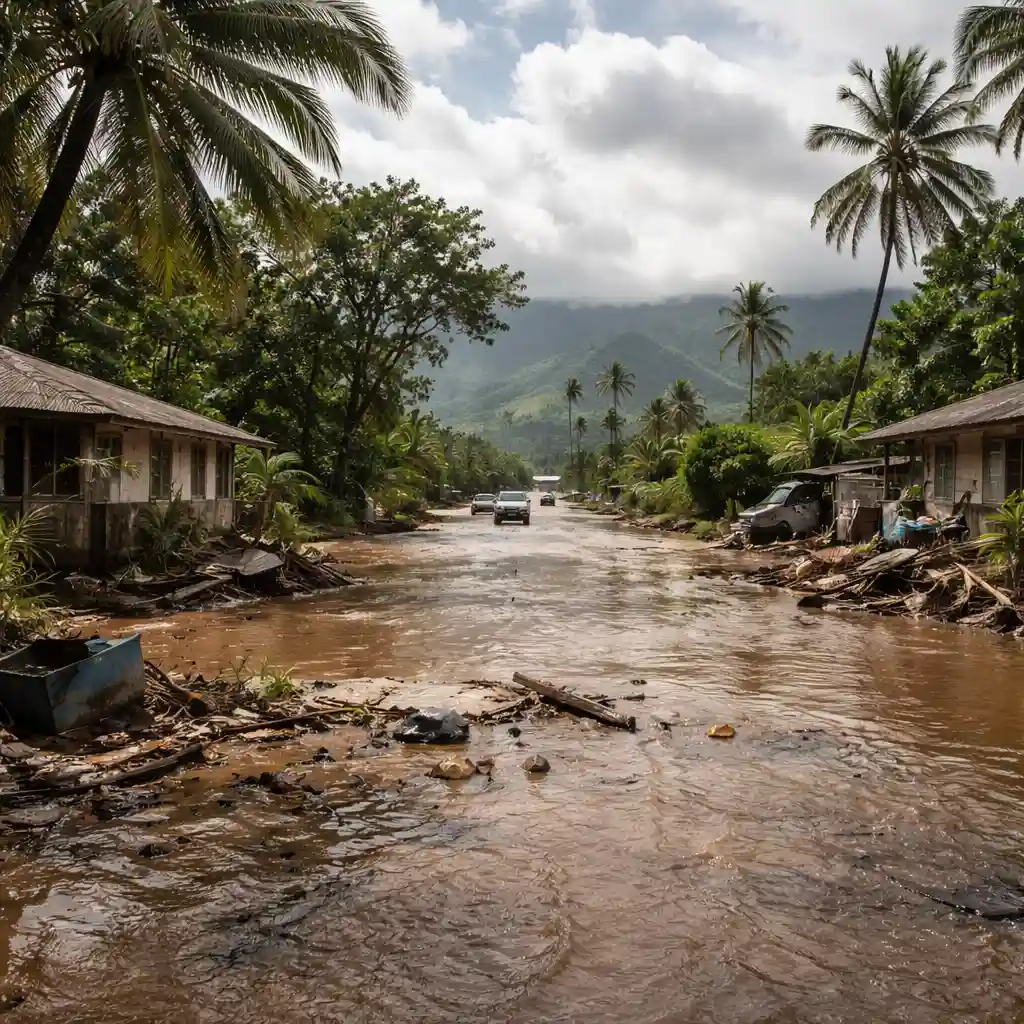

Hawaii’s North Shore is facing a harsh post-disaster reality after the March 2026 kona storms — one where recovery efforts, tourism dependence, and public frustration are colliding. While the skies have cleared over Oahu, the situation on the ground in Waialua, Haleiwa, and nearby communities remains far from normal. Floodwaters may have receded, but the economic and emotional damage is still unfolding.
Local businesses are now reporting a staggering up to 90% drop in customers, highlighting just how quickly a natural disaster can disrupt Hawaii’s tourism-driven economy. At the same time, officials are urging visitors to stay away from the hardest-hit areas — a request that many tourists appear to be ignoring.
90% Business Drop Signals Economic Shock
For small business owners in Waialua, the sudden collapse in visitor traffic has been devastating. Shops that rely heavily on daily tourist spending are seeing empty storefronts, reduced staff hours, and growing uncertainty.
“If visitors don’t come back soon, we may have to cut down manpower,” one local business owner warned, reflecting the pressure many are facing.
This creates a difficult paradox. Hawaii needs tourism to survive, but certain communities need time and space to recover. The North Shore has become the center of that conflict.
Tourists Ignoring Warnings Spark Local Frustration
Officials, including the Hawaii Tourism Authority, have made it clear: Hawaii is open, but visitors should avoid flood-damaged areas such as Waialua, Mokuleia, and parts of Haleiwa.
Despite this, some tourists continue to visit these locations — not to help, but to see the damage firsthand. That has triggered frustration among residents.
Locals say they are dealing with cleanup, damaged homes, and emotional stress, only to see visitors driving through neighborhoods as if they are attractions. Some residents even reported tourists complaining that the disaster has “ruined their vacation.”
For many in the community, that behavior crosses a line.
What Went Wrong: Officials ‘Flying Blind’
The crisis has also raised serious questions about how the disaster was handled. According to detailed reports, emergency officials delayed evacuation orders even as floodwaters were rising rapidly.
Officials later admitted they were effectively “flying blind” due to a combination of factors:
- Unreliable weather forecasts with high uncertainty
- A broken Doppler radar system that limited storm tracking
- Delayed recognition of rapidly rising water levels
- Low public alert system reach, with only about 11% of residents signed up
By the time evacuation alerts were issued, some residents were already swimming for their lives or escaping rising water in the middle of the night
This has led to growing anger within the community, with residents questioning whether earlier warnings could have reduced damage and risk.
Visitor Numbers Dip — Then Quickly Rebound
Despite the chaos on the ground, statewide tourism data shows a more complex picture. Visitor arrivals dropped during the storm periods but recovered within days:
- First storm dip: 7,829 arrivals on Oahu (18,187 statewide)
- Rebound: 14,629 on Oahu (25,276 statewide)
- Second storm dip: 10,530 on Oahu (21,237 statewide)
- Recovery again: 14,015 on Oahu (25,150 statewide)
This suggests that while Hawaii’s overall tourism demand remains strong, the impact is highly localized. Areas like Waikiki continue to function normally, while North Shore communities face severe disruption.
Data from the Hawaii Department of Business, Economic Development and Tourism indicates that most travelers are not canceling trips entirely — they are adjusting plans instead.
Tourism vs Recovery: A Growing Conflict
The situation highlights a deeper issue: how to balance economic survival with community recovery.
Tourism is Hawaii’s economic backbone, but disaster-hit areas cannot immediately return to normal. Encouraging visitors while restricting access to certain regions sends mixed signals, creating confusion among travelers.
This is not the first time Hawaii has faced this challenge. After the Lahaina wildfire, many tourists avoided the entire state, causing unnecessary economic damage. Now, officials are trying to avoid that mistake — but at the same time protect vulnerable communities.
Not All Visitors Are the Problem
Amid the tension, there are also stories of visitors stepping up in meaningful ways. Some tourists have gone directly to affected areas not to observe, but to help — assisting with cleanup, removing debris, and supporting residents.
These actions have been welcomed by locals and highlight an important distinction: respectful tourism can support recovery, while careless behavior can harm it.
What Happens Next?
For now, it is too early to determine the long-term impact of the North Shore floods on Hawaii’s tourism economy. Experts believe most pre-booked trips will still happen, though visitor behavior may shift.
The real test will be how effectively officials communicate guidance — and whether visitors choose to follow it.
The message is becoming increasingly clear: Hawaii is open, but not every area is ready. Supporting local businesses, respecting recovery zones, and understanding the situation on the ground will play a crucial role in how quickly communities bounce back.
As North Shore residents continue rebuilding their lives, the balance between tourism and recovery remains fragile. And in a place where both economy and community matter deeply, getting that balance right has never been more important.

Make Swikblog your go-to source on Google for reliable updates, smart insights, and daily trends.