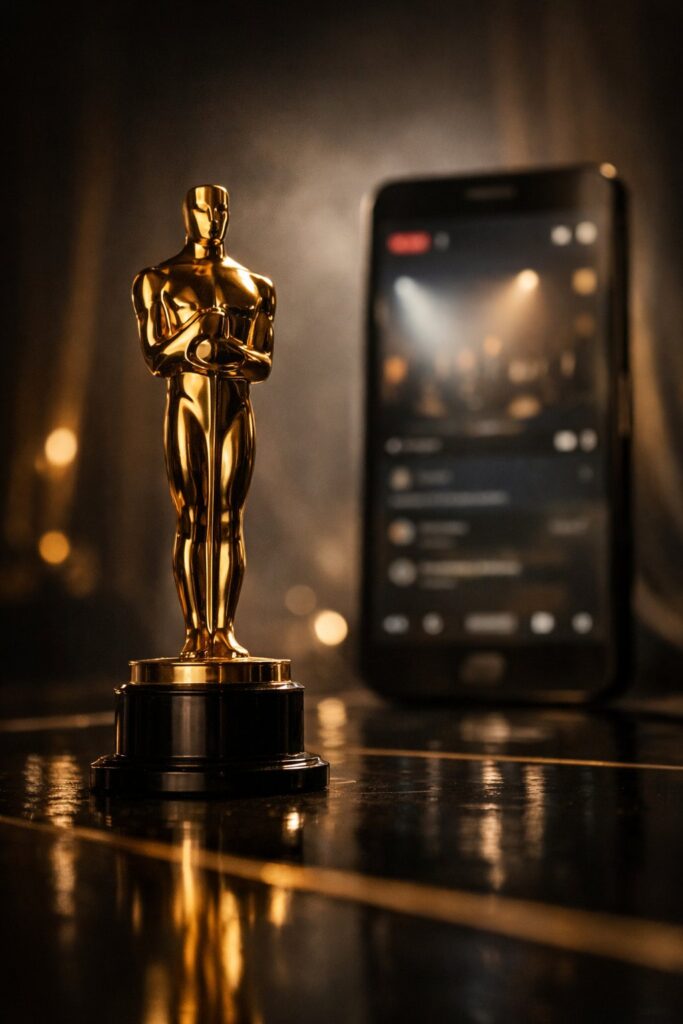

The Oscars are not simply changing platforms. They are changing where cultural authority lives.
After more than half a century tied to broadcast television, Hollywood’s most prestigious night is preparing for a decisive break. From 2029, the Academy Awards will stream live and free on YouTube, ending a relationship with traditional television that stretches back to the 1970s and signalling that TV is no longer the default home of cultural importance.
This move is less about technology than relevance. For decades, broadcast television functioned as a gatekeeper. Prime-time slots conferred legitimacy, and live ratings defined success. That logic has been eroding for years as audiences fragment and younger viewers encounter culture through feeds, clips, and commentary rather than fixed schedules.
The Academy’s decision acknowledges that shift. Prestige without reach no longer carries the weight it once did.
ABC’s long association with the Oscars was built on history and ritual. But history does not guarantee leverage. Viewership has steadily declined over the past decade, while the cost of producing a sprawling live broadcast has only grown. The balance that once justified the partnership has tilted.
YouTube offers something broadcast television no longer can: scale without borders. The platform reaches billions of users worldwide, distributes content instantly across regions, and already hosts year-round conversation about film — from trailers and interviews to awards predictions and post-ceremony analysis.
On television, the Oscars existed as a single annual event. Online, they become an ecosystem. Red-carpet coverage, backstage access, nomination announcements, student awards, technical ceremonies, and filmmaker interviews can all live side by side, extending attention beyond one night and stretching it across the calendar.
That expansion changes who shapes the narrative. Where critics and networks once framed awards season, creators now play a central role. Livestreams, reaction videos, fashion breakdowns, and instant commentary multiply the ceremony in real time. The Oscars no longer simply air; they spread.
Disney, which owns ABC, did not lose the Oscars so much as step away from an increasingly difficult equation. Creative tensions, runtime disputes, and the challenge of monetising a long broadcast with shrinking audiences have all surfaced in recent years. Disney will continue airing the ceremony through its 100th edition in 2028, closing the chapter with its legacy intact and its risk limited.
For the Academy, the YouTube partnership opens new possibilities. Global sponsorships become simpler. Advertisers gain access to younger and more international audiences. Data replaces estimation, and monetisation extends beyond a single broadcast window.
According to reporting by Reuters, the deal reflects a broader shift as major live events migrate toward platforms built for global, on-demand audiences rather than national schedules.
For decades, television validated importance. The Oscars’ move to YouTube confirms that this era is ending. Cultural weight now comes from participation, accessibility, and scale — not from a channel number or a prime-time slot.
Hollywood is no longer speaking from a stage. It is entering the feed.

Make Swikblog your go-to source on Google for reliable updates, smart insights, and daily trends.