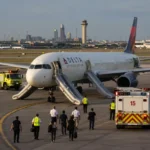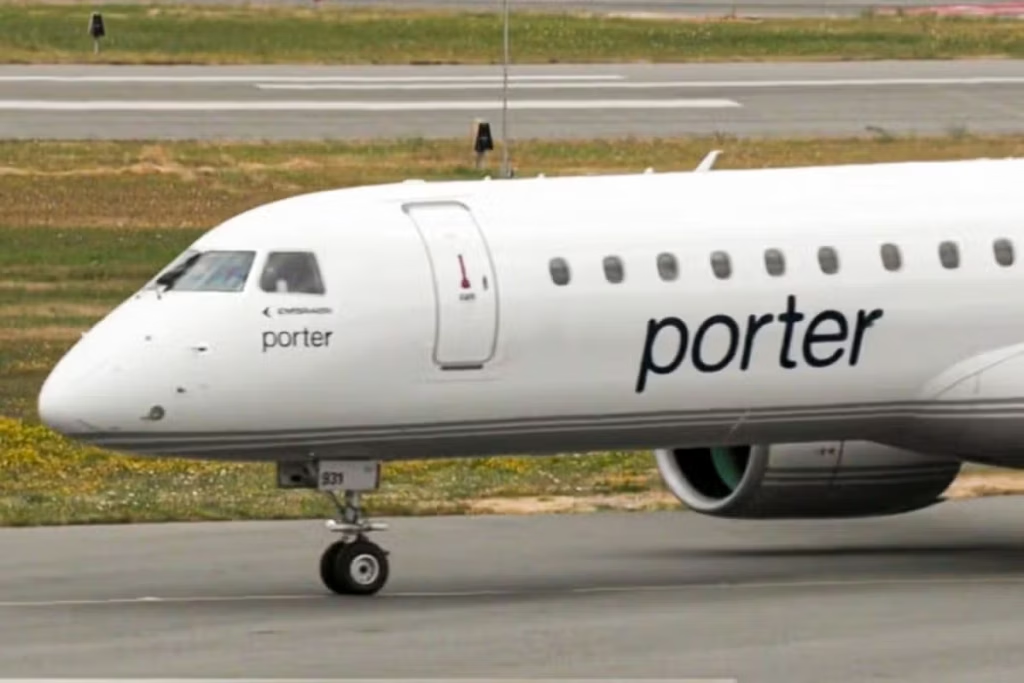

Passengers on a Porter Airlines flight from Victoria, British Columbia, to Toronto were stranded overnight after a young child refused to remain seated with a seatbelt fastened. The safety incident forced the aircraft to return to the terminal and eventually miss the airport’s overnight runway deadline.
Flight PD444 was due to leave Victoria International Airport on Thursday night, August 6. Its doors had closed and the aircraft was taxiing towards the runway when cabin crew noticed the child standing on a passenger seat.
The child’s parents and crew members tried to secure the youngster but were unable to do so. Because the aircraft could not safely take off with a passenger standing and unrestrained, the captain returned to the terminal and the family was removed from the flight.
How the disruption led to a cancellation
Removing the family did not allow the aircraft to depart immediately. Ground workers had to locate and unload the family’s checked baggage from the cargo hold. The flight plan reportedly needed to be filed again, while the crew and airline completed paperwork connected to the incident.
These procedures pushed the delay beyond approximately 12.30am, when overnight runway restrictions at Victoria prevented the aircraft from departing. Porter Airlines cancelled the service, leaving the remaining passengers to spend the night in Victoria before being rebooked on another departure on Friday, August 7.
The airline apologised for the disruption. However, no verified information has been released about the child’s exact age, the number of passengers affected, the family’s identity or the restraint being used.
There is also no confirmed report that the family was arrested, fined, required to pay the airline’s costs or permanently banned. Claims beyond the family’s removal from the aircraft should be treated cautiously unless confirmed by the airline or authorities.
Why the crew could not make an exception
The child’s refusal to sit down triggered the incident, but it was the combination of safety procedures, baggage removal, paperwork and the runway deadline that ultimately caused the cancellation.
Canadian aviation rules require passengers to follow seatbelt instructions during critical stages of a flight. An aircraft cannot take off while someone occupying a seat is standing or unsecured.
Taxiing also carries risks. An aircraft may brake suddenly to avoid another plane, vehicle or obstruction. An unrestrained child could be thrown against a seat, cabin fitting or another passenger even before reaching the runway.
Cabin crew therefore could not ignore the situation to preserve the schedule. Their responsibility was to secure the cabin before departure, regardless of the passenger’s age or the inconvenience caused by returning to the gate.
Official Canadian guidance on child-restraint systems aboard aircraft explains the use of approved devices for infants and young children. Parents should check both the approval labels and airline requirements before taking a car seat onboard.
Porter permits approved child-restraint systems with an internal harness that meet applicable labelling standards. Ordinary booster seats are not accepted for use during a flight. A separate aircraft seat must also be purchased when a child travels in an approved car seat.
Why removing one family affected every passenger
When a checked-in passenger leaves an aircraft, the airline may need to remove that person’s baggage. Finding specific bags after loading is complete can take time and may require assistance from several ground workers.
A return to the terminal can also affect flight plans, crew duties and coordination with air traffic control. Documents may need to be updated before the plane can leave again. Close to an airport’s overnight restrictions, even a routine safety process can consume the remaining departure window.
The knock-on effect was similar to the disruption seen when US-bound flights were cancelled at Montreal airport, where one operational problem affected numerous journeys.
Another case involving international passengers being misdirected at Ottawa airport illustrated how airline journeys also depend on ground and security procedures being completed correctly.
Read More
Information affected passengers should keep
Travellers affected by an overnight cancellation should retain boarding passes, booking confirmations, airline messages and receipts for meals, transport or accommodation. They should request written confirmation of the cancellation reason and ask the airline about rebooking and available assistance.
Financial compensation is not automatic. Canadian passenger entitlements may depend on whether a disruption was within the airline’s control, required for safety or outside its control. Rebooking, refunds, overnight assistance and compensation can be assessed under different rules.
Passengers who miss connecting flights, hotels or other prepaid arrangements should contact the relevant provider quickly. Travel-insurance claims may require written evidence of the cancellation and itemised receipts.
For families, the incident is a reminder to review child-seating rules before travelling and consider an airline-approved restraint where appropriate. Flight PD444 remained grounded because the crew could not accept the immediate risk of taking off with an unsecured child, while the resulting procedures pushed the aircraft beyond Victoria’s runway deadline.

Make Swikblog your go-to source on Google for reliable updates, smart insights, and daily trends.